

Share of households with cars down, but absolute number has risen since 2012: Chee Hong Tat
 Add BT as a preferred source
Derryn Wong
DeeperDive is a beta AI feature. Refer to full articles for the facts.
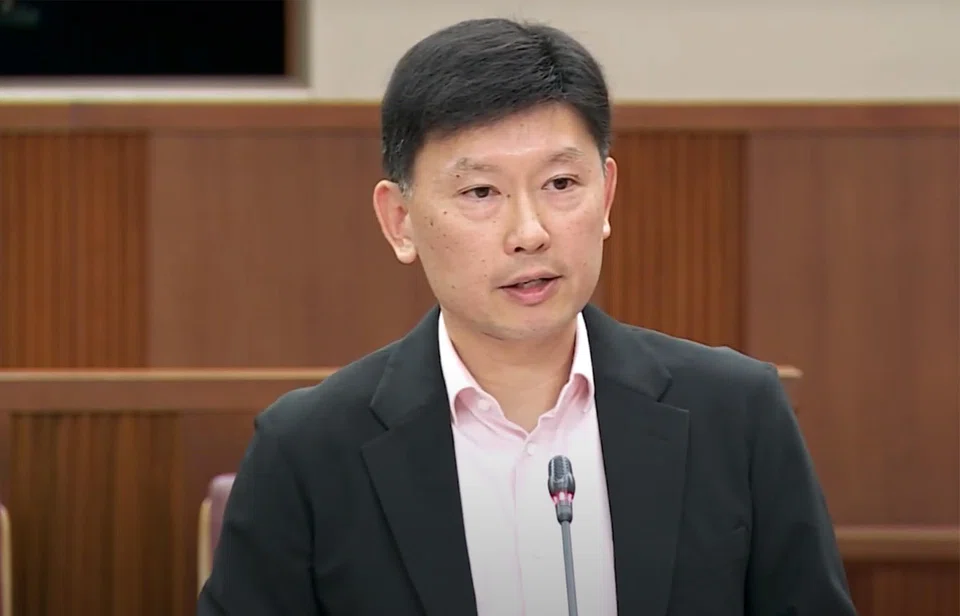
THOUGH a smaller share of Singapore’s resident households now own cars, the absolute number of such households has risen, said Acting Minister for Transport Chee Hong Tat in a Facebook post on Thursday (Nov 16).
He was addressing public responses to remarks he made in Parliament on Nov 6, in which he noted that a third of resident households – those comprising Singaporean or permanent residents – owned cars in 2022, down from 40 per cent in 2013.
“Some people have incorrectly inferred that this means there are now fewer resident households which own cars,” said Chee in his Facebook post.
But the actual number of car-owning households has risen to 472,000 in 2022, up 2.8 per cent from 459,000 in 2012.
The percentage has fallen because there are now more resident households: 1.4 million in 2022, compared to 1.2 million in 2012.
In his Facebook post, Chee reiterated the government’s stance on not having a separate Certificate of Entitlement (COE) category for private-hire cars (PHCs), although industry observers have said that PHCs contributed to record-breaking COE prices in 2023.
Navigate Asia in
a new global order
Get the insights delivered to your inbox.
Chee wrote: “The main contributors to COE demand are local individual buyers. In the first three quarters of 2023, they made up three in four Category A bids and two in three Category B bids.
“We must not wrongly assume that having a separate category means there will be new COE supply for these vehicles.”
To create a separate COE category for private-hires, some quota would need to be taken from passenger car categories, he noted.
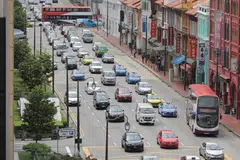

He reiterated that the Ministry of Transport and the Land Transport Authority are exploring “further options” beyond COE bidding to address concerns about car-leasing companies, recognising that private-hire cars travel longer distances, but play “an important role” in providing point-to-point commuting services.
The authorities are “open to different ideas which can effectively address the concerns and improve the situation”, he said, without elaborating.
On Nov 6, he noted that private-hire cars had won about 21 per cent of Category A COEs in the last three quarters, down from 27 per cent in the same period in 2022.
They also won 23 per cent of Category B COEs, down slightly from 24 per cent in 2022.
“The data shows that COE prices have gone up in a period where demand from car-leasing companies has come down, so it is unlikely that they are the main factor for the increase in COE prices,” he said then.
Decoding Asia newsletter: your guide to navigating Asia in a new global order. Sign up here to get Decoding Asia newsletter. Delivered to your inbox. Free.
Copyright SPH Media. All rights reserved.
TRENDING NOW
‘Boring’ is the new black: The stars are aligning for a Singapore stock market revival
Near sell-out launches in March boost developer sales to 1,300 units after four slow months

China pips the US if Asean is forced to choose, but analysts warn against reading it like a sports result

Genting Singapore’s Lim Kok Thay receives S$7.5 million pay package for FY2025

