

Shipping and decarbonisation - what happens next?
November's COP27 will be a focal point for those pushing to slash shipping's carbon footprint sooner rather than later
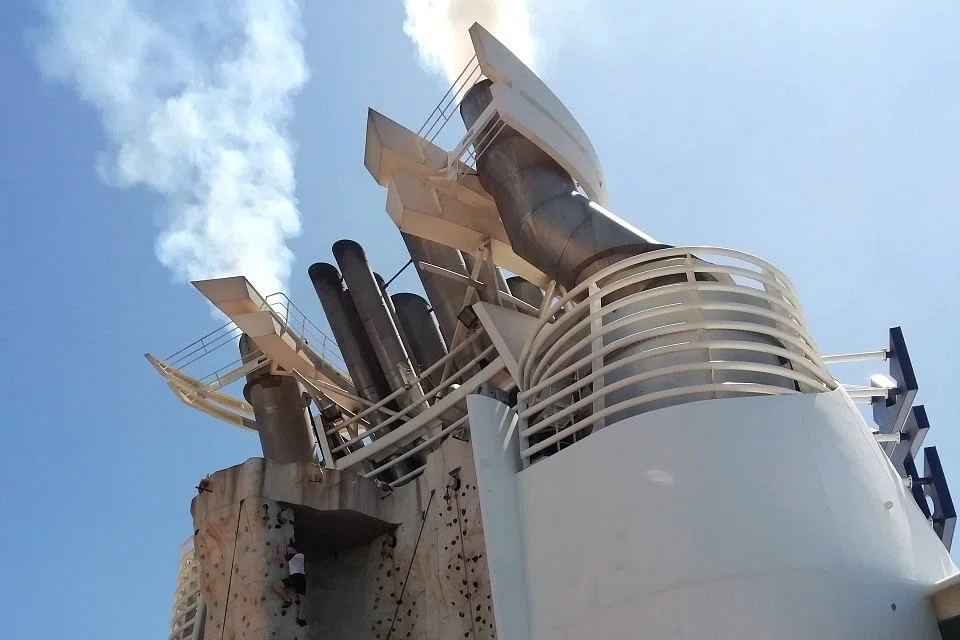
LOOKING ahead to what may be in store for shipping in 2022, it is very difficult to be confident about almost anything.
The continuing Covid-19 pandemic, now with the added twist of the highly transmissible Omicron variant and increasing geopolitical tensions in several parts of the world, make any predictions even riskier hostages to fortune than usual. That said, we can be reasonably sure that pressure on shipping to decarbonise will continue to build.
COP27 - the 27th session of the Conference of the Parties to the United Nations Framework Convention on Climate Change - is scheduled to take place in November in Egypt. It remains to be seen whether it will generate the same sort of expectations as last year's COP26 held in Glasgow.
In any case, it is bound to act as a focal point for those pushing to slash shipping's carbon footprint sooner rather than later.
Under huge pressure
And it is worth mentioning that all the global shipping industry organisations are in that camp, even though preferred strategies vary widely.
Major companies, including the big online retailers, are under huge pressure to reduce the carbon footprints of their supply chains. That reality has been highlighted by a new Lloyd's Register (LR) study that warns of potential future supply chain upheaval from energy transition uncertainty.
According to the report, "leaders from across the global supply chain" are calling for immediate action on maritime decarbonisation if a successful energy transition to zero-carbon supply chains is to be achieved.
LR's report, titled How To Make Shipping's 'Decade of Action' a Reality, says the transition to zero-carbon shipping will be among the most significant in the sector's history, with investments made today preventing future supply chain interruptions and minimising disruption to the backbone of world trade.
Lindsay Zingg, senior director of sustainability at freight forwarder DSV Panalpina, said in the report: "If you cannot offer a 'green' product, you will lose business - it is an absolute requirement. Our customers are constantly asking what we can do to lower CO2, and we will launch our green logistics programme later this year. Customers push us, we push our suppliers, and we will make a difference."
It is no surprise then that container shipping giant AP Moller-Maersk is at the forefront of moving towards zero-carbon. It has launched its Green Finance Framework which it says is designed to allow the company to issue a variety of sustainable financing instruments which may include bonds, loans, project finance and other instruments as part of a funding strategy to enable it to become carbon-neutral by 2050.
Maersk's inaugural 10-year, 500-million-euro (S$767 million) green bond will be used to fund the construction of a feeder vessel and a series of 8 ocean-going methanol-fuelled container vessels. Maersk intends that the methanol used by these ships will be carbon-neutral.
That is a very significant development in 3 ways. Firstly, it commits a big container carrier to having some of its fleet carbon-neutral within just a few years.
And if it demonstrates that some of its fleet can achieve this then it is inevitable that Maersk will have to have a wholly carbon-neutral fleet within a few years. Forget about waiting until 2050.
Secondly, with such a major player moving towards becoming carbon-neutral, the pressure of other carriers to follow suit will be irresistible.
Thirdly, and perhaps most interestingly, Maersk has opted to use methanol as its future fuel. That has caused consternation among the vocal LNG (liquefied natural gas) lobby, particularly as Maersk chief Soren Skou has advocated halting investment in LNG infrastructure.
Pro-LNG group SEA-LNG has issued a detailed rebuttal, so there will be great interest to see what the other big carriers do, and some decisions at least will have to be made in the coming year.
Green financing is not just confined to the container ship sector.
For example, global law firm Watson Farley & Williams said it had advised a major financial services company regarding a US$25 million financing to companies controlled by Union Maritime Ltd secured on 3 dry bulk carriers with a focus on sustainability and, more specifically, the International Maritime Organization's (IMO) aim to reduce international shipping's carbon footprint through the recent adoption of a new operational carbon intensity indicator.
Speaking of the IMO, following on from COP26, the main shipowners' groups hoped that the UN agency's Marine Environment Protection Committee's meeting held a couple of weeks later, would approve a proposal to set up a research and development (R&D) fund paid for by a US$2 per tonne levy on bunker fuel. That did not happen and it was sent to a working group for further consideration later this year.
The shipowners put a lot of effort into the R&D proposal and were very unhappy. International Chamber of Shipping Secretary General Guy Platten said that governments "cannot keep kicking the can down the road, as every delay moves us further away from reaching pressing climate goals".
He said the chamber will continue to work with governments to agree to the suite of measures that the industry has proposed, including the US$5 billion R&D fund as an immediate step to be followed by a levy based carbon price for shipping. "The adoption of both these measures will be the only way to deliver on net-zero emissions from shipping by 2050 while ensuring an equitable transition that leaves no one behind," he noted.
The shipping industry bodies' disappointment is understandable but the idea that the R&D fund and a levy are the only way forward could easily be overtaken by events this year. In fact, it may already have been.
The case for an R&D fund, which would entail a significant amount of administration, looks less convincing as it becomes ever clearer that we are now on the cusp of having a range of viable alternative zero-carbon fuels. Moreover, there is a real prospect of carbon capture technology providing a different option for achieving zero carbon. Any IMO-organised levy, even if agreed, will take some years to put in place.
In the meantime, the European Union is almost certain to impose its Emissions Trading system on shipping, at least within the trading bloc.
Clear regulations
There is another approach, which has been floated by the International Bunker Industry Association but not yet widely discussed. This would be to simply introduce regulation requiring ships to comply with reduced CO2 emission limits that would be reduced according to a timeframe that would eventually lead to zero-carbon emissions.
Experience has shown that shipping responds well to clear regulations. Shipping firms such as Maersk are showing what can be done, and surprisingly quickly. However, in the absence of any move to a regulatory approach, anybody looking for 2022 to provide a pathway for shipping to achieve zero-carbon is likely to end up disappointed.






