Shipping firms face tough 2026 as reopening of Red Sea looms
Maersk has made two successful passages for the first time since Yemen-based Houthis began attacking vessels in 2023
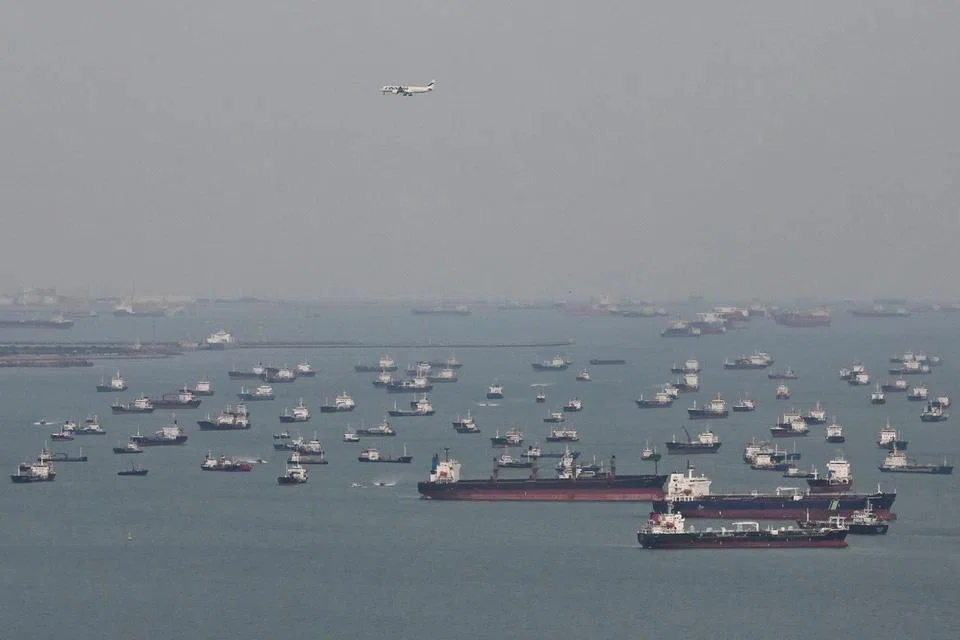
[HONG KONG] Global container liners are bracing for lower profits in 2026 as the potential reopening of the Red Sea shipping route weighs on freight rates, exacerbating oversupply issues and aggravating trade pains.
Denmark’s AP Moller-Maersk, Germany’s Hapag-Lloyd, Japan’s Nippon Yusen KK and Chinese liners Orient Overseas International and Cosco Shipping Holdings are all expected to report weaker earnings in 2026 after an already difficult 2025 marked by tariff turmoil.
A resumption of traffic through the Red Sea would exacerbate existing “structural overcapacity issues”, analysts at Bank of America (BOA) said.
Supply continues to expand at a record pace, with a projected 36 per cent surge in new vessel capacity from 2023 to 2027, according to Bloomberg Intelligence (BI) analyst Kenneth Loh. On the flip side, demand for container shipping is expected to contract 1.1 per cent in 2026, assuming container liners make a complete return to the Red Sea, he added.
Global liner rates are on a downward trajectory, falling 4.7 per cent to US$2,107 per 40-foot container in the week ended Jan 29, according to the Drewry World Container Index.
Though not guaranteed, a restart of Red Sea shipping is becoming a more likely prospect now that Maersk has made two successful passages for the first time since Yemen-based Houthis began attacking vessels in 2023.
HSBC analyst Parash Jain previously expected that Red Sea disruptions lasting until at least mid-2026 would mean a 9 to 16 per cent drop in freight rates this year. Now, with Maersk’s return to the Red Sea hinting at a faster-than-expected transition to normalcy, HSBC said there could be a further 10 per cent decline that would push Maersk and Hapag-Lloyd into losses.
A rapid resumption of traffic may at first cause port congestion in Europe, which would support rates, according to Jain. A reopening as Western economies look to restock inventory in the first half of 2026 may also initially help rates, Citi analysts led by Kaseedit Choonnawat said.
Rates would then stabilise lower, with Maersk set to issue “soft” 2026 profit guidance and cut its share buybacks by 50 per cent, according to BOA. The Danish shipper is expected to post its first annual loss since 2017 this year, consensus shows.
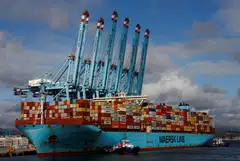


Major carriers are treading with caution for now, hesitant to overhaul their networks when a sudden shift in Houthi activity may force a total reversal overnight, according to Drewry Shipping Consultants’ Arya Anshuman and Simon Heaney.
“Cargo owners are also wary of putting valuable goods at risk and are now well-used to longer transits, while ports will not be able to cope with a sudden arrival of ships en-masse,” they said.
While Maersk has recently started voyages, CMA CGM reversed its decision to use the same route after having previously returned three services through the waterway. “That highlights how volatile and unpredictable the situation in the region is,” BI’s Loh said.
Peers in Asia face similar challenges. A complete reopening of the Red Sea route will be “the wild card” to watch in Asian shipping this year, more so than tariffs, given the US-China trade truce and ongoing decoupling of the two economies, according to Loh.
For Japanese liners such as Nippon Yusen, profitability pressure in the container business will mainly come from oversupply and tariff uncertainty, Jefferies analyst Carlos Furuya wrote in a note.
Privately owned Ocean Network Express, a container shipper jointly owned by Nippon Yusen, Mitsui OSK Lines and Kawasaki Kisen Kaisha, reported a net loss of US$88 million in its fiscal third quarter last week, citing the increase in new ships and slow cargo movement on routes from Asia to both North America and Europe. It expects vessels will continue to route via the Cape of Good Hope, leading to a “modest uptick” in fourth-quarter rates.
Asian shipping carriers may be better positioned than their European peers on margins, as they benefit from stronger regional demand and more resilient spot rates compared with global averages, according to Drewry’s Anshuman and Heaney.
“Intra-Asia trade benefits from greater operational stability, as it is less exposed to geopolitical disruptions such as tariffs and security risks in the Red Sea, which continue to affect major global trade lanes like Transpacific and Asia-Europe,” they said. BLOOMBERG
Decoding Asia newsletter: your guide to navigating Asia in a new global order. Sign up here to get Decoding Asia newsletter. Delivered to your inbox. Free.
Share with us your feedback on BT's products and services