Shipping losses continue declining, but marine insurers face big challenges
 Add BT as a preferred source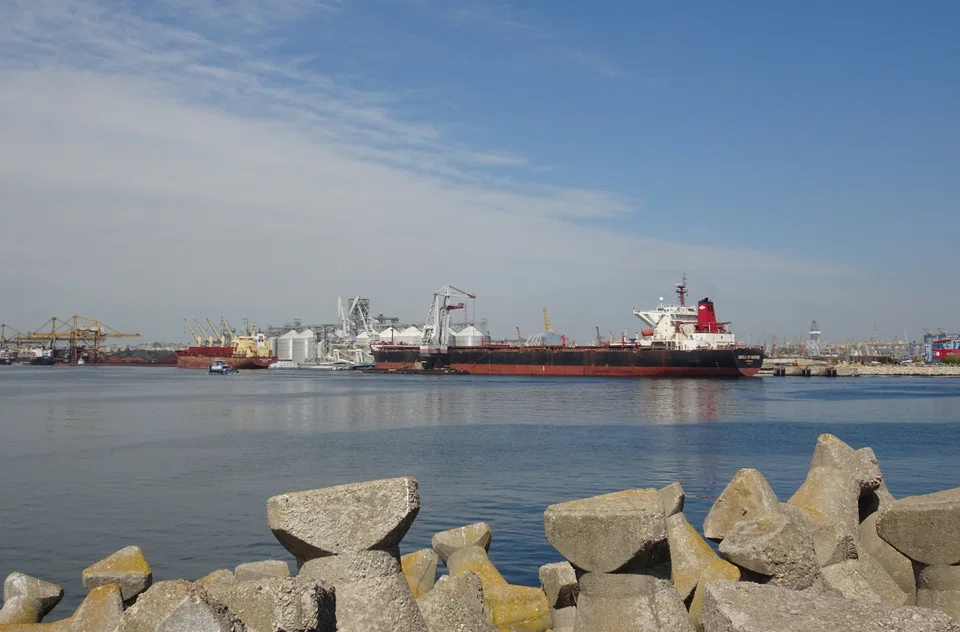
DAVID HUGHES
SHIPPING accidents are far likelier to make news than the achievements of the industry, so it may well come as a surprise to the layman to know that the sector’s safety record has improved significantly over recent years and is actually good now.
This is reflected in the Safety & Shipping Review 2022 by marine insurer Allianz Global Corporate & Specialty (AGCS), which notes that shipping continued its long-term positive safety trend over the past year, but that there is little room for complacency, considering the headwinds blowing — downsides created by Russia’s invasion of Ukraine, the rising number of costly issues involving larger vessels, crew and port congestion challenges triggered by the shipping boom, and managing challenging decarbonisation targets.
Captain Rahul Khanna, global head of Marine Risk Consulting at AGCS, said: “The shipping sector has demonstrated tremendous resilience through stormy seas in recent years, as evidenced by the boom we see in several parts of the industry today. Total losses are at record lows – around 50 to 75 a year over the last 4 years, compared to more than 200 a year in the 90s.”
However, the ongoing war in Ukraine has caused upheaval in the Black Sea and elsewhere; it has worsened the disruption to supply chains, port congestion, and crew-crisis issues created by the Covid-19 pandemic.
Warning flags are also flying over the industry’s response to the shipping boom, such as by changing the use of or extending the working life of vessels. Meanwhile, the increasing number of problems posed by large vessels — fires, groundings and complex salvage operations — continue to dog ship-owners and their crews.
The annual AGCS document analyses reported shipping losses and “casualties” (industry parlance for incidents) among ships exceeding 100 gross tonnage. Last year, During 2021, 54 losses of vessels were reported globally, down from 65 the year before. Given that there were 127 losses in 2012, this was a 57 per cent decline over 10 years. Compare this figure to that in the early 90s, when the global fleet was losing more than 200 vessels a year.
The AGCS report also points out that the losses last year have to be set against the estimated 130,000 ships in the global fleet today; 30 years ago, the global fleet comprised only around 80,000 vessels. The insurer believes that this progress reflects the increased focus on safety measures over time through training and safety programmes, improved ship design, technology and regulation.
The report notes that there have been 892 total losses over the past decade. The seas off Indochina, Indonesia and the Philippines are a global loss hotspot; the area accounted for a dozen — or 1 in 5 losses — last year, and 225 or one in four losses over the last decade. These losses were driven by factors such as high levels of trade, congested ports, older fleets and extreme weather.
Globally, cargo ships accounted for half the vessels lost in the past year, and 40 per cent over the past decade. These vessels were classified as having “foundered”, meaning they sank; in 60 per cent of the cases, this was the main cause of total loss in the past year.
Total loss declined over the past year, but the number of reported shipping casualties or incidents rose. The British Isles accounted for the highest number (668 out of 3,000). Machinery damage was at the root of more than a third of incidents globally (1,311), followed by collisions (222) and fires (178). The number of fires rose by almost 10 per cent.
It would seem inevitable that losses and casualties will climb this year. As AGCS notes, the shipping industry has been affected on multiple fronts by Russia’s invasion of Ukraine, with the loss of life and vessels in the Black Sea, disruption to trade, and the growing burden of sanctions. The industry also faces challenges to its day-to-day operations, with knock-on effects for crew, the cost and availability of bunker fuel, and the potential for growing cyber risks.
Justus Heinrich, AGCS’s global product leader, Marine Hull, said: “The insurance industry is likely to see a number of claims under specialist war policies from vessels damaged or lost to sea mines, rocket attacks and bombings in conflict zones. Insurers may also receive claims under marine war policies from vessels and cargo blocked or trapped in Ukrainian ports and coastal waters.”
The insurer added: “The evolving range of sanctions against Russian interests presents a sizeable challenge. Violating sanctions can result in severe enforcement action, and compliance can be a considerable burden. It can be difficult to establish the ultimate owner of a vessel, cargo or counterparty. Sanctions also apply to various parts of the transport supply chain, including banking and insurance, as well as maritime support services, which makes compliance even more complex.” In other words, marine insurers will now have to be very careful about not selling insurance to Russian shipowners.”
A prolonged war is likely to have deeper consequences, “potentially reshaping global trade in energy and other commodities”. AGCS predicts that an expanded ban on Russian oil could contribute to pushing up the cost of bunker fuel, affecting its availability, and, in turn, potentially pushing ship-owners to alternative fuels.
For many, that would seem to be a silver lining, a move towards decarbonisation. However, insurers are in the business of being professional pessimists. AGCS warns: “If such fuels are of sub-standard quality, this may result in machinery breakdown claims in future.”
You don’t need to be a pessimist to see dark clouds on the horizon right now, but that should not detract from the conclusion that shipping has generally become much safer over recent years.
Decoding Asia newsletter: your guide to navigating Asia in a new global order. Sign up here to get Decoding Asia newsletter. Delivered to your inbox. Free.
Share with us your feedback on BT's products and services