SIA expects healthy passenger demand in near term, but yields may ease as industry capacity rises

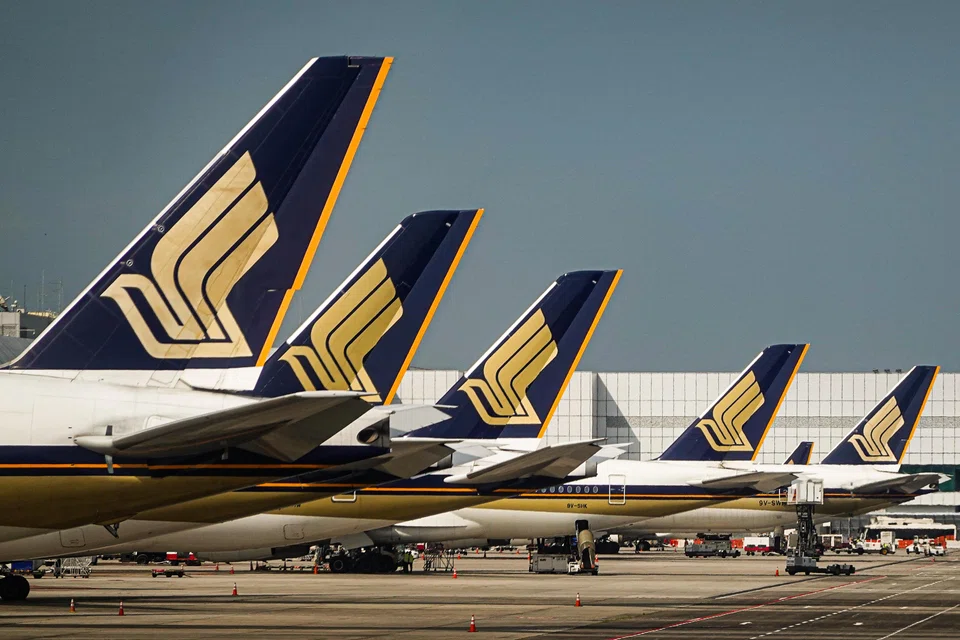
NATIONAL carrier Singapore Airlines (SIA) expects healthy demand for air travel in the two quarters to March 2024. However, it has flagged that significant capacity restoration across the industry, especially in the Asia-Pacific region, could reduce passenger yields.
The airline group is ramping up its passenger capacity, which is expected to reach around 92 per cent of pre-pandemic levels in December 2023, and will achieve a full recovery by March 2025.
SIA gave an update on the group’s strategies and operations at an earnings briefing on Wednesday (Nov 8), a day after its half-year financial results were published.
Lee Lik Hsin, SIA’s chief commercial officer, said that a combination of factors is holding the group back from returning to full passenger capacity soon. The group has a smaller fleet size than before the pandemic, as it has modernised the fleet and decommissioned some older planes.
Demand from the China market has also not fully recovered; the group has not restored full capacity there.
SIA and its budget arm Scoot will fly to 23 destinations in China by December, compared with 25 destinations before the pandemic. The robust demand in the recent quarter was sustained by the rebound in passenger traffic to North Asia, where borders were fully reopened this year, much later than in other regions. The group also restructured its network and stopped flying to destinations such as Wellington in New Zealand, thereby contributing to a lower capacity.
SIA Group’s passenger network covered 119 destinations in 36 countries and territories. As at end-September, its full-service airline was serving 75 destinations, and Scoot, 67. Other airlines are also adding capacity, which could reduce passenger yields. In fact, SIA has already experienced the pressure in its latest results, Lee noted.
For the second quarter to September, group passenger yield was S$0.108 per km, marginally lower than S$0.119 for the year-ago period. “I think that… same pressure on yield is expected to continue into the third and fourth quarter (of the financial year to March 2024) as well. But overall, from a total demand perspective, in respect of filling our flights, we believe that the full financial year will still have a positive picture,” Lee added.
The group posted earnings of S$707.1 million for Q2, up 27.1 per cent year on year from S$556.5 million. The top line rose by 4.3 per cent to about S$4.7 billion from S$4.5 billion. Earnings per share stood at S$0.172, from S$0.086 in the year-ago period. Net asset value per share was S$5.83 as at end-September, lower than S$6.68 half a year ago, due to bond redemption, debt repayment and dividend payment.
Lee said that all regions have posted “good and high” load factors, except for China, where “we can get better load factors”. Load factor refers to the percentage of available seating capacity filled by paying passengers.
SIA has hedged 36 per cent of its projected fuel consumption between October 2023 and March 2024, and around 10 per cent for the period between April 2024 and June 2025. Net fuel expenditure was 13.6 per cent lower year on year in Q2, as fuel prices dropped 25.2 per cent on the year.
SIA shares closed up 0.6 per cent or S$0.04 at S$6.28 on Wednesday; its mandatory convertible bond rose 0.1 per cent or S$0.001, to S$1.093.