

SIA’s dividend capacity will be curtailed if it injects more than expected fund into Air India, says analyst
The Indian airline racks up a wider-than-expected annual loss of more than 220 billion rupees for FY2026

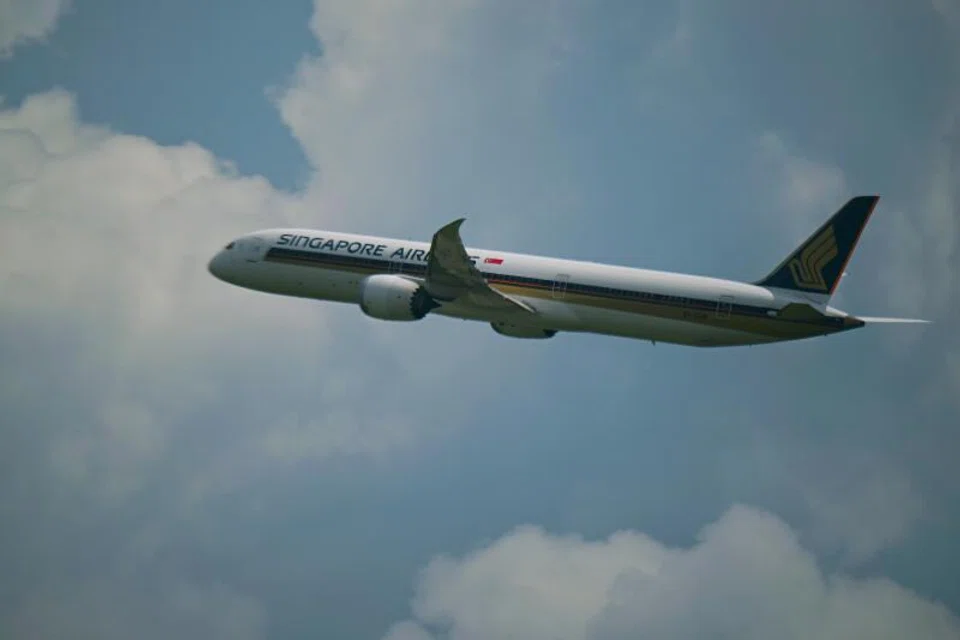
[SINGAPORE] Should Singapore Airlines (SIA) inject capital that is more than expected into its associate company Air India, the move could begin to constrain its dividend capacity, DBS Group Research said in a report published on Wednesday (Apr 15).
The Indian airline had racked up a wider-than-expected annual loss of more than 220 billion rupees (S$3 billion) for FY2026, prompting the company to seek funds from its shareholders, Bloomberg reported.
Air India’s controlling shareholder, Tata Group, as well as SIA – which owns 25.1 per cent of the carrier – are reportedly in talks to provide funding.
The Indian carrier in 2025 was said to require additional funding from SIA, with the implied contribution of S$360 million, which to DBS analyst Jason Sum would appear manageable.
If SIA’s contribution for this round is likely higher than initial expectations, Sum said, this would increase risk to its dividend capacity, particularly in the context of rising earnings pressure for the Singapore group.
SIA’s total dividend stood at S$0.08 per share for the first half of FY2026 to September and it also proposed a special dividend package of S$0.10 per share yearly over three financial years. The national carrier posted a 67.9 per cent drop in net profit to S$238.5 million, weighed down by Air India losses.
Sum also said that Air India’s losses for FY2026 were materially wider than earlier expectations, signalling a sharper deterioration in operating performance.
“The scale of losses reflects multiple overlapping pressures, including higher operating costs from airspace disruptions, reduced international capacity following the Boeing 787 incident, and continued strain from the Middle East conflict,” Sum added.
Also, Air India’s network is heavily exposed to the warzone, while its weaker pricing power and an unclear hedging profile limit its ability to offset elevated fuel costs. Yet, the carrier has an order backlog of 540 aircraft – representing significant funding requirements.
Sum, nonetheless, has a “hold” call on SIA shares with a target price of S$7.50 for now.
Shares of SIA were up S$0.03 or 0.5 per cent at S$6.60 at market close on Thursday.






