Singapore-based airlines cut flights to HK, offer lower fares
Ongoing protests in Hong Kong have taken their toll on Singapore-based carriers flying to Hong Kong
Singapore
SINGAPORE-BASED airlines plying the Singapore-Hong Kong route have cut flight frequencies in response to weaker passenger demand, as a direct result of the ongoing protests in Hong Kong.
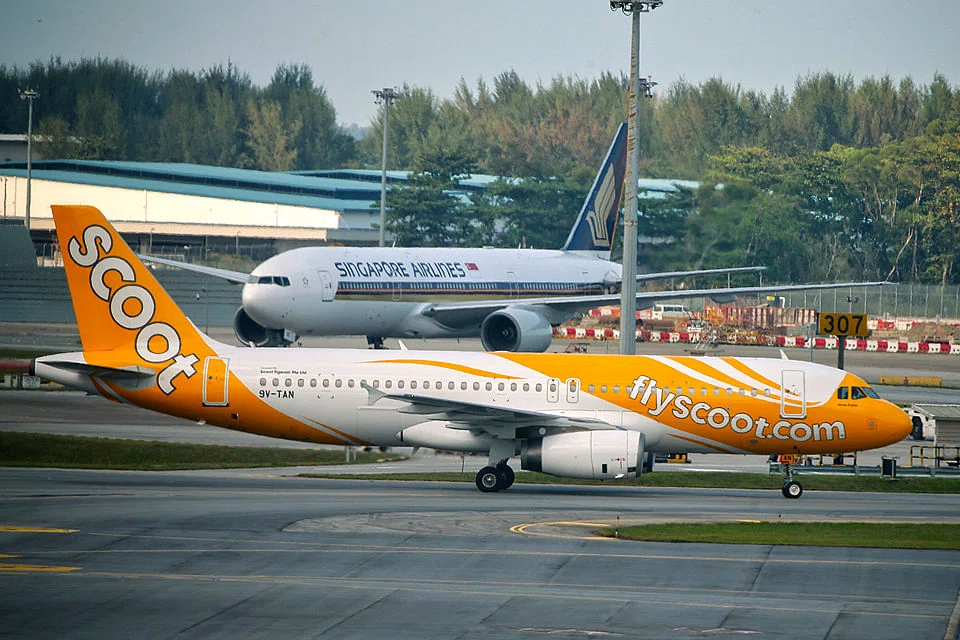
Singapore Airlines, Scoot and Jetstar Asia have been making adjustments to their respective flight operations. With Hong Kong protests now lasting for the seventh month, SIA has cut the number of daily flights to Hong Kong from seven to six, noted Brendan Sobie, an independent analyst at Sobie Aviation. Scoot said that in recent months it has been running on average 13 to 15 weekly flights to Hong Kong, from 21 previously. Jetstar Asia said it has reduced by about one return service per week, from the normal seven weekly flights.
Singapore Airlines declined to provide detailed information on specific routes, only saying that it has seen a decline in demand for travel to Hong Kong and adjusted its flight capacity accordingly.
Mr Sobie estimates that there has been a 15 per cent decrease in capacity, given a limited change to smaller aircraft by airlines.
The outlier appears to be Cathay Pacific.
"Cathay Pacific has been able to maintain capacity on the Singapore-Hong Kong route by relying more heavily on sixth freedom traffic beyond Hong Kong," said Mr Sobie. "Singapore-based carriers do not carry significant traffic beyond Hong Kong with the exception of one of SIA's flights which continues to San Francisco. Therefore the Singapore-based carriers are unable to match Cathay Pacific in offsetting declines in local Singapore-Hong Kong traffic with more sixth freedom traffic beyond Hong Kong."
According to data from OAG, an air travel data provider, while Cathay Pacific has maintained flight frequency, it has upgauged from Airbus A330 or Airbus A350 to Boeing 777 aircraft, which have a bigger capacity, for some schedules. This has allowed it to transport more passengers.
"Airlines monitor the market and demand and adjust their schedules accordingly, sometimes on the day of departure," said OAG head of Japan and Asia-Pacific Mayur Patel. "We have noticed that Cathay Pacific's overall traffic (excluding China) has held up from major markets as it provides feeder traffic across its network."
Lower air fares can help to stimulate demand, with some full service carriers known to be offering just over S$200 for return flights from Singapore to Hong Kong. The fares have since risen with the start of the school holidays.
"However, I haven't seen any data providing figures on how much the average fare has decreased," said Mr Sobie. Fewer flights also help to raise the passenger load factor on each trip, although airlines have been tightlipped on changes to the load factor, if any.
On the future outlook for the Singapore-Hong Kong route, Mr Sobie believed short-term prospects remain challenging.
He said: "I think both the route and the market will recover eventually, but how long this takes is hard to predict, as it is contingent on the situation in Hong Kong stabilising."
Mr Sobie added that after Chinese New Year, SIA will downgauge one daily Singapore-Hong Kong flight from Airbus A380 to Boeing 777-300ER, marking a further capacity decrease and the first time in several years that SIA has not operated its flagship A380 on the route.
Similarly, Mr Patel did not see the situation improving anytime soon, though he highlighted the unique location of Hong Kong as a key regional hub and its resilience post-Asian Financial Crisis in 1997 and Sars in 2003.
Even though the Hong Kong Civil Aviation Department has temporarily suspended the use-it-or-lose-it slot rule to help airlines through this period of lower demand, "we do believe that airlines will adopt a 'wait-and-see' approach, and will add capacity when they sense that demand has firmed up," said Joshua Ng, engagement manager, Alton Aviation Consultancy.
Cathay Pacific declined to share specific route traffic with The Business Times. However, it told BT that it will be reducing overall seat capacity year on year by 1.4 per cent, as it reels from lower tourist arrivals to Hong Kong. This is in contrast to the initially announced target of an increase by 3.1 per cent, back in September.
Alan Lee, head of marketing and digital sales, Cathay Pacific Airways South-east Asia, said: "We don't believe that in the current environment we can continue to operate a full schedule profitably."
Hong Kong protests erupted in June over a controversial, now-withdrawn extradition bill, which could have transferred fugitives to jurisdictions Hong Kong does not currently have an agreement with, including mainland China. The protests have since morphed into an anti-government demonstration, calling for greater democracy and an independent commission of inquiry into alleged police violence, among other demands.
READ MORE: No store closures or staff cuts in HK with pick-up in sales: BreadTalk