

Singapore favoured by Muslim travellers amid surge in AI-assisted holiday planning: report
The city-state takes the top spot among non-OIC destinations; Malaysia ranks first globally

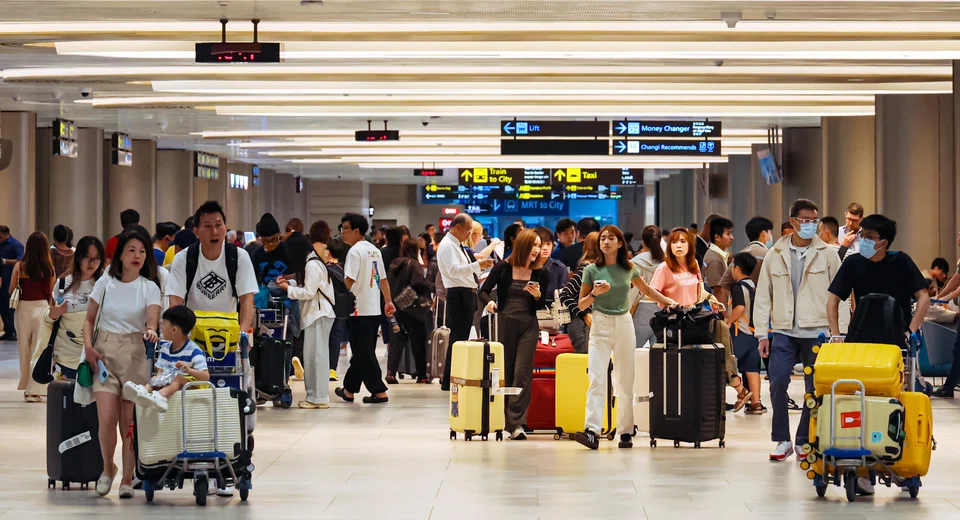
[SINGAPORE] Singapore remains a top destination for Muslim travellers, even as artificial intelligence reshapes the global tourism sector.
Singapore ranked 11th globally and first among non-Organisation of Islamic Cooperation (OIC) nations in Mastercard and CrescentRating’s Global Muslim Travel Index (GMTI) released on Thursday (Jun 18).
CrescentRating is a Singapore-based research organisation specialising in halal travel, a subcategory of tourism geared towards those who abide by the rules of Islam.
The city-state secured a score of 73 on the index, driven “by its halal culinary ecosystem, strong safety standards, multicultural environment and smart destination infrastructure”.
Four in five travellers now use AI tools to plan, evaluate and discover their journeys, the index showed.
“As AI becomes more embedded in travel planning, destinations and businesses need to make trusted information, secure payments and Muslim-friendly services easier to discover and act on,” said Aisha Islam, senior vice-president of Mastercard’s South-east Asia customer solutions centre.
The latest GMTI evaluated 150 destinations, representing more than 98 per cent of global Muslim visitor arrivals.
Asia remained the "centre of gravity” for the market, with almost 128 million Muslim arrivals at a 20.8 per cent market penetration.
Malaysia retained the top spot globally for the 11th consecutive year with a score of 83, anchored by its highly developed halal tourism sector and the Visit Malaysia 2026 agenda. (*see amendment note)



Indonesia rose three places to share the second spot globally with Turkey and Saudi Arabia, with each scoring 79.
Among non-OIC destinations, Hong Kong climbed to second place, while Taiwan and the UK tied for third.
South-east Asia wins on travel volatility
Amid ongoing global volatility, including rising fuel costs, geopolitical tensions and airspace disruptions, there has been a shift towards “closer, safer and more predictable” destinations, the GMTI showed.
Instead of cancelling trips, travellers are opting for “home-continent” mobility.
South-east Asia has emerged as a primary travel corridor for Asian Muslim travellers in 2026 due to the region’s “proximity to major source markets, strong air connectivity, established halal ecosystems and rich cultural appeal”.
This regional momentum was highlighted by individual growth spots, with Mindanao in the Philippines recognised as the most promising non-OIC Muslim-friendly region and Jawa Barat in Indonesia taking the top spot for OIC regions.
*Amendment note: Updated scores for Singapore and Malaysia from GMTI.
Decoding Asia newsletter: your guide to navigating Asia in a new global order. Sign up here to get Decoding Asia newsletter. Delivered to your inbox. Free.
Copyright SPH Media. All rights reserved.

