Singapore has spent S$250m so far on high-speed rail

Minister Khaw says it is in Malaysia's interest to inform Singapore officially on the fate of the project, since Singapore's incurred costs will add to compensation payable by KL

Christopher Tan
Published Mon, Jul 9, 2018 · 09:50 PM

    Singapore

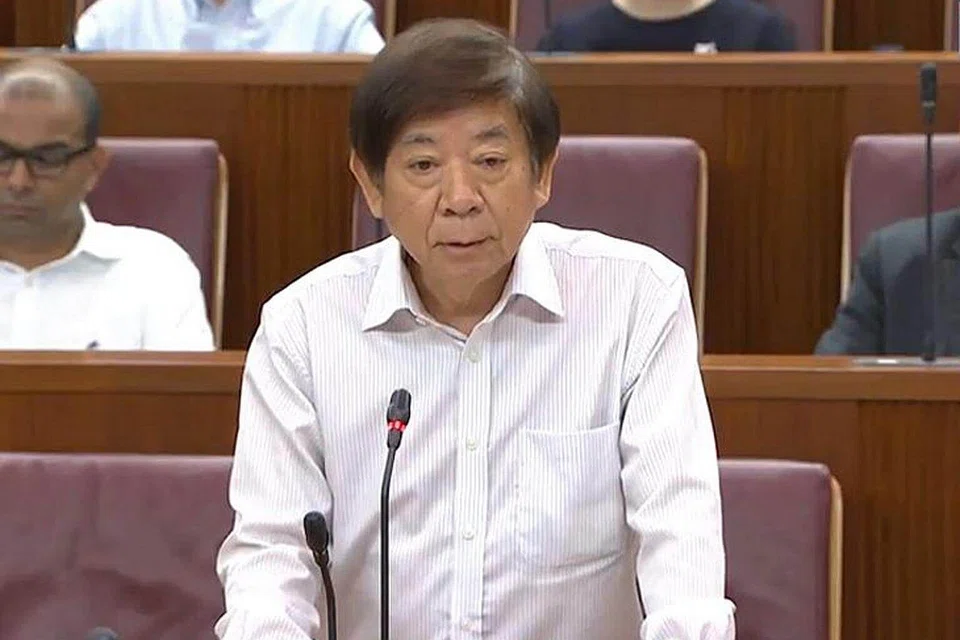
    SINGAPORE has already spent more than S$250 million on the Kuala Lumpur-Singapore high-speed rail (HSR) project, and is likely to expend another S$40 million or so by the end of this year, said Transport Minister Khaw Boon Wan in Parliament on Monday.

    Replying to questions from several MPs on the status of the HSR, he revealed that based on preliminary estimates, the costs incurred had "already exceeded S$250 million".

    "This is actual money that has already been spent, our taxpayers' money," he said. "We can recover value for some of the expenditure, even if the HSR project does not proceed. But a significant amount which has been spent will be completely wasted expenditure, if the project does not proceed."

    Mr Khaw said the expenditure included land acquisition, setting up of an infrastructure company - SG HSR Pte Ltd - and the formation of a team of more than 100 specialists in the company "to build, own, fund and maintain the HSR civil infrastructure in Singapore".

    By May, SG HSR had called five tenders to construct civil infrastructure within Singapore.

    The minister said the bilateral agreement with Malaysia "provides for how compensation is to be dealt with".

    Mr Khaw added that Singapore sent a diplomatic note to Malaysia on June 1 "to seek immediate clarification on Malaysia's position".

    "To date, Singapore has still not received a reply from the Malaysian government," he said, adding that public statements made by Malaysian ministers and by Prime Minister Dr Mahathir Mohamad in various press interviews on the termination of the project "have not been followed through with any official communication to us".

    Mr Khaw said: "At this point, therefore, we have been left with no choice but to continue performing in accordance with the bilateral agreement, and thus continue to incur more costs."

    In June, Singapore incurred more than S$6 million; and it expects to incur another S$6 million in July.

    "These costs will increase rapidly with time," Mr Khaw said. "From August to end-December 2018, we will need to spend at least S$40 million more."

    "Because the costs that we have incurred will add to the total amount of compensation, it is in Malaysia's own interest to officially inform us of its position on the HSR Project early, to minimise the amounts involved," Mr Khaw pointed out.

    The minister said he highlighted this consideration to Malaysian Economic Affairs Minister Mohd Azmin Ali "when he called me on June 6".

    Also on Monday, Foreign Minister Vivian Balakrishnan told the House that should Malaysia cause the HSR project to be terminated, Singapore will deal with the question of compensation for costs incurred in accordance with the binding agreement signed with Malaysia and international law.

    "The Singapore government has a duty to safeguard public funds by recovering these costs," he said.

    Dr Balakrishnan in his speech also stressed the importance of maintaining the sanctity of international law and agreements.

    Meanwhile, Second Finance Minister Lawrence Wong said the underlying rationale for the upcoming Goods and Services Tax (GST) hike is not affected by the outcome of the HSR project, as the planned increase was never meant to finance lumpy investments in infrastructure.

    He was responding in Parliament to Workers' Party chief Pritam Singh, who wanted to know if the possibility of the HSR being scrapped would have any implications on the government's plans to raise the GST from 7 per cent to 9 per cent some time between 2021 and 2025.

    Mr Wong said: "Mr Singh has tried to link the prospect of the HSR project being cancelled to the government announcement to raise GST. But these are two separate matters. The increase in GST was never meant to finance lumpy investments in infrastructure in the first place. We have already made this clear in the Budget statement."

    Mr Wong noted that the main drivers for rising government expenditure in recent years, and in the years to come, are healthcare, security and social spending - "broad-based, structural increases in recurrent spending".

    Healthcare spending, in particular, is expected to rise sharply over the coming years due to the rapidly ageing population.

    Singapore must raise recurrent revenues - of which the planned GST hike is one component - to pay for these ongoing needs year after year.

    "This is the responsible way to ensure that every generation pays for its own spending in a sustainable manner," said Mr Wong.