Singapore, Malaysia ports could come under ‘massive pressures’ from Red Sea diversions: analyst

Tay Peck Gek
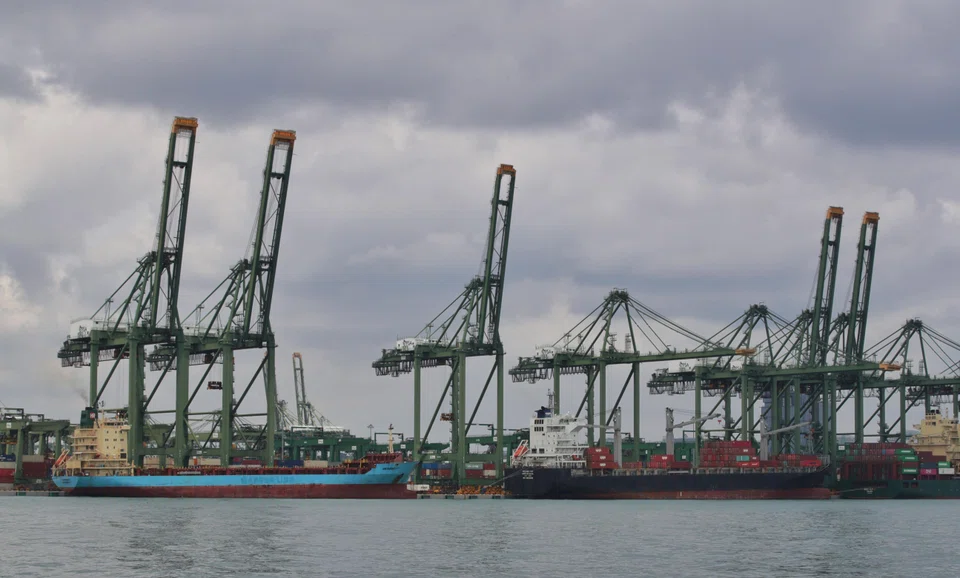
A VETERAN shipping analyst has warned that ports in Singapore and Malaysia could come under “massive pressures” amid diversions of shipping routes from the Red Sea. Companies hoping to ship goods from Asia to Europe in 2024 could also face a shortage of vessels.
Lars Jensen, chief executive of consultancy Vespucci Maritime, said there would be delays caused by both reroutings and time taken in a transhipment port turning out to be “a lot longer” than anticipated.
He was speaking on Thursday (Dec 21) at a webinar hosted by freight forwarder Flexport to discuss the impact of the detour that hundreds of vessels are making to avoid Yemeni rebel attacks in the Red Sea.
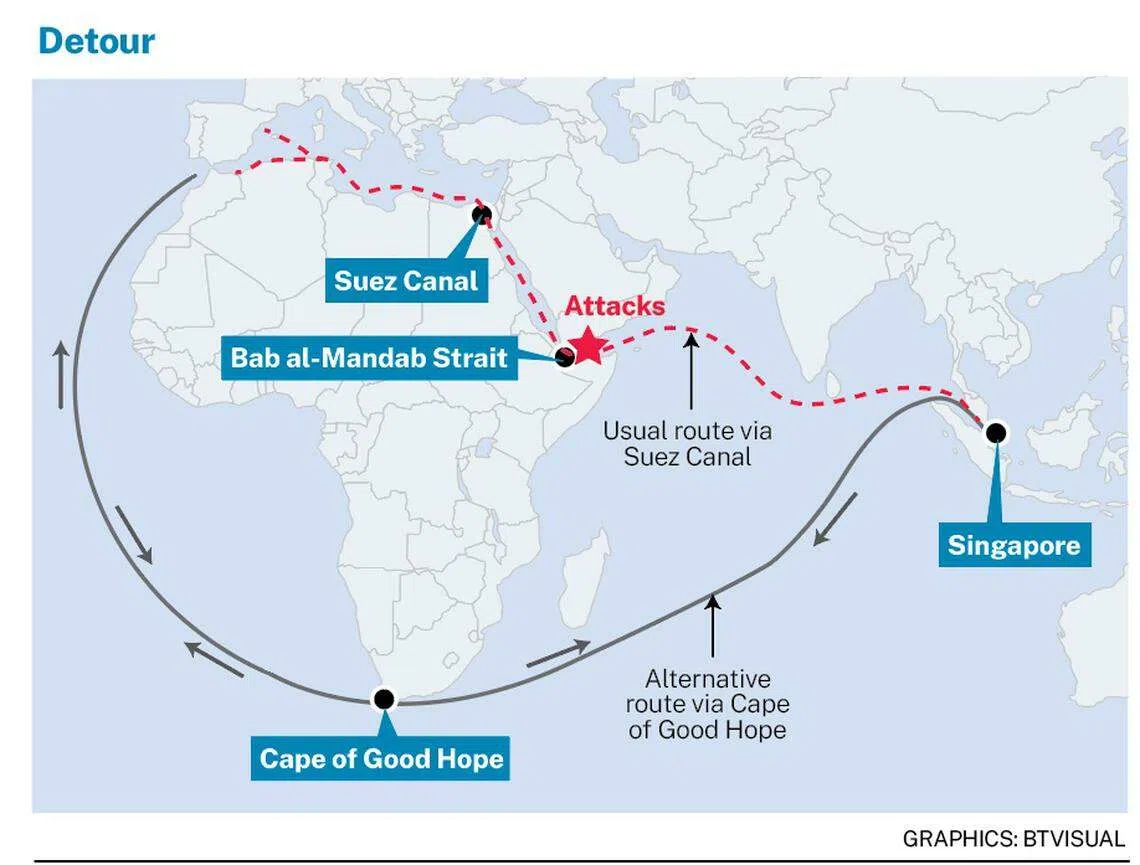
Vessels are being forced into a longer route via the Cape of Good Hope in Africa instead of the Suez Canal in Egypt for Asia-Europe shipments.
Jensen highlighted the Port of Singapore as well as Malaysia’s Port of Tanjung Pelepas and Port Klang as the transhipment ports in Asia expected to experience the biggest bottlenecks, as shipment schedules are expected to be in disarray.
“All the networks (will) change at the same time,” he said. “Coming out of Asia, I would make sure that… if I have to reassess and readjust, those are the three ports we’ll do it in, just before leaving Asia.”
Singapore became the “go-to” port for shipping lines to catch up on lost time and connections in 2021, when the container ship Ever Given blocked the Suez Canal for a week and resulted in a drastic drop in shipping schedule reliability.
The Maritime and Port Authority of Singapore told The Business Times on Thursday that it has issued an advisory to shipowners, managers, operators and masters of Singapore-flagged ships to review their ships’ security plans and implement necessary risk-mitigating measures when trading in the Red Sea area.
It has not received requests for assistance from Singapore-flagged vessels navigating the waterway off Yemen, and the Port of Singapore remains unaffected, the authority said.
Jensen said another key issue would be fewer vessels returning to Asia for the peak season in January leading to the Chinese New Year.
“They will now be arriving at least a couple of weeks late out in Asia. These vessels were originally supposed to be out in Asia some time during, say, the middle of January, in time for the usual seasonal pickup to Chinese New Year. These vessels are now not going to be there.”
Nathan Strang, a director for ocean freight at Flexport, said 136 vessels have been diverted from the Red Sea to the Cape of Good Hope, while 42 have paused their journeys.
These are fewer than half of the vessels that use the East-West routing, as the remaining vessels had either cleared the Red Sea or not started their voyages.
Adding to pressures for the industry is the European Union Emissions Trading System, which will take effect for ships on Jan 1. The longer route taken in the detour around Africa will mean a massive increase in carbon taxation that the carriers will have to pay, Jensen noted.
This will cause freight rates on the Asia-to-Europe routes to rise.