Singapore port sells more marine fuel in March despite war-induced tight supply
On a year-on-year basis, the marine fuel volume sold is up 6.6%

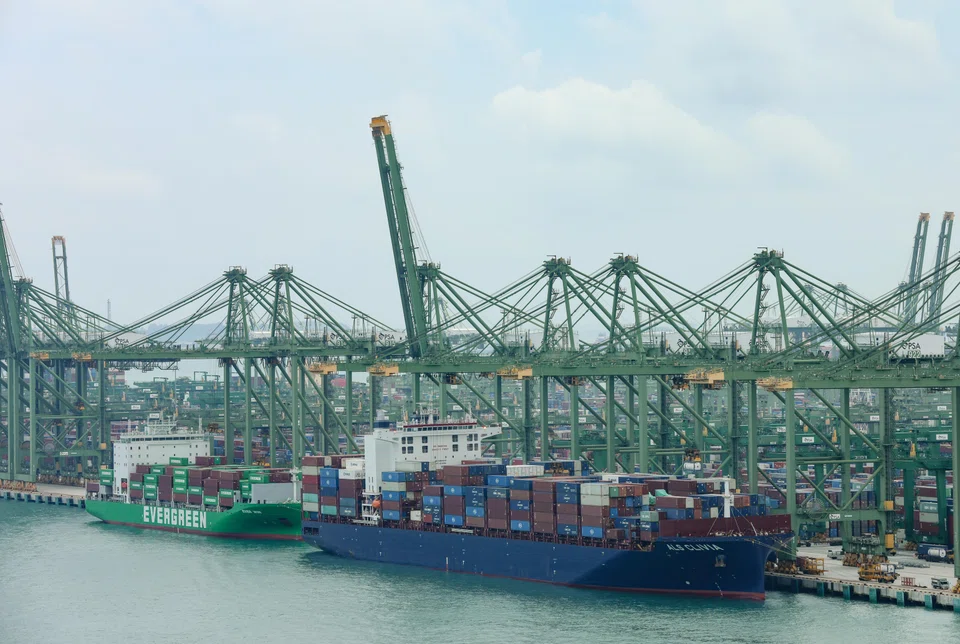
[SINGAPORE] Singapore, the world’s largest refuelling hub for ships, sold marginally more bunker in March despite a constrained supply of marine fuel in Asia caused by the effective closure of a Middle Eastern oil route.
According to statistics from the Maritime and Port Authority of Singapore (MPA) published on Tuesday (Apr 14), bunker sales stood at about 4.8 million tonnes in March, up 1.9 per cent from nearly 4.7 million tonnes in February.
On a year-on-year basis, the marine fuel volume sold was up 6.6 per cent.
This was achieved amid a tight supply of crude oil due to the closure by Iran of the Strait of Hormuz after it was attacked by US and Israel. Twenty per cent of global crude oil volume would have normally flowed through this passage.
Since Israel and the US launched their war on Iran on Feb 28, spot prices for bunkers delivered in Singapore have more than doubled for key grades, including high-sulphur fuels, low-sulphur fuels and marine gasoils.
The number of oil-tanker arrivals increased to 1,651 with 67.3 million gross tonnage in total during the month, versus 1,503 with a total of 57 million gross tonnage in February. In March last year, there were 1,502 arrivals with 62.9 million gross tonnage.
Tan Hua Joo, an analyst at container shipping intelligence provider Linerlytica, told The Business Times: “Bunker sales depend on vessel traffic, and this has increased despite the Iran war due in part to vessels and cargo being diverted away from the Persian Gulf.
“There is sufficient bunker supply and the situation remains under control with no indications of any imminent bunker shortage.”
Ivan Mathews, head of Asia-Pacific analysis at Vortexa – a data and analytics platform for energy and freight industries – said that demand diversion from Middle East bunkering ports, such as Fujairah and Khor Fakkan, to Singapore has more than offset lower spot purchases in the Republic due to higher bunker prices.
“Looking ahead, marine fuels demand in April could remain supported due to demand diversion from the Middle East Gulf. Downside risks include weaker seaborne trade resulting from the conflict, which would lower bunker demand,” he added.
Last month, MPA told BT that Singapore’s bunker supply comes from several sources and that there is enough supply to meet demand.
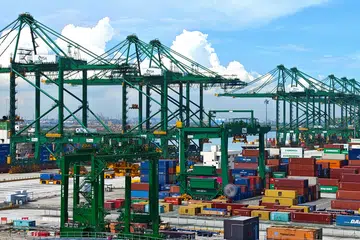
Meanwhile, total container throughput in March rose 13.9 per cent month on month and 4.3 per cent year on year to about 3.9 million twenty-foot equivalent units (a measure of capacity). Total cargo recorded an 11.6 per cent rise over the month and a 0.7 per cent increase year on year to 52.7 million tonnes.
A US blockade of the Strait of Hormuz began on Monday, after ceasefire negotiations with Iran did not lead to an agreement. The impact on the container shipping market is, however, “negligible”.
Tan noted that vessel traffic has been largely limited to Iranian-linked ships over the past six weeks with just four outbound passages made by neutral operators since the war started.
TRENDING NOW
Why US$100 oil, 5% US yields affect Singdollar, ringgit differently vs other Asean currencies
Singapore fintechs struggle to find finance and tech talent
Despite the de-dollarisation debate, demand for dollar liquidity in Asia is growing
Why Tan Aik Keong of digital solutions specialist Agmo wants to make himself less indispensable