

Singapore's air cargo community ready to ship ultra-cold Covid-19 vaccines
 Add BT as a preferred source
Sharon See
DeeperDive is a beta AI feature. Refer to full articles for the facts.
SINGAPORE'S air cargo community is ready for the transportation and distribution of Covid-19 vaccines, the Changi Ready Taskforce announced on Tuesday, as it detailed its capabilities in handling cargo with strict temperature requirements.
Led by Civil Aviation Authority of Singapore and Changi Airport Group (CAG), the task force is a public-private collaboration that comprises 18 members, including cargo handlers, airlines and freight forwarders.
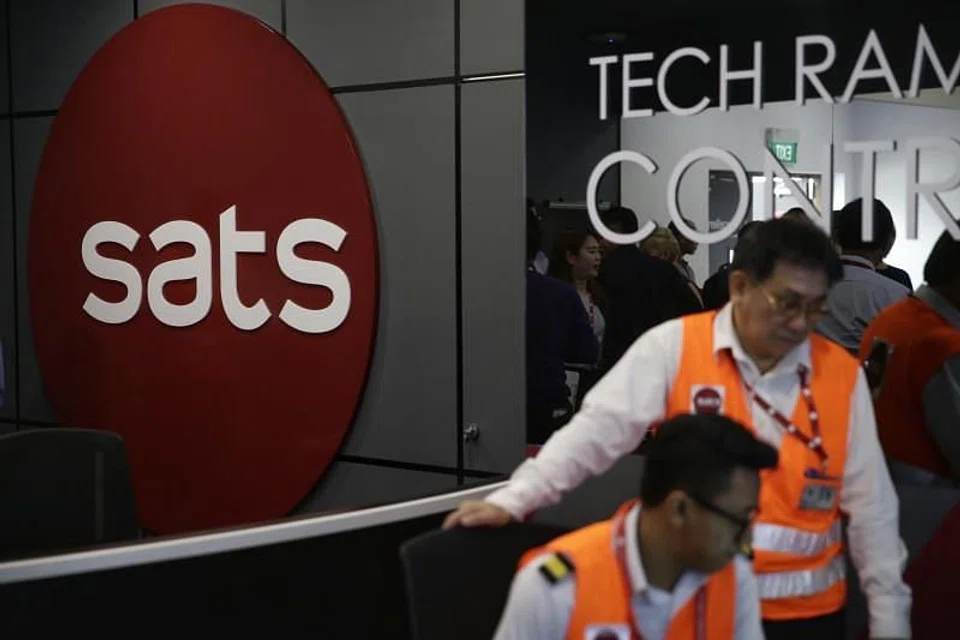
CAG's cargo handlers, dnata and SATS, have been enhancing their cool chain infrastructure and equipment over the years.
dnata's CoolChain and SATS' Coolport, which consist of controlled warehouses with adjustable temperature ranges between -25 and 25 degrees Celsius, together cover more than 9,000 square metres, according to to CAG.
They have both also introduced cool dollies - temperature-controlled containers designed specifically for temperature-sensitive goods that allow for cool chain integrity and visibility on the tarmac - between the aircraft and their temperature-controlled warehouses.
These preparations are made with several promising Covid-19 vaccine candidates requiring storage at extremely cold temperatures. One candidate by American drug maker Pfizer requires storage of -70 degrees Celsius, while US pharmaceutical company Moderna's vaccine needs to be stored at -20 degrees Celsius.
Navigate Asia in
a new global order
Get the insights delivered to your inbox.
Dry ice is deemed an important ingredient in tackling the problem of ultra low temperatures, and SATS, which also has a food catering arm, has been dipping into its expertise in this area.
"That gives us an advantage because we produce our own dry ice. So that ensures an uninterrupted supply of dry ice to ensure that our vaccine handling, according to the requirements, are not disrupted," Nazri Othman, senior vice-president of cargo services at SATS, told reporters during a briefing.
Although the Covid-19 pandemic has brought travel to a standstill, CAG said it has seen its weekly cargo flights triple to more than 950 flights compared to end-2019, the company said. Changi Airport is now connected to about 80 cities by weekly cargo flights.
Even so, the boost in revenue that could come from vaccine transportation is unlikely to bring both CAG and national carrier Singapore Airlines back in the black for now, with cargo flights yielding lower margins than passenger flights.
"There's also a very clear humanitarian reason, where we want to make this process as efficient as possible, so that the vaccine can be transported safely to people who need them," Lim Ching Kiat, managing director of airhub development at CAG, said.
"(Covid-19) has also disrupted Changi Airport flights quite significantly, so the key to traffic recovery also comes in terms of widespread (distribution) of the vaccine," he added.
Decoding Asia newsletter: your guide to navigating Asia in a new global order. Sign up here to get Decoding Asia newsletter. Delivered to your inbox. Free.
Copyright SPH Media. All rights reserved.
TRENDING NOW

Shelving S$5 billion office redevelopment plan proved ‘wise’ as geopolitical risks mount: OCBC chairman

OCBC is said to emerge as lead bidder for HSBC Indonesia assets

Middle East-linked energy supply shocks put Asean Power Grid back in focus

Eurokars Group introduces rental car franchises Enterprise Rent-A-Car, National Car Rental, and Alamo to Singapore

