

Singapore's grip on bunkering market challenged by China
Singapore
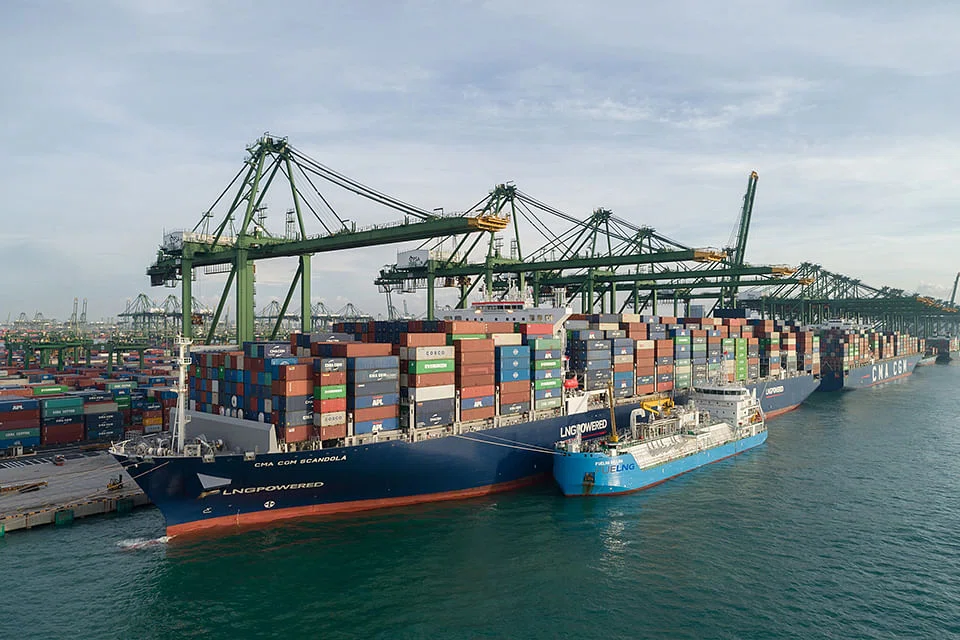
SINGAPORE is facing the greatest competition yet to its status as the dominant marine fuel supplier in Asia, as China lures more ships to its shores following a rapid expansion of its port and refining facilities.
China's marine fuel sales, known in the industry as bunkering, have almost doubled over the past five years as it banks on attracting ships headed for ports in nearby major economies such as South Korea and Japan.
Singapore still has a commanding position as the top supplier to a sector valued at over US$30 billion in Asia, but China's growth in this arena is accelerating.
The epicentre of China's bunkering is Zhoushan, an archipelago to the south of Shanghai on the east coast. Some of the nation's newest and biggest crude oil refineries are being built in the area; the Beijing government has also introduced tax incentives to make Chinese fuels more competitive.
"Singapore has had an edge over other Asian ports on all parameters," said Jayendu Krishna, director at Drewry Maritime Advisors. "It continues to be so today. However, other ports have been trying to catch up. Zhoushan will certainly capture a share of the vessels from other north east Asian ports."
Singapore, also the world's biggest ship refuelling hub, sold about 50 million tons of bunker fuel last year, or a fifth of the global total. Industry consultant OilChem estimates China's sales rose for a fifth straight year to 16.9 million tons. SeaCred, a marine intelligence agency, valued the Asian bunker fuel market at US$31 billion to US$32 billion last year.
The world's busiest ports are in China, thanks to its massive manufacturing industry. Boosting its bunkering capabilities adds clout to supporting businesses. The government in Zhoushan is spending 520 million yuan (S$109.2 million) to expand the anchorage and build new shipping channels in Zhoushan, while refiners are pumping out higher volumes of low-sulphur fuel oil, now essential under new global rules that require ships to use cleaner fuels.
Zhang Xiaoli, a ex-official with the customs authority in Zhejiang province, which includes Zhoushan, told an industry meeting in June: "China's bunkering business is closely catching up with Singapore's." She predicted that China's marine fuel sales would be 40 per cent of Singapore's this year - or about 20 million tons based on 2020 data.
China has issued more than 10 bunkering licences to companies operating in the free-trade zone of Zhoushan, and has also introduced a low-sulphur fuel oil (LSFO) futures contract to the Shanghai International Energy Exchange to improve transparency on pricing. The actual LSFO fuel being sold at the port was at US$536 a ton on Tuesday, US$3 higher than in Singapore; in April, this fuel was cheaper than in Singapore, said the Marine Bunker Exchange.
Zhoushan has been more competitive with its prices this year and Stena Bulk vessels travelling to China will likely utilise the port for refuelling more often, said Yvonne Rittfeldt, head of bunker procurement at the shipping company, which transports crude and refined products. However, Singapore is more reliable with its efficient and timely delivery of fuel, she added.
Singapore has geographical superiority where it counts. It sits at the crossroads of a centuries-old trade route that links the region to Europe, the Middle East and the US Gulf Coast. The construction of South-east Asia's first container port in 1972 helped the city-state map a path to the top marine fuel supplier spot; the city-state is now planning for the world's biggest automated terminal.
Singapore has a vast refining and storage network to keep the steady stream of vessels refuelled. It has also bolstered its credentials around transparency recently. Strict measures for monitoring bunker fuel deliveries were introduced last year, following on from the addition of flow meters in 2017, which gives shippers assurance that the quantity of fuel they purchased will be delivered.
Victor Shum, vice-president of energy consulting at IHS Markit, said: "The regional bunker fuel pie is big enough to support growth for key ports, but Singapore will remain the main bunkering hub in the foreseeable future." BLOOMBERG
TRENDING NOW

Higher rates, weaker spending: Is the Philippines entering stagflation?
Ex-Nvidia CEO misled top lawyer on affair with Chinese businesswoman, sources say

‘I’ll be buying more’: Singapore investors pour into Nvidia shares on Jensen Huang’s exit

Nvidia approaches Arm CEO Haas as employees seek Huang's return, reports say

