

Soaring COE prices may be roadblock for China EVs in Singapore

Tay Peck Gek
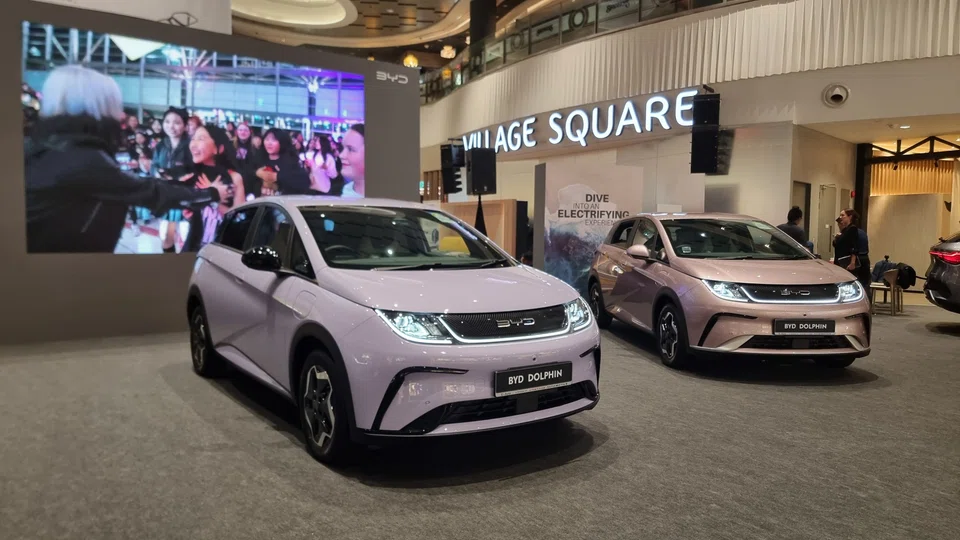
CHINA’S electric vehicle (EV) brands that have made inroads into Singapore may find a new obstacle in their way – the currently sky-high certificate of entitlement (COE) prices, industry watchers said.
China’s BYD has already overtaken America’s Tesla to become the best-selling EV brand in Singapore this year. Taken collectively, however, China’s EV brands are the second most popular, after the stable of German EV brands.
According to Land Transport Authority statistics, German brands (including BMW and Mercedes) accounted for a combined 1,110 new passenger EVs registered in the first nine months of this year. Chinese brands came in second with 1,080, followed by US brands with 835.
Chinese brands include those that were originally European, but are now Chinese-owned, such as MG. US brands include those with European roots, but are now in the stable of American automakers.
Vincent Su, an analyst at investment research company Morningstar, said China’s automakers have started to look for growth beyond their domestic market, where penetration of EVs and hybrid automobiles has surpassed 30 per cent.
But in their quest to expand, China’s brands have to overcome a significant hurdle in terms of marketing and design, said Walter Theseira, an associate professor of economics at the Singapore University of Social Sciences.
China’s global reputation in engineering or design is not as strong as that of Germany or Japan, he added. China also has “little brand equity, compared with global automakers with decades of brand recognition”.
Prof Theseira pointed out that Singapore buyers tend to be brand conscious. However, if the COE of a car alone exceeds S$100,000 – before even factoring in the cost of the car and taxes – the value-driven buyers stay away.
“Many consumers are cautious about making a huge investment in a new brand, with no established reputation for resale value, after-sales support or reliability,” he said.
Jochen Siebert, managing director of JPW Asia Consulting, said the price of a vehicle is less important when COE prices are high. He suggested that Singapore’s rising affluence would increase the market share of the premium car market.
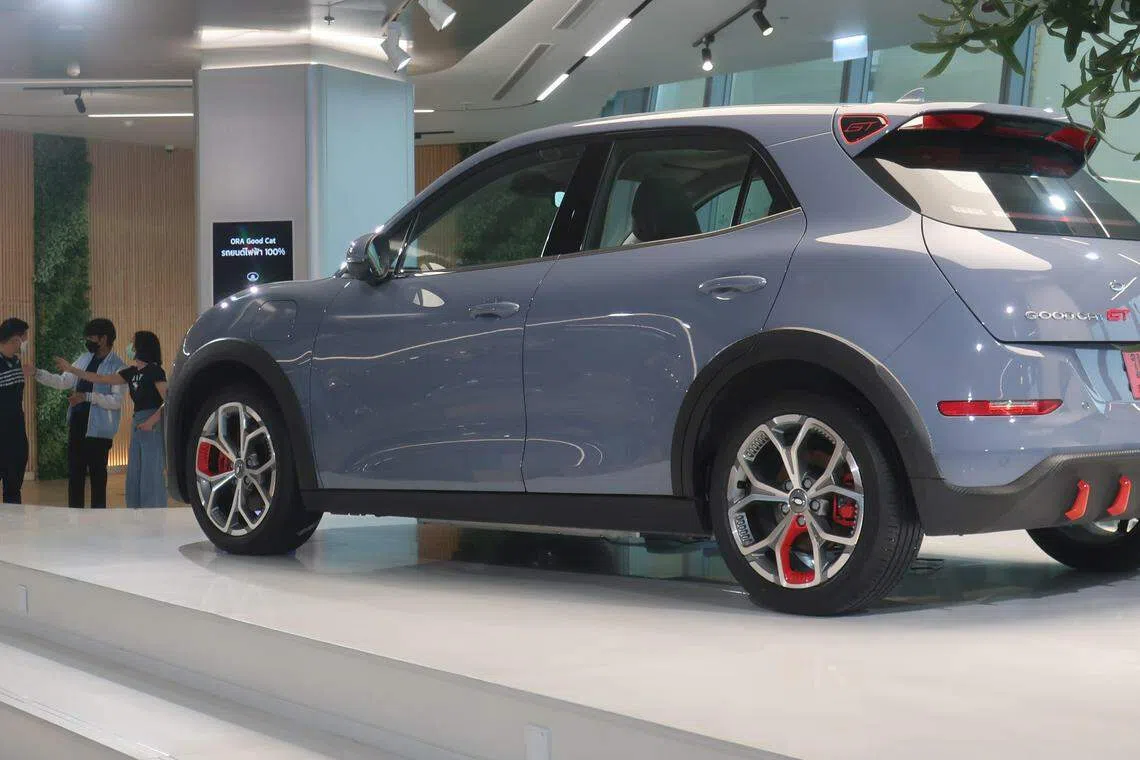
The Chinese EV models available in Singapore are seen as being positioned for the masses, and may face an uphill task in capturing market share unless they roll out premium models and raise their profile, he added.
Siebert, whose consultancy has conducted nearly 300 market-research studies in the automotive industry, said a hefty investment is required to bring a brand to fruition, grow share and build after-sales service.
“I don’t think every Chinese brand is willing to do that in a market as small as Singapore’s; let’s not kid ourselves.”
Success in Singapore
But the Singapore market could be an important one for China’s EV makers.
“Singapore has always been seen as a gateway to the rest of South-east Asia. This is evident in the many new-market-brand entrants in recent times. With our lighthouse effect, it is important for any brand that has ambitions in this region to continue to invest in Singapore,” said Michael Wee, managing director of distributor Eurokars EV.
Eurokars is the distributor for MG, a British brand now owned by China’s SAIC Motor.
Wee said substantial resources have been dedicated to building the MG brand and making it a success in Singapore.
“We have a long legacy, and the brand will be celebrating its 100-year anniversary in 2024. For us, it is more an effort to re-acquaint with those who still fondly remember the MG brand and also the new generation of buyers,” he added.
Siebert, the automotive consultant, thinks BYD has the best chance of success among the Chinese EV makes, thanks to its deep pockets.
The automaker, in a tight race with Tesla for the title of the world’s top EV seller, raked in 6.8 billion yuan (S$1.3 billion) in earnings for the quarter to June.
Another brand with potential is Polestar, he said. The Swedish EV brand was acquired by Volvo, which is in turn owned by China’s Zhejiang Geely Holding Group.
Siebert said of Polestar: “It’s actually based on Volvo’s technology.”
Adele Lee, assistant general manager for the Polestar brand at multi-franchise motor group Wearnes Automotive, suggested that the China association is a positive for Polestar, rather than a negative.
“China’s reputation for being at the forefront of EV automotive manufacturing and technology is something customers appreciate and are aware of. Old biases of China-made cars are dying out as customers become more well-travelled, tech-savvy and open-minded,” she said.
“Having the financial backing of Geely enables Polestar to continue to invest in the development and manufacture of electric vehicles.”
TRENDING NOW

Fed hike throws Singapore banks a margin lifeline; UOB most likely to feel impact

He built the Vingroup empire. Now South-east Asia’s richest man is handing some key roles to his sons

Real-estate veteran Desmond Sim quits from CEO roles at Realion, ETC

Chagee, Mixue and Luckin won the market. Sustaining their edge is the harder part

