

SpiceJet to reduce fleet, workforce in cost-cutting bid
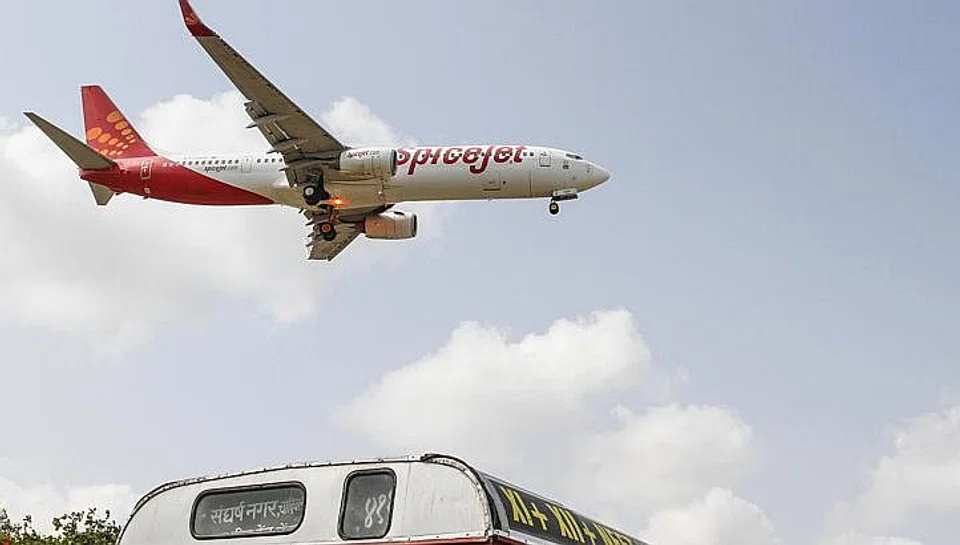
[NEW DELHI] SpiceJet Ltd, the Indian budget airline that has posted four straight quarterly losses, is seeking to lower costs by flying fewer and newer aircraft to return to profit amid intensifying competition from AirAsia Bhd.
The airline returned two 14-year-old aircraft to lessors three weeks ago, and will consider removing other older planes to improve fleet efficiency and cut fuel cost, chief operating officer Sanjiv Kapoor said in an interview.
SpiceJet, majority owned by billionaire Kalanithi Maran, has this year offered fares as low as US$8 to fill seats that would have otherwise gone empty, boosting its own occupancy and forcing competitors to follow suit. The budget carrier is shrinking the size of its fleet and workforce to lower costs in one of the world's most expensive markets for airlines.
"It's better to be one size smaller" with more seats filled in fewer aircraft, Mr Kapoor said in New Delhi on Sept 12. SpiceJet has cut capacity by 10 per cent this year, and aims to shrink by up to 14 per cent in the year ending December, he said.
The steps come as SpiceJet looks to raise funds, including from the sale of stake. In March, SL Narayanan, the chief financial officer of SpiceJet's parent Sun Group, had said that the weak operating environment in India is unlikely to attract investors immediately.
SpiceJet is "conceptually open" to raise funds through sale of stake to another airline or private equity, or debt, Mr Kapoor said, declining to provide more details.
State taxes of as much as 30 per cent on aviation turbine fuel mean that carriers in India have to spend 60 per cent more than the ones in other countries, according to Mr Kapoor.
The airline, which has 38 Boeing Co's 737 aircraft and 15 of Bombardier Inc's Q400 turboprop plans, has stopped services to some cities including Guangzhou, Riyadh and Bangkok.
"Any short-term capacity gaps may be filled by dry lease-ins," he said. "We believe there is overcapacity in the market in the near term."
The carrier has also deferred taking delivery of two Boeing 737 planes to next year, Mr Kapoor said.
The number of employees at SpiceJet will decline to less than 5,000 by the end of this year, from about 5,600 at the start of 2014, Mr Kapoor said.
Some positions that fall vacant as part of normal attrition won't be filled as the carrier seeks to have less than 100 employees per aircraft, he said.
SpiceJet has offered low fares to those who book early to fill vacant seats and cover its cost of carriage, Mr Kapoor said. That's helped fill 82.5 per cent of seats in August, the highest among local carriers for a second consecutive month, according to data from the Directorate General of Civil Aviation.
Some benefits of its strategy were seen in the first quarter, according to Mr Kapoor. While fuel expenses rose 4 per cent in the three months ended June, total revenue per available seat kilometre, a measure of revenue performance, increased 9.4 per cent even as capacity was cut.
Still, the company's liabilities exceeded assets by 10.2 billion rupees (S$212.4 million) as of March 31.
"Funding the operations, going forward, would remain a very challenging task for the company," Rashesh Shah and Darpan Thakkar, analysts at ICICI Securities Ltd wrote in a note to clients dated Aug 19.
The strategy to shrink and offer low fares come as competition in India intensifies, where over the last seven years airlines are estimated to have lost US$22 every time a passenger has stepped on board. That's added up to a US$10 billion loss, according to estimates by Capa Centre for Aviation, in a market where the number of domestic travelers is projected to triple in the decade to 159 million by 2021.
A subsidiary of AirAsia, Asia's biggest budget carrier, started local flights in June and a joint venture between Singapore Airlines Ltd and Tata Sons Ltd aims to start operations this year. Last year Etihad Airways PJSC acquired a stake in Jet Airways (India) Ltd after India changed ownership rules for airlines.
SpiceJet increased its market share to 19.5 per cent last month from 17.8 per cent in March, overtaking state-owned Air India to become India's third largest domestic carrier by share.
"Key trends are positive," said Mr Kapoor. "Next quarter through calendar 2015 could mark the period that the turnaround becomes visible." - Bloomberg
TRENDING NOW

Indonesia’s coal tycoon Low Tuck Kwong replaced as Bayan Resources president-director

OCBC names Ang Eng Siong as global corporate banking head in rejig of wholesale banking business

Consider lowering homeownership barriers for some non-resident foreigners

DBS opens flagship investment strategy to retail investors with new fund

