

Pacific International Lines posts US$277.6 million earnings for FY2023, expects to stay profitable in FY2024


SINGAPORE container carrier Pacific International Lines (PIL) posted US$277.6 million in net profit for FY2023 – about 10 per cent of its FY2022 earnings of US$3 billion – as freight rates tumbled.
PIL’s revenue for FY2023 to December was 53 per cent lower at US$2.9 billion, compared with US$6.1 billion a year earlier.
The carrier’s results are in line with peers at a time when container shipping rates began their downward trajectory, after pandemic-induced supply chain disruptions and e-commerce boom eased.
Average cargo rates on a per 20-foot-equivalent-unit (a unit of measurement used to determine cargo capacity for containerships) basis were 58 per cent lower in 2023 than 2022 for PIL.
The company’s cargo rates have not been as impacted as those in the United States and Europe trade lanes because its key markets are Africa, South America and Intra-Asia, Lars Kastrup, chief executive of the Temasek-backed liner, told The Business Times in an interview on Tuesday (Apr 16).
PIL mitigated the impact from the lower freight rates by running a tight ship in controlling costs amid steady shipment volumes.
For instance, it cut fuel consumption by slow steaming (operating vessels at reduced speed), collaborated with peers to consolidate shipments to optimise deployment of ships, and leveraged digitalisation to enhance operational efficiency.
Fuel cost accounts for about 30 per cent of PIL’s shipping expenses, which declined by about 10 per cent to US$1.7 billion in FY2023.
The carrier should not see red ink for FY2024, said Kastrup.
The cargo rate decline has been halted since Yemen’s Houthis rebels started attacking merchant vessels in the Red Sea in November 2023, forcing liners to avoid the shortest Asia-Europe passage and instead make detours through Africa.
Said Kastrup: “We thought that we are going into 2024 in a continued downward scenario because a lot of new ships were coming in. Eventually we see the Red Sea situation develop in November, which has absorbed quite a lot of the excess capacity… given the fact that ships from Asia to Europe and the US east coast are (re-routing) through Africa.”
PIL, however, has been sailing through the Red Sea to serve its market in the region, with its automatic identification system (providing identification and positioning information to both vessels and shore stations) switched on.
This came after assessing and safeguarding the risks, including of being a Singapore-affiliated liner, noted Kastrup.
The conflict is unlikely to be resolved quickly, said the shipping veteran, but freight rates held up by the re-routing will potentially be pressured nearer to 2025 as new vessel deliveries lead to oversupply in the market.
The container carrier sector had banner years in 2021 to 2022 and placed record vessel-building orders during those boom times, with more than one boxship reportedly to be delivered every day on average this year.
PIL’s current containership fleet of 96 should see eight additions between October 2024 and end-2025. The world’s 12th largest liner is now focused on boxships only.
The majority of PIL’s ships will be replaced over the next 10 years through a mix of new ship orders and charters as it works towards meeting industry standards for decarbonisation, as well as achieving its own net-zero target by 2050.
Higher costs resulting from green initiatives, including the use of more expensive green fuels, would have to be covered by customers, although Kastrup acknowledged that there are currently “no concrete examples” of customers paying for environmentally friendly shipping.
“Now the question, of course, is can the industry afford to do that without the consumers paying their share? It will be difficult. We cannot. I mean we cannot absorb it. It’s a huge cost. So there will be a need for customers to take their share.”
Meanwhile, Kastrup said that PIL is beefing up its international network to improve efficiency and presence by setting up representative offices in eight Latin American countries in 2024. This includes one that is opening this week in Mexico, a country which is increasingly becoming the gateway to the US.
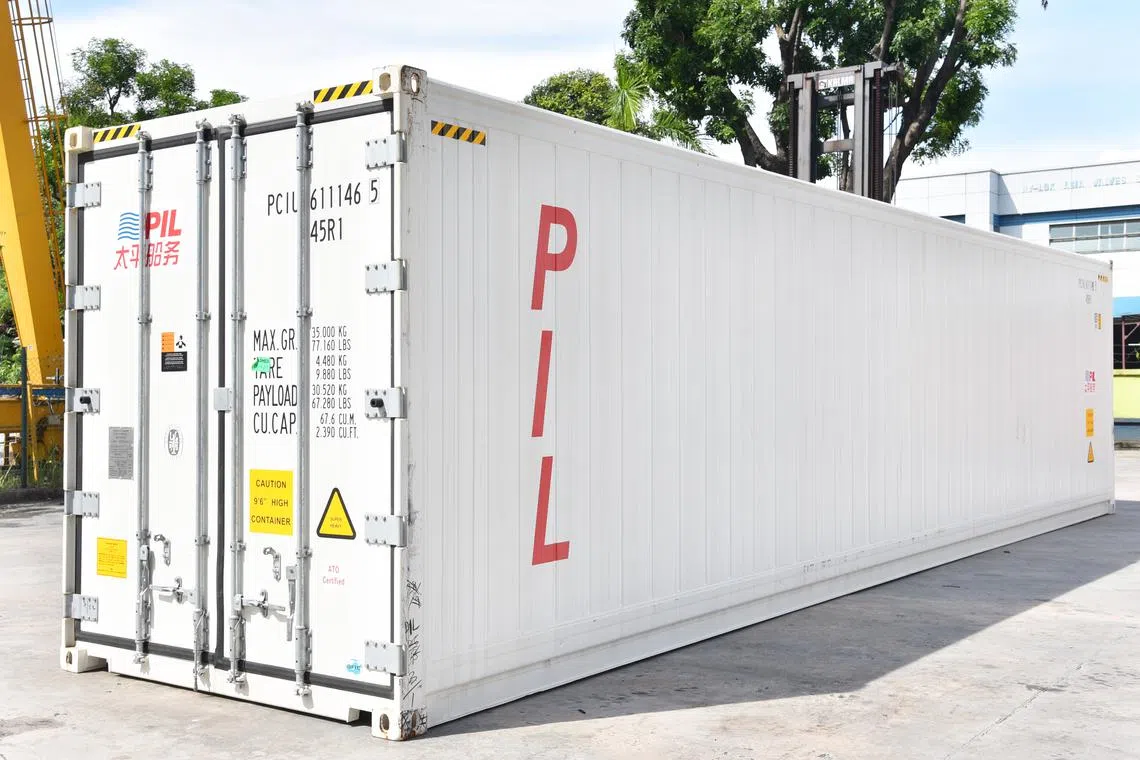
Additionally, to mitigate volatility in the general container freight rates and tap demand for temperature-controlled products in its key markets, PIL intends to up its offering of refrigerated container shipping to 10 to 12 per cent of shipping volume from 4 to 5 per cent now.
Operational matters aside, the 57-year-old firm will also be refreshing its brand with an updated logo and a new website as it continues its transformation journey that it started in 2021 after staving off bankruptcy.
TRENDING NOW

Once staunchly pro-China, Malaysian Chinese businesses are now distancing themselves from Beijing

New launch or resale unit? Here’s a guide for homebuyers
The lesser-known prospects in the Asian chipmaking supply chain

Cliff Tan has 7 million followers and a 4-month waitlist. Why won’t he expand his business?

