

Stellantis says Jeep joint venture in China to file for bankruptcy
 Add BT as a preferred source
DeeperDive is a beta AI feature. Refer to full articles for the facts.
THE venture between Stellantis and Guangzhou Automobile Group (GAC) producing Jeep vehicles in China is filing for bankruptcy, Stellantis said on Monday (Oct 31), after a lengthy decline for the oldest foreign auto brand in the world’s largest market.
The European carmaker said in a statement it had fully impaired the value of its investment in the joint venture in its results for the first half of 2022.
Stellantis said GAC had also approved the bankruptcy filing and that it would continue to provide service to Jeep customers in China.
GAC had no immediate comment.
Stellantis terminated the venture with GAC in July, only months after it said it would raise its stake in the business to 75 per cent from 50 per cent.
In the following days, GAC blasted Stellantis, saying that it was “deeply shocked” by critical comments from Stellantis about the end of their joint venture in China.
Navigate Asia in
a new global order
Get the insights delivered to your inbox.
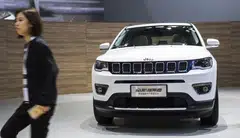
Sales for the venture, which sold the Jeep Cherokee SUV and the Compass crossover, have been in sharp decline for the past four years. Sales fell by 50 per cent in 2021 from the previous year to 20,396 vehicles.
For 2022, it sold less than 2,000 vehicles. In May, it reported selling only a single vehicle.
While reporting financial results in July, Stellantis chief executive officer Carlos Tavares said that over the last five years “the political influence” in doing business with its partners in China was growing. He said then he did not see a major long-term impact from the company’s decision to break the joint venture.

Earlier this month, Tavares said Chinese automakers should be subject to the same tariffs when exporting cars to Europe as European brands face when exporting to China.
Foreign automakers as a group have been under growing pressure in China, where the market has shifted quickly to battery-electric vehicles and domestic brands have been taking market share.
Foreign automakers saw their share of China’s auto market, now the world’s largest, drop by 5.5 percentage points last year, to 45.6 per cent, according to the China Passenger Car Association.
The joint-venture model, which China had insisted on as a condition of investment by foreign automakers, is under threat, said Chee-Kiang Lim, managing director China at Detroit-based consultancy Urban Science.
“The joint-venture policy was originally designed to compel foreign brands to share their brands and technology with local Chinese (automakers) in exchange for access to China’s large, growing auto market,” he said.
Now that Chinese automakers are more “confident that they have closed the gaps with or even surpassed their foreign partners”, he said, “we have to expect more JVs to unwind in the coming years”.
The bankruptcy for the Jeep venture is the latest chapter in a turbulent history for the first foreign brands to have invested in China when it was an almost non-existent market for global automakers.
The former AMC invested in a Beijing Jeep joint venture in 1984, the first such deal for vehicle production in China by an American brand.
The operation went through ownership changes after AMC was acquired by Chrysler and then Chrysler was acquired by Fiat, which became Stellantis in 2021 after a merger with Peugeot.
Tesla is the only global automaker that was granted a waiver to produce cars in China without a joint venture. REUTERS
Decoding Asia newsletter: your guide to navigating Asia in a new global order. Sign up here to get Decoding Asia newsletter. Delivered to your inbox. Free.
Share with us your feedback on BT's products and services
TRENDING NOW

Japan stocks look set for new highs in 2025 on earnings, reform
Beijing’s calculated silence on the Iran war
China pips the US if Asean is forced to choose, but analysts warn against reading it like a sports result

Richard Eu on how core values, customers keep Singapore’s TCM chain Eu Yan Sang relevant

