

Tesla board to weigh go-private as Musk faces questions
 Add BT as a preferred source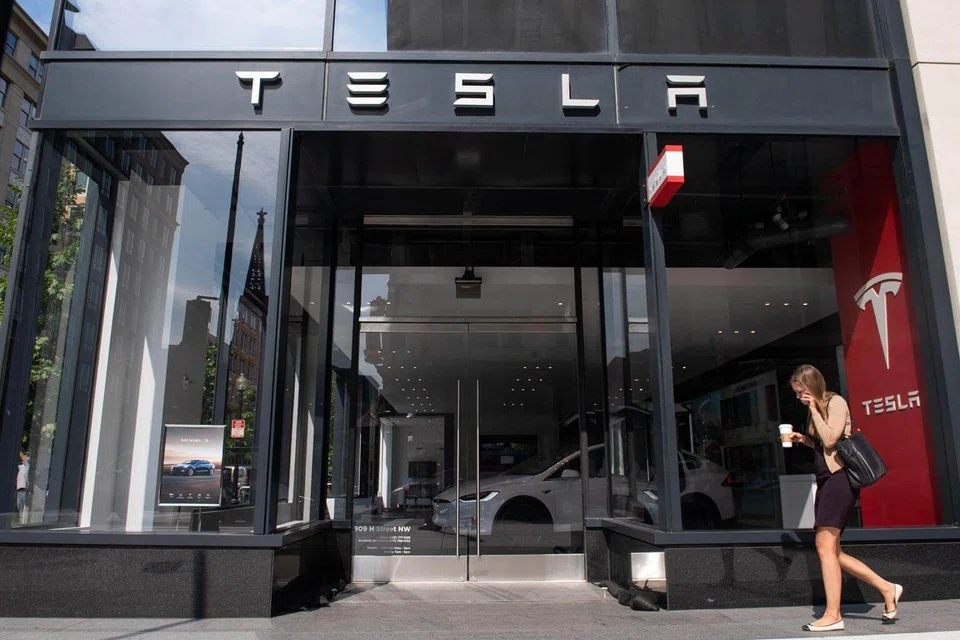
DeeperDive is a beta AI feature. Refer to full articles for the facts.
[NEW YORK] Tesla's board of directors said on Wednesday it will evaluate possibly taking the electric car maker private as US securities regulators reportedly questioned chief executive Elon Musk's unorthodox announcement of the proposal.
A statement from the Tesla board said directors had met "several times" to discuss the idea after Mr Musk raised going private as a better solution for the automaker's long-term growth.
The board "is taking the appropriate next steps to evaluate this," the statement added.
Mr Musk jolted markets Tuesday by announcing the proposal on Twitter and saying he could finance the buyout at a large premium to current valuation, at a price of US$420 a share.
The Wall Street Journal, citing unnamed sources, reported Wednesday afternoon that the US Securities and Exchange Commission inquired whether Mr Musk's statements were factual and why the disclosure was made on Twitter rather than in a regulatory filing.
Companies can come under scrutiny for misleading statements, but the agency in 2013 said firms may use social media "to announce key information ... so long as investors have been alerted about which social media will be used to disseminate such information."
Navigate Asia in
a new global order
Get the insights delivered to your inbox.
The SEC declined comment. Tesla did not immediately respond to a request for comment.
Tesla shares, which surged 11 per cent Tuesday on Mr Musk's statements, dropped 2.4 per cent to close at US$370.34 on Wednesday.
Many companies avoid releasing market-moving news during trading hours, but Musk floated the idea in an afternoon tweet and then elaborated in a series of responses to questions on the social network, before the company finally released a letter to employees with more details on the rationale.
Going private would liberate the company from the quarterly reporting cycle, allowing it to be "free from as much distraction and short-term thinking as possible," Mr Musk said in a blog post.
But legal experts and equity analysts said the announcement raised more questions about Mr Musk, who has had prickly relations with Wall Street and has been involved in a number of controversies in recent months.
IS FUNDING REALLY 'SECURED'?
Regulators are likely to scrutinise Mr Musk's statement that funding for the deal was "secured," a factual statement that could be problematic if it is not true, said John Coffee, a Columbia Law School professor and expert on securities law.
"It's very implausible" that funding has been secured "because you're talking about an offer of maybe US$73 billion," Prof Coffee said.
When companies undertake such transactions, the board of directors typically form a committee to study the idea and consult investment bankers on a fair price.
Mr Musk "can't go much longer without discussing what the funding was, or qualifying or amending his statement," said Prof Coffee, adding that Mr Musk could be exposed to deep liability from investors who lost money because of his announcement.
Meanwhile, equity analysts generally reacted skeptically to the idea of taking the automaker private. Mr Cowen said the proposal raised many questions, such as how the company will raise needed capital to execute its manufacturing ramp-up.
"It is obvious to see how such a transaction would benefit a CEO who has been very distracted by social media and is focused on 'burning shorts,'" Mr Cowen said.
However, "we question how remaining investors would benefit from a less liquid structure in which management receives far less scrutiny despite its historically poor execution and track record."
JPMorgan Chase also noted the scant details in the proposal and questioned whether Tesla profits would match its lofty forecasts given that rival auto companies may be able to offer electric cars at lower price points that are subsidized with sales of vehicles with internal combustion engines.
But JPMorgan still estimated the odds that Tesla would go private as 50 per cent, implying a higher valuation for Tesla shares than the analysts had been projecting.
AFP
Share with us your feedback on BT's products and services
TRENDING NOW
Why where you park your joint venture matters: Lessons from a US$689 million shareholder dispute

Richard Eu on how core values, customers keep Singapore’s TCM chain Eu Yan Sang relevant

A new logic of China-Asean economic integration emerges from the Middle East conflict

From 1MDB to ‘corporate mafia’: Is Malaysia facing a new governance test?

