

Tesla disbands Dojo supercomputer team in blow to AI effort
The EV maker has faced an exodus of key talent this year as it has grappled with rising competition, falling sales and a consumer backlash to Musk’s political activity
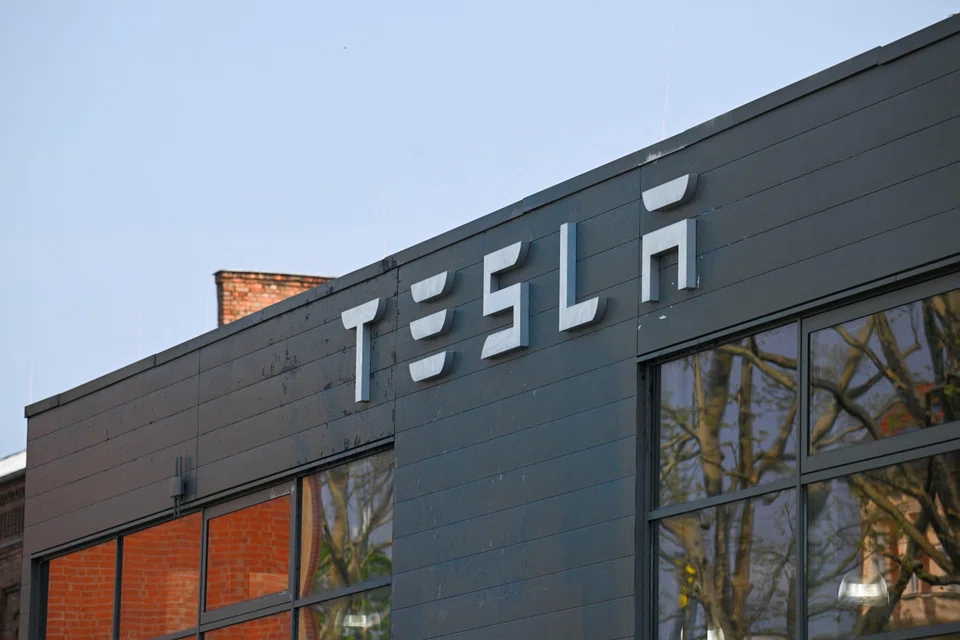
[SAN FRANCISCO] Tesla is disbanding its Dojo supercomputer team and its leader will depart the company, according to sources familiar with the matter, upending the automaker’s effort to develop in-house chips for driverless technology.
Peter Bannon, who was heading up Dojo, is leaving and chief executive officer Elon Musk has ordered the effort to be shut down, according to the sources, who asked not to be identified discussing internal matters. The team has lost about 20 workers recently to newly formed DensityAI, and remaining Dojo workers are being reassigned to other data centre and compute projects within Tesla, the sources said.
Tesla plans to increase its reliance on external technology partners, including Nvidia and Advanced Micro Devices for compute, and Samsung Electronics for chip manufacturing, the sources said.
Tesla, Musk and Bannon did not immediately respond to requests for comment.
The decision marks a major shift for a programme years in the making, with Dojo once positioned as central to Tesla’s multibillion-dollar plan to gain computing muscle in the artificial intelligence (AI) race.
The Dojo system is a Tesla-designed supercomputer used to train the machine-learning models behind the electric-vehicle (EV) maker’s Autopilot and Full Self-Driving programmes, as well as its Optimus humanoid robot. The computer takes in data captured by vehicles and rapidly processes it to improve the company’s algorithms. Analysts have said that Dojo could be a key competitive advantage, with Morgan Stanley estimating in 2023 it could add US$500 billion to Tesla’s value.
DensityAI, which is poised to come out of stealth soon, is working on chips, hardware and software that will power data centres for AI that are used in robotics, by AI agents and in automotive applications, among other sectors, Bloomberg reported this week. The company was founded by Ganesh Venkataramanan, the former head of Dojo, and ex-Tesla employees Bill Chang and Ben Floering.
Tesla’s shares extended postmarket declines after Bloomberg’s report, trading down less than 1 per cent as of 5.29 pm in New York.
Talent drain
Tesla has faced an exodus of key talent this year as it has grappled with rising competition, falling sales and a consumer backlash to Musk’s political activity. Milan Kovac, the head of engineering for Optimus, and David Lau, vice-president of software engineering, departed earlier this year, while Bloomberg reported in June that longtime Musk confidant Omead Afshar had abruptly left.
SEE ALSO



The EV maker last month reached a US$16.5 billion deal with Samsung to secure AI semiconductors through 2033. The plan is for an upcoming plant in Texas to produce Tesla’s next-generation AI6 chip, diversifying Tesla’s sourcing beyond leading chipmaker Taiwan Semiconductor Manufacturing Company.
Musk hinted at a strategic pivot during Tesla’s most-recent quarterly earnings call, suggesting future iterations of the company’s in-house technology could converge with that of its partners. “Thinking about Dojo 3 and the AI6 inference chip, it seems like intuitively, we want to try to find convergence there, where it’s basically the same chip,” Musk said on the Jul 23 call.
Tesla’s CEO last year acknowledged that the company might not pursue Dojo in perpetuity and instead lean more on external partners.
“We are pursuing the dual path of Nvidia and Dojo,” Musk said in January 2024. “But I would think of Dojo as a long shot. It’s a long shot worth taking because the payoff is potentially very high.” BLOOMBERG
Decoding Asia newsletter: your guide to navigating Asia in a new global order. Sign up here to get Decoding Asia newsletter. Delivered to your inbox. Free.
Share with us your feedback on BT's products and services
TRENDING NOW

Once staunchly pro-China, Malaysian Chinese businesses are now distancing themselves from Beijing

Looking beyond looming CEO succession, should UOB potentially pursue a transformative merger?

Could stablecoins be the future of money?

Grab CEO’s wife Chloe Tong on life with Anthony Tan and finding her purpose

