Tesla says sorry as disquiet in China climbs after protest
World's largest EV maker responds to government entities' criticism of its consumer service attitude
 Add BT as a preferred source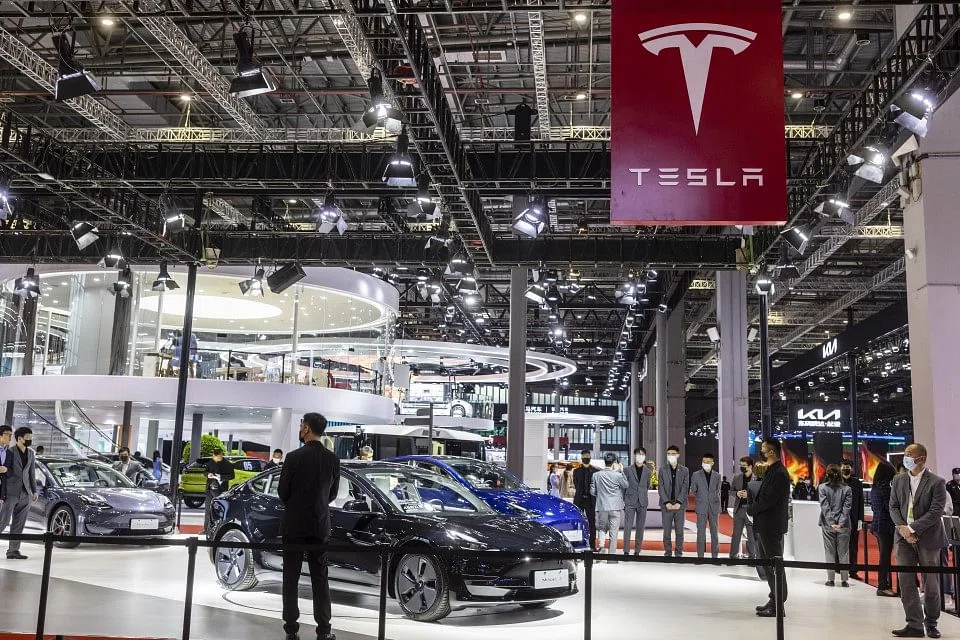
DeeperDive is a beta AI feature. Refer to full articles for the facts.
Shanghai
AFTER a dream run that saw it receive backing from the highest levels of the Chinese state, Tesla is getting a reality check, with the automaker coming under fire for how it treats its customers in the world's largest, and increasingly most competitive, car market.
The Palo Alto, California-based company earlier this week found itself on the pointy end of missives from two government entities, both of which criticised its attitude toward consumer service. The drubbing came after Tesla endured an embarrassing outbreak at the Shanghai Auto Show on Monday, during which the owner of one of its electric vehicles (EVs) said she almost died because her car's brakes failed.
The unwanted publicity comes at an uncomfortable time for Tesla, which, since breaking ground on its Shanghai Gigafactory in early 2019, has enjoyed an enviable run in China, receiving all-important support from the government and appearing to skirt the tensions between Washington and Beijing. The world's biggest EV maker has enjoyed perks other foreign companies have struggled to obtain, including tax breaks, cheap loans and permission to wholly own its domestic operations.
The first rebuke came on Tuesday when China's state-run Xinhua news agency published an article that said the quality of Tesla's EVs must meet market expectations in order to win consumer trust. Tesla should address consumer hesitation over buying its cars after issues ranging from malfunctioning brakes to fires during charging emerged, the article said.
A few hours later, the Central Political and Legal Affairs Commission of the Communist Party of Chinaposted a commentary on its WeChat account saying Tesla should respect Chinese consumers and comply with local laws and regulations. Making an effort to find the cause of problems and improve features is something any responsible business should do, the party body that oversees China's police, prosecutors and courts said, and Tesla has not done that.
Navigate Asia in
a new global order
Get the insights delivered to your inbox.
The blowbacks stem from an incident on Monday at the Shanghai Auto Show when a woman climbed on one of Tesla's display vehicles shouting that her car's brakes had lost control. Her protest was captured by onlookers who uploaded the footage to social media, where it went viral. Tesla's booth at the show had a noticeably increased security presence the next day. After initially pushing back against the woman's claims, saying she was "widely known" for protesting against Tesla, the automaker made a statement on Tuesday apologising for the delay in resolving her problems.
"Tesla appreciates the trust and tolerance given by our car owners, netizens and media friends, and actively listens to the suggestions and critics," it said. "In order to make up for the discomfort of the owner as much as possible and the negative impact on her car using experience and life, we are always willing to try our best to actively communicate with her and seek solutions with the most sincere attitude."
On Wednesday, the Communist Party's discipline commission said that Tesla's apology shows a better attitude than before. Meanwhile, the woman who protested is being detained for five days.
This is not the first time Tesla has had to defend its actions in China, which is now one of its largest markets. Demand from Chinese buyers helped Tesla report in the first quarter estimate-smashing deliveries of EVs, prompting Wedbush stock analyst Dan Ives to note the "eye-popping" numbers coming out of China. In March, Tesla had its cars banned from military complexes in China because of concerns about sensitive information being collected by cameras built into the vehicles. In February, it was forced to issue a public apology to China's state grid after a video purportedly showed staff blaming an overload in the national electricity network for damage to a customer's vehicle.
After the military order, chief executive officer (CEO) Elon Musk strenuously denied the company would ever use a car's technology for spying, and Tesla's Beijing unit said cameras that are built into its EVs are not activated outside of North America.
The US automaker is facing increasing competition in China from a slew of younger, cashed-up local EV players such as the New York-listed Nio and Xpeng. Their presence at this year's Shanghai Auto Show was telling, with their large, shiny booths overshadowing exhibits from some of the more traditional carmakers.
Chinese EV makers like Nio and Xpeng are enjoying not only the support of municipal governments in China, but a wave of nationalistic sentiment that has ensnared other international names.
Tesla's cars remain hugely popular in China. A record 34,714 China-built and imported Teslas were registered in the country in March, almost double the 18,155 registrations in February and almost triple the number a year earlier. BLOOMBERG
Decoding Asia newsletter: your guide to navigating Asia in a new global order. Sign up here to get Decoding Asia newsletter. Delivered to your inbox. Free.
Share with us your feedback on BT's products and services