

Tesla sticks by Model 3 target, warns spending could rise in 2018
Its long-term viability depends on annually selling billions of dollars of the car that starts at US$35,000
San Francisco
TESLA Inc said on Wednesday it was sticking with chief executive Elon Musk's revised production targets for its Model 3 sedan, cheering investors who have put up with two delays, but the electric carmaker's plans to raise spending this year underscored its growing need for cash.
Reflecting the mixed fourth-quarter report, shares of the Palo Alto, California-based company, which are up 10 per cent since the start of the year, were barely changed in extended trading. Money-losing Tesla's long-term viability depends on annually selling billions of dollars of Model 3s, the new sedan that starts at US$35,000, about half the price of its flagship Model S.
Tesla said that net reservations for the new model were stable during the fourth quarter. Production delays blamed on battery issues resulted in only 1,550 deliveries in the fourth quarter, far below the 4,100 vehicles expected by analysts - meaning revenue from the highly anticipated vehicle has yet to hit Tesla's bottom line.
But obstacles to production of 5,000 vehicles by the end of the second quarter "were getting smaller with every week", Mr Musk told analysts on a conference call. Once at that production rate, Tesla could begin to generate sustained positive operating income "at some point in 2018", he said.
"I'm cautiously optimistic that we will actually be GAAP profitable with no asterisk," he added. Using that accounting method, Tesla lost nearly US$2 billion last year. Tesla posted its biggest-ever quarterly loss, but the loss was not as wide as analysts were expecting, and revenue just topped targets.
Mr Musk reiterated a bold goal to produce one million vehicles annually by 2020, with plans to make capital investments related to the upcoming Model Y SUV towards the end of this year. Nearly two years ago, Mr Musk proclaimed that Tesla would produce 500,000 vehicles in 2018, which Model 3 troubles have made near impossible.
Analyst Jamie Albertine at Consumer Edge Research said there was a trade-off between accelerating growth and vehicle quality, and it was better not to rush Model 3 production and risk a recall.
Tesla's reiteration of its production target for the quarter was good news, he said. Tesla chief financial officer Deepak Ahuja said that more than 50 per cent of Tesla's spending was on the Model 3, underscoring that project's importance and its high cost.
Tesla burnt through US$3.4 billion last year, and US$787 million in the fourth quarter alone, and said capital spending in 2018 would be "slightly more" than in 2017 due to expanded production at its Fremont factory and Nevada Gigafactory. Other upcoming capital needs include the recently unveiled Tesla Semi, the Model Y and a factory in China.
Tesla ended the fourth quarter with US$3.37 billion in cash, just below the US$3.5 billion in the previous quarter, which had been boosted by a US$1.8 billion debt sale. For the first time, Tesla securitised its leases, raising US$546 million earlier this month in securitised notes backed by Model S and X lease payments.
Still, Tesla's cash burn eased in the quarter, in part thanks to customer deposits for the just unveiled Semi truck and Roadster, inventory reduction of finished vehicles and some Model 3 capital spending deferred to the first quarter. The niche carmaker has made inroads among luxury car buyers with the advanced technology and innovative design in its Model S sedan and Model X SUV.
Still, it faces a wave of electric vehicles from competitors on the horizon. Global carmakers from Ford Motor Co to Volkswagen AG are cumulatively investing US$90 billion in electrification over the next five years, with luxury models from Audi and Tata Motors Ltd's Jaguar due to hit showrooms this summer. Amid that sales pressure, Mr Musk announced that Jon McNeill, president of global sales and service, and seen by some as a possible successor, was leaving the company. He will join US ride-hailing company Lyft as its new chief operating officer. Despite the competitive environment, Tesla's stock has soared 35 per cent in the last year, making the company the second-most valuable US carmaker, with a market capitalisation of US$56.1 billion, just behind General Motors Co, which had net revenue of US$145.6 billion in 2017.
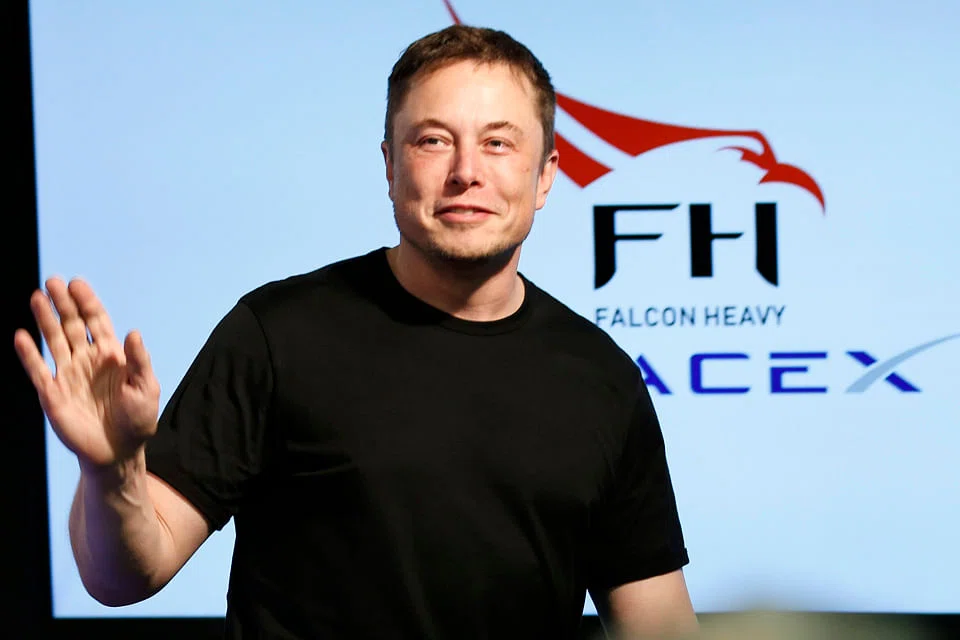
Mr Musk scored a clear victory on Tuesday with the successful launch of the world's most powerful rocket, Falcon Heavy, made by his private company SpaceX. But some analysts have questioned whether his myriad of other interests, from space exploration to tunnel boring technology, are a distraction at a critical time within Tesla. Net loss widened to US$675.4 million, or US$4.01 per share, for the fourth quarter ended Dec 31 from US$121.3 million, or 78 cents per share, a year earlier. Total revenue rose to US$3.29 billion from US$2.28 billion. Excluding items, the company lost US$3.04 per share, below the US$3.12 per share loss expected by analysts. REUTERS
TRENDING NOW

He built the Vingroup empire. Now South-east Asia’s richest man is handing some key roles to his sons
China’s Pinglu Canal likely to benefit Singapore, other South-east Asia ports in the long term
Suntec Reit to increase Singapore focus, sell three Australia properties
Despite the de-dollarisation debate, demand for dollar liquidity in Asia is growing

