

Title of world's biggest vessel shifts as rates fall
Samsung Heavy is building 4 ships capable of carrying 20,100 20-foot boxes for Mitsui OSK
Singapore
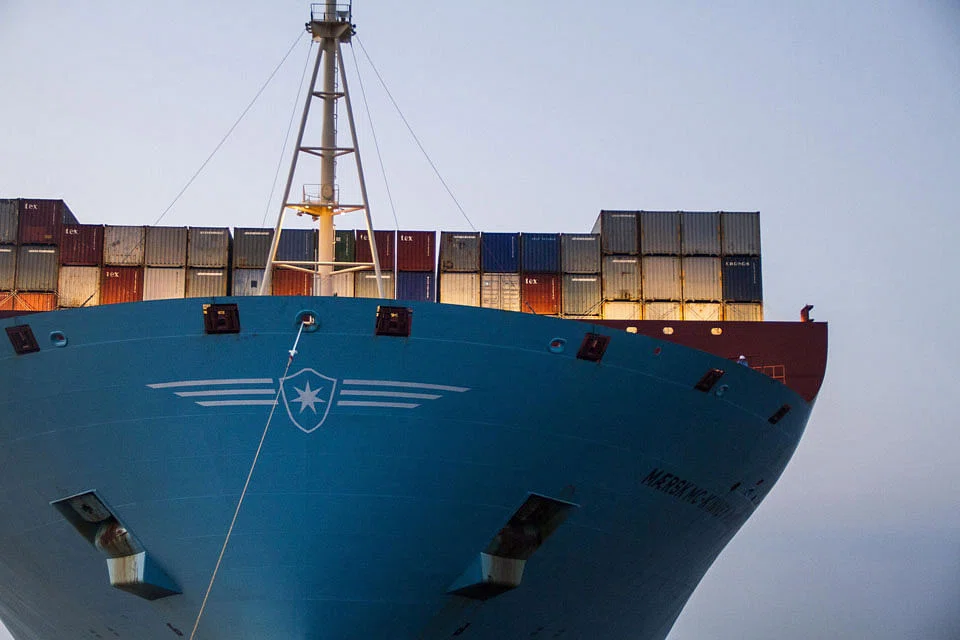
THIS is how much size matters in the shipping industry: bragging rights for the world's largest container ship have changed hands four times in as many months - and will soon shift again.
With weak freight rates encouraging shipping lines to send as many goods as possible in a single voyage, Samsung Heavy Industries Co, the world's third-biggest shipbuilder, is constructing four vessels capable of carrying 20,100 20-foot containers - enough to fit about 203 million iPads - for Mitsui OSK Lines Ltd of Japan. Another two ships of the same size will be built by Japan's Imabari Shipbuilding Co.
The seaborne arms race comes even as overcapacity has led to a plunge in shipping rates since late 2010 and four straight years of losses for the industry.
Some lines have responded by driving their vessels more slowly to save fuel and by scrapping older, less-efficient ships. Others decided to go as large as possible to cut costs by as much as 30 per cent per voyage.
"Shipping companies are favouring bigger ships because of the benefits. With bigger ships, you can move more goods at one go, helping to reduce your costs." said Park Moo Hyun, an analyst at Hana Daetoo Securities Co in Seoul. "But at the same time, it raises concerns about whether these ships can be filled."
Mitsui OSK will receive its new ships from Samsung Heavy by August 2017. The vessels will be 400 metres long and 58.8 metres wide, Samsung Heavy said on March 2. They also will have fuel-saving features.
Samsung Heavy expects more 20,000-container vessels will be ordered in the first half of this year because of the economies of scale they offer, the company told Bloomberg.
Mitsui OSK believes switching to larger ships "will enhance our competitiveness", Tetsutaro Kozai, assistant manager of the company's public relations office, told Bloomberg. The company expects the new ships it has ordered "will be the largest in operation for some time", he added.
Whether ship sizes continue to grow depends on builders finding ways to make even larger vessels that will be structurally sound amid the punishment of rough seas. Ports will need ever-deeper shipping lanes and terminal operators will require cranes capable of stretching all the way across the wider decks.
That could be a problem for ports on the US West Coast, where Los Angeles and Long Beach, California can't handle ships holding more than about 12,000 containers. That - plus the fact that there are no ports of call between Asia and the US West Coast - means the supersize vessels mainly ply Asia-Europe routes.
AP Moeller-Maersk A/S started the recent trend towards bigger vessels in 2011 when it ordered 20 "Triple-E" ships from Daewoo Shipbuilding & Marine Engineering Co. At the time, they were the world's biggest vessels, capable of carrying more than 18,000 20-foot containers each.
A ship of that size can cut costs by about 30 per cent per trip compared to a 13,000-box ship, based on a bunker fuel price of US$600 a tonne, according to Drewry Maritime Equity Research. Even at current fuel prices - US$393.12 a tonne as of Thursday in Singapore - a larger vessel is still about 15 per cent cheaper per voyage, Drewry said.
Most vessels used now on the Asia-Europe route can fit 14,000 containers, according to Mr Park at Hana Daetoo. More than 100 of these ships are currently in service, he added.
Maersk Line, the world's largest container shipping company, operates 15 Triple-Es and expects five more to be delivered in the first half of this year.
"Maersk moved the market with big ships, and people are seeing Maersk's results," said Rahul Kapoor, a Singapore-based director for equity research at Drewry. "So people are thinking that's the way to go forward."
Maersk Line doubled its after-tax operating profit in the fourth quarter of 2014, to US$655 million.
The Triple-Es didn't keep Maersk Line on top of the size rankings for long: China Shipping Container Lines Co took the title in November with a ship able to carry 19,100 20-foot containers. That was overtaken barely a month later when Mediterranean Shipping Co launched a ship able to carry 19,224 containers.
In late January, Imabari received an order for 11 ships capable of carrying 20,000 containers. Those briefly became the world's biggest planned ships - until Mitsui OSK placed its order this week. Bloomberg
TRENDING NOW

Nvidia reinstates Jensen Huang as CEO; Trump says move poses no national security risk

Indonesia’s coal tycoon Low Tuck Kwong replaced as Bayan Resources president-director

Nvidia surges 33% after reinstating Jensen Huang, reviving AI trade; stocks soar in US and Europe

Consider lowering homeownership barriers for some non-resident foreigners

