

Toll Group banks on India’s logistics growth amid rise of ‘quick commerce’
While Singapore is its top Asia market, India is the ‘most exciting’, says executive chairman Thomas Knudsen

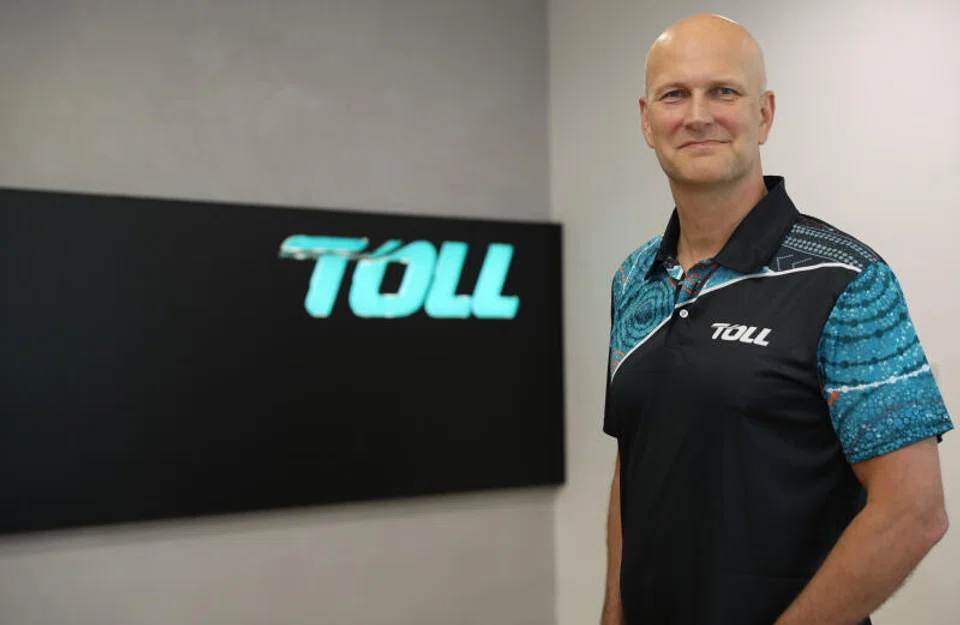
[SINGAPORE] Toll Group expects its Indian market to rise in prominence in the next five years, with the country seeing the largest increase in warehouse space among the freight-forwarding and logistics group’s major markets.
India, China and Singapore are the Australian group’s largest foreign markets in Asia-Pacific, said executive chairman Thomas Knudsen in an interview with The Business Times.
Of these, Singapore is tops, which Knudsen attributed to the Japan Post subsidiary having developed a “strong” value proposition in the city-state.
Toll Group’s presence in Singapore includes its headquarters and a flagship logistics hub in Tuas with 102,000 square metres (sq m) of floor space – one of its largest internationally – that serves industries ranging from automotive and retail to consumer and technology.
“So from today’s point of view, Singapore is the most important. But if you look forward, I would say the most exciting is perhaps India,” said Knudsen.
India is the group’s fastest-growing contract logistics market, with another 50,000 sq m of warehouse space planned this year, on top of the existing 60,000 sq m.
“What is, I think, really exciting about India is its transformation into a consumer market.”
Noting that “quick commerce” is emerging in its big cities, he added: “We think we’re well-positioned for that part. So I think India, from a growth perspective, of all the markets, is probably where we expect the highest growth in the next five years.”
In quick commerce, merchandise is delivered within minutes from satellite stores, which in turn replenish stock from warehouses.
“We see that as a market that has a great opportunity for us in South-east Asia, that’s growing very, very rapidly – much faster than traditional retail,” said Knudsen.
“We can operate the very large warehouses, but we can also operate the smaller satellite warehouses, and the distribution back and forth.”
Growing footprint
For the financial year ended March 2025, Toll Group’s Asia revenue rose 22 per cent year on year to A$1.65 billion (S$1.4 billion), from A$1.35 billion before, accounting for 32 per cent of group turnover.
Its warehousing space in Asia rose 17 per cent in the same period. Toll Group boasts 3 million sq m of warehouse space globally, of which about 1.1 million sq m is in Asia.
This year, the company marked 25 years of presence in Asia, where it operates across 13 markets.
Having started out as a freight-forwarding player, it now has a “very large” footprint in contract logistics, with warehousing, final-mile distribution and e-commerce value-chain solutions.
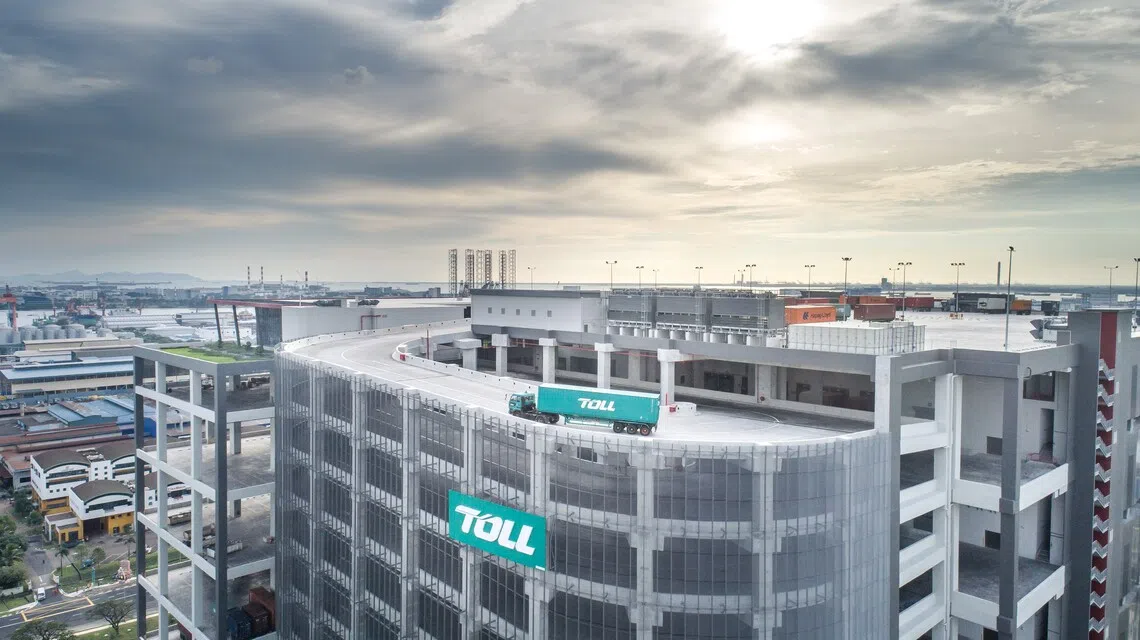
Knudsen said the group has achieved a scale in Singapore, China and India where it can serve almost all the sectors it is in. Meanwhile, it focuses on specific verticals in Indonesia, Malaysia and Vietnam.
In Vietnam, where e-commerce is booming, Toll Group helps customers that handle their own online sales rather than using platforms such as Amazon – even when their shipments are modest.
“We’re very flexible in terms of setting up small, tailor-made projects in the South-east Asian markets,” said Knudsen.
For customers with different operational models for Asia’s disparate markets, Toll Group leverages its regional or global network to help brands develop a fit-for-purpose solution in each market.
Apart from the rise of quick commerce in India and South-east Asia, Toll Group also sees opportunities in the cross-border logistics market between China and Japan.
The group recently entered into a joint venture with Chinese player Wise Express, angling for a share of the one million to two million e-commerce packages shipped from China to Japan daily.
Toll Group’s owner Japan Post would also benefit from handling last-mile deliveries in Japan. In the future, this could be the case for packages arriving not just from China, but also from other Asian countries.
Joint ventures are one way in which Toll Group expands its presence, in addition to mergers and acquisitions (M&A). The group has some M&A targets on its radar, but Knudsen would only reveal that these are for its logistics and forwarding businesses.
Tariffs: threats and opportunities
Toll Group does not have to pay the tariffs that the US has imposed on many trading partners. But its freight-forwarding business has faced slowing demand as its customers are hit by the duties.
The group saw a drop in freight-forwarding volume to the United States in the second quarter of this year, and the usual third-quarter peak has not materialised.
However, overall volume for Asia has been holding up, driven by shorter-haul routes in the intra-Asian market.
And Toll Group sees opportunities to build relationships with customers by offering solutions to navigate tariffs. “So it opens as many doors as it closes, to be honest,” noted Knudsen.
Growth in the group’s contract logistics arm and deals in the domestic distribution of merchandise are also helping to mitigate the tariff-driven slowdown. Knudsen believes that Asian domestic demand is resilient.
“So that’s the benefit of having a business like Toll, which does both contract logistics and forwarding,” he said. “We’re kind of betting: one is on the global economy and one is on domestic economies.”
Toll Group’s decarbonisation efforts also give it a competitive edge. In addition to installing solar panels at its facilities, the group pursues simple solutions such as transporting more freight per vehicle to reduce carbon emissions.
“We used to have five cars on a transporter that moves cars around Singapore. Then we went to six. Now we have seven,” said Knudsen. “Not rocket science, but it reduces our emissions per car when we move them around, by 20 to 30 per cent.”
TRENDING NOW

Singapore identifies 7 firms responsible for haze fires, notices issued urging action: Grace Fu
DBS remains analysts’ pick ahead of Q3 earnings after Singapore banks’ share slump

High Court rules against Julius Baer’s Singapore trust arm in US$50 million family trust dispute

Could stablecoins be the future of money?

