Toyota Motor to invest 730 billion yen in Japan, US for EV battery supply
 Add BT as a preferred source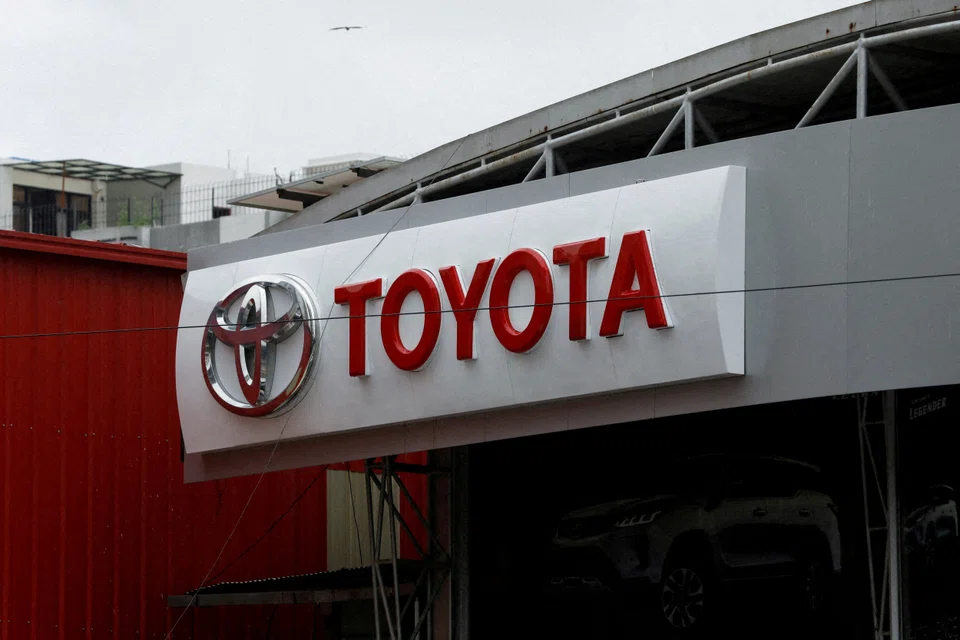
TOYOTA Motor said on Wednesday (Aug 31) it would invest up to 730 billion yen (S$7.4 billion) in Japan and the United States to make batteries for fully electric vehicles, a category of automobile that critics say it has been slow to embrace.
When the additional facilities come on line between 2024 and 2026, Toyota’s battery production capacity in the 2 countries will have increased by 40 gigawatt-hours, the company said, giving no current figure for comparison.
“This investment is aimed at enabling Toyota to flexibly meet the needs of its various customers in all countries and regions by offering multiple powertrains and providing as many options as possible,” it said in a statement.
Some green investors and environmental groups have said the company should move faster to introduce fully electric (or “battery electric”) vehicles, rather than clinging to the internal combustion engine in such powertrain configurations as the hybrid.
Toyota is the latest in string of companies announcing big battery investment in the United States, where a shift towards fully electric automobiles could accelerate as the country discourages use of petrol and diesel vehicles and tightens eligibility for tax credits.
Major rival Honda Motor said on Monday it and Korean battery supplier LG Energy Solution would build a US$4.4 billion lithium-ion battery plant for electric vehicles in the United States.
In its Wednesday statement, Toyota said it would invest about 400 billion yen in Japan. That money would go into 2 of its own plants, 1 owned by its joint venture with Panasonic Holdings - Prime Planet Energy & Solutions - and a third that is being built for another joint company with Panasonic.
In addition, about 325 billion yen would be invested in Toyota Battery Manufacturing in North Carolina.
Automakers worldwide are spending billions of US dollars to ramp up battery and electric vehicle production in the face of tougher environmental regulations.
President Joe Biden signed a US$430 billion climate, health care and tax bill this month that would render electric vehicles assembled outside North America ineligible for tax credits.
California announced a plan last week to ban sales of new cars powered only by internal combustion engines by 2035.
Toyota last year committed 8 trillion yen to electrify its car model range by 2030, with half of that slated to develop fully electric vehicles. Still, it expects annual sales of such cars to reach only 3.5 million units by the end of the decade, around a third of its current total volume.
In June, Toyota said it had recalled more than 2,000 of its first mass-produced electric vehicle, the bZ4X SUV, less than 2 months after unveiling the model, because of a risk the wheel could come loose. REUTERS
Decoding Asia newsletter: your guide to navigating Asia in a new global order. Sign up here to get Decoding Asia newsletter. Delivered to your inbox. Free.
Share with us your feedback on BT's products and services