

Trump unveils his plan to weaken car pollution rules
 Add BT as a preferred source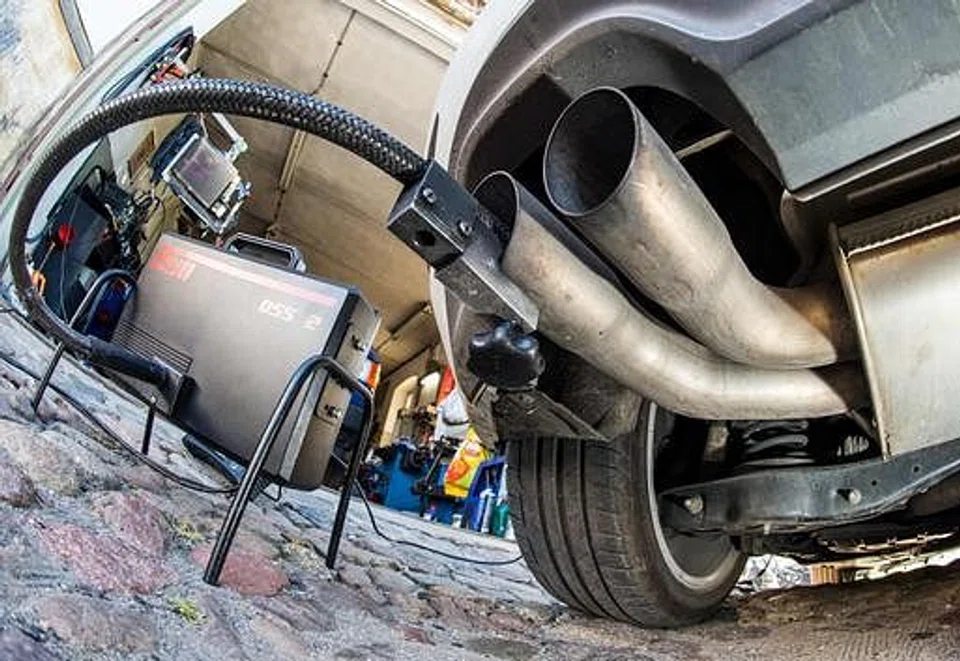
DeeperDive is a beta AI feature. Refer to full articles for the facts.
[WASHINGTON] The Trump administration on Thursday formally announced its long-awaited proposal to dramatically weaken an Obama-era regulation on planet-warming vehicle tailpipe pollution.
The publication of the proposal sets up a race among opponents of the change - an unusual mix of environmentalists, automakers, consumer groups and states - to temper the plan before it is finalized this year.
The proposal would freeze rules requiring automakers to build cleaner, more fuel-efficient cars, including hybrids and electric vehicles, and unravel one of President Barack Obama's signature policies to combat global warming. It would also challenge the right of states to set their own, more stringent tailpipe pollution standards, setting the stage for a legal clash that could ultimately split the nation's auto market in two.
The Trump administration's proposal, jointly published by the Environmental Protection Agency and the Transportation Department, would roll back a 2012 rule that required automakers to nearly double the fuel economy of passenger vehicles to an average of about 54 mpg by 2025. That rule, which would have significantly cut the nation's greenhouse gas emissions while saving billions of barrels of oil, was opposed by automakers who said it was overly burdensome.
The new proposal would freeze the increase of average fuel economy standards after 2021 at about 37 mpg. It would also revoke a legal waiver, granted to California under the 1970 Clean Air Act and now followed by 13 other states, that allows those states to set more stringent tailpipe pollution standards than the ones followed by the federal government.
The Trump administration contends that, by promoting the manufacture and sale of lighter cars, the Obama standards could lead to nearly 13,000 more auto fatalities.
Navigate Asia in
a new global order
Get the insights delivered to your inbox.
That conclusion is in direct opposition to the Obama administration's analysis of the same rule, which found that improving fuel-economy standards would actually lead to about 100 fewer auto-related casualties.
The Trump administration will ask the public to formally submit comments on the rule. It will then consider those comments and issue a final version of the rule, most likely this year.
It is widely expected that the proposal will meet with widespread criticism, even from automakers.
NYTimes
Share with us your feedback on BT's products and services
TRENDING NOW

Shelving S$5 billion office redevelopment plan proved ‘wise’ as geopolitical risks mount: OCBC chairman

Eurokars Group introduces rental car franchises Enterprise Rent-A-Car, National Car Rental, and Alamo to Singapore

20 photos that show how dramatically Singapore has changed in two decades
Singapore’s key exports up 15.3% in March from electronics surge, exceeding forecasts

