

Uber to add 25,000 EVs in India in green push
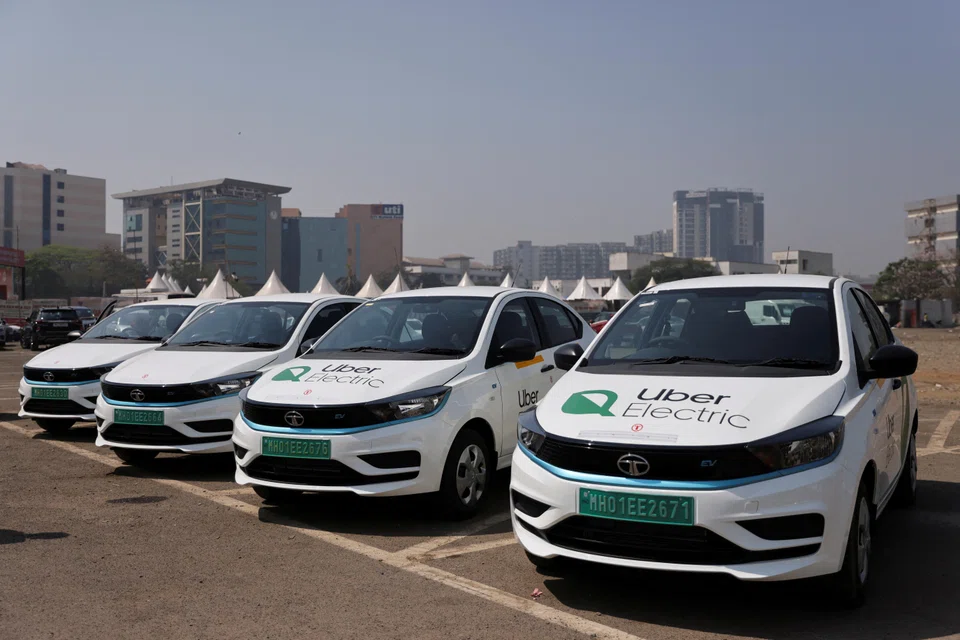
UBER Technologies is planning to launch 25,000 electric vehicles (EVs) in India, taking advantage of the country’s clean-energy push to expand its local presence.
The ride-sharing company is teaming up with local fleet operators such as Lithium Urban Technologies, Everest Fleet and Nigeria-based Moove to get EVs on the country’s roads, Prabhjeet Singh, president of Uber’s India operations, said at an event in New Delhi on Wednesday (May 24).
Adoption of EVs in the ride-hailing market could be a bright spot for India, which has been slower to electrify private passenger transport than other parts of the world. It may also help Prime Minister Narendra Modi reach his goal of making the world’s most populous nation net-zero by 2070.
For Uber, the lack of charging stations in India will be a hurdle, however.
Ride-hailing EVs become more expensive than internal combustion engine ones when there is a scarcity of chargers, according to BloombergNEF, and Indian consumers are known to be price conscious, a factor that has deterred them from buying personal battery-powered cars in the past.
Singh said Uber will launch EV Uber Green in June in Mumbai, Bengaluru and Delhi.

Separately, startup Zypp Electric will supply 10,000 electric scooters to Uber, to be deployed in India by 2024, he said. BLOOMBERG
Decoding Asia newsletter: your guide to navigating Asia in a new global order. Sign up here to get Decoding Asia newsletter. Delivered to your inbox. Free.
Share with us your feedback on BT's products and services
TRENDING NOW

Fed hike throws Singapore banks a margin lifeline; UOB likely to benefit more

He built the Vingroup empire. Now South-east Asia’s richest man is handing some key roles to his sons

Chagee, Mixue and Luckin won the market. Sustaining their edge is the harder part

Canada is upping oil flows to Asia, but South-east Asia’s refineries aren’t ready to handle them yet

