

Uber aims for an edge in race for self-driving future
It acquires startup developing self-drive trucks, and will test self-drive cars in Pittsburgh soon
New York
A WORLD in which cars drive themselves may come sooner than once thought.
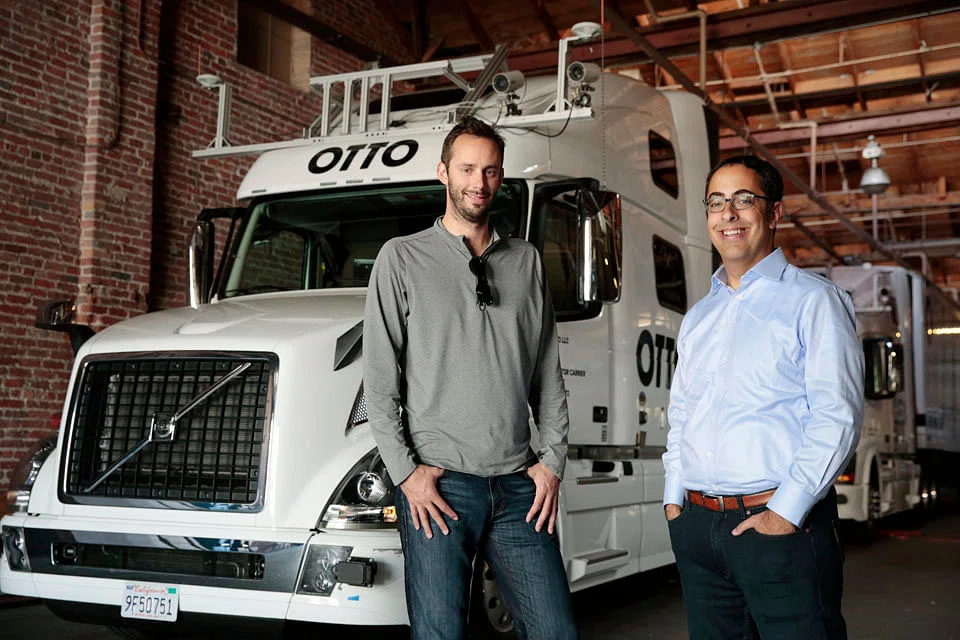
On Thursday, Uber said it would begin testing self-driving cars in Pittsburgh in a matter of weeks, allowing people in the city to hail modified versions of Volvo sport utility vehicles to get around the city. Uber also said it had acquired Otto, a 90-person startup including former Google and Carnegie Mellon engineers that is focused on developing self-driving truck technology to upend the shipping industry.
Those moves are the most recent indications of Uber's ambitions for autonomous vehicles that can provide services to both consumers and businesses.
And they come after Ford Motor's announcement this week that it would put fleets of self- driving taxis onto US roads in five years. As part of that effort, Ford said it had acquired an Israeli startup, Saips, that specialises in computer vision, a crucial technology for self-driving cars. Ford also announced investments in three other companies involved in major technologies for driverless vehicles.
Suddenly, it seems, both Silicon Valley and Detroit are doubling down on their bets for autonomous vehicles. And in what could emerge as a self-driving-car arms race, the players are investing in, or partnering, or buying outright the specialty companies most focused on the requisite hardware, software and artificial intelligence capabilities.
"It appears 2016 will go down in history as the year of the autonomous vehicle partnership," said Karl Brauer, an analyst with the car research firm Kelley Blue Book.
When Uber puts its modified Volvo XC90s on the streets of Pittsburgh, it will be the first, fledgling attempt to commercialise vehicles that drive themselves without the need for a human being at the controls.
Mr Brauer said the partnership between Volvo and Uber (which plan to invest US$300 million in their self-driving car effort) is part of a growing trend of big carmakers joining forces with technology firms. It comes after a US$500 million investment in January by General Motors in Uber's ride-hailing competitor Lyft, and an agreement in May by Fiat Chrysler to work with the tech giant Google to create self-driving minivans.
But the Ford and Uber initiatives are not without risk. Federal vehicle safety regulators are preparing guidelines for autonomous vehicles that may or may not include the need for a steering wheel or require the presence of a driver who can step in should computerised systems falter.
In a nod to the highly experimental nature of its Pittsburgh plan, Uber intends to have an actual human being behind the wheel - just in case. But while Ford is looking five years out, Uber is moving aggressively towards driverless fleets, despite the regulatory uncertainties.
"There's an urgency to our mission about being part of the future," Travis Kalanick, Uber's CEO, said on Thursday. "This is not a side project. This is existential for us."
That explains Uber's other announcement on Thursday: its deal to buy Otto for undisclosed terms, to beef up its own in- house expertise in self-driving technology. The acquisition of Otto follows Uber's recent opening of an advanced technology centre in Pittsburgh, in conjunction with Carnegie Mellon University. The company has also hired engineers directly away from Google, which has been immersed in developing autonomous cars for a decade.
Like Uber, Google is intent on developing self-driving cars for urban taxi use - reasoning that the slow speeds and relatively predictable environment of city streets that can be thoroughly, digitally mapped is the best and safest near-term purpose of autonomous vehicles. But for Uber, such cars are not a side bet but a way to be more fully in control of its business by eliminating the need for drivers who expect to be paid.
"Uber arguably has more at stake in creating self-driving cars than any other automotive entity," Mr Brauer said.
Although the market for big sales of fully self-driving cars is still years away, the investment and research activities are on a fast track. Uber plans to open a 180,000-square-foot facility in Palo Alto, California, to house Otto, which will operate as a stand-alone company focused specifically on upending the long-distance trucking industry.
But that talent and technology will apply more broadly to the technology behind Uber's grander self-driving car efforts, Mr Kalanick said. He said he believes his company's approach - a combination of teaming up with hardware manufacturers, Otto's software expertise, and a large network of more than 50 million monthly riders as recently as July - places Uber in the best position to be competitive with companies like Google.
"The first company in the space is not always the winner," Otto CEO Anthony Levandowski said on Thursday. "Intel was not the first chip maker. Facebook wasn't the first social network."
In the Pittsburgh pilot programme, Uber plans not only to have human drivers aboard as a safety precaution; passengers who use the vehicles will have to "opt in" and agree to be participants in the road test before riding, according to Uber.
GM and Lyft are also planning their own testing programme for autonomous ride-hailing vehicles, although they have not disclosed details.
That plan, along with this week's announcements by Uber and Ford, make it clear that the initial market for robotic cars will likely be for commercial fleets rather than vehicles consumers would park in their own garages. NYT






