

UK lowers security level for its ships in Strait of Hormuz
 Add BT as a preferred source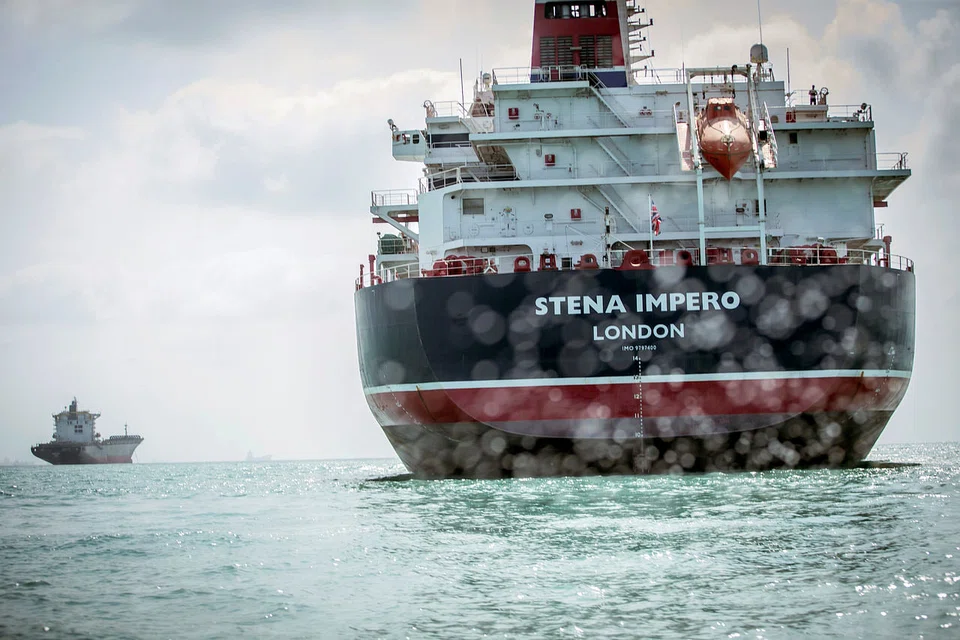
DeeperDive is a beta AI feature. Refer to full articles for the facts.
[LONDON] Britain lowered its security risk level for UK-flagged ships travelling through the Strait of Hormuz on Thursday, more than a month after one of its tankers was finally released from detention by Iran.
The Stena Impero was seized in July by Iran's Revolutionary Guards in the Strait, a major oil shipping route, for alleged marine violations two weeks after Britain detained an Iranian tanker off Gibraltar. The Iranian ship was released in August.
"UK-flagged ships will soon be able to transit the Strait of Hormuz without close Royal Naval accompaniment, following a decrease in the specific risk of detention of these vessels," a government spokeswoman said.
The Royal Navy's Fleet Commander told Reuters in September that the deployment of its warships had helped to stabilise commercial shipping through the critical chokepoint.
The UK Chamber of Shipping said it had been calling for a de-escalation of tensions in the Strait of Hormuz and welcomed the news that British-flagged ships would soon be able to transit the area without close Royal Navy protection.
"We continue to urge all ships operating in the region to liaise with the relevant authorities to ensure their safety and to enable the free flow of goods across the world," a spokesman for the trade association said on Thursday.
Navigate Asia in
a new global order
Get the insights delivered to your inbox.
"Global trade relies on the safe passage of goods and without this consumers and businesses could suffer with increased costs."
Several international merchant vessels have been attacked in the Gulf this year in incidents that have rocked world commodities trading. Washington has blamed Iran, which denies the accusation.
REUTERS
Share with us your feedback on BT's products and services
TRENDING NOW

Shelving S$5 billion office redevelopment plan proved ‘wise’ as geopolitical risks mount: OCBC chairman
China pips the US if Asean is forced to choose, but analysts warn against reading it like a sports result

Beijing’s calculated silence on the Iran war

Middle East-linked energy supply shocks put Asean Power Grid back in focus

