

Ultra-luxury car registrations slow down in June after tax hike

Derryn Wong
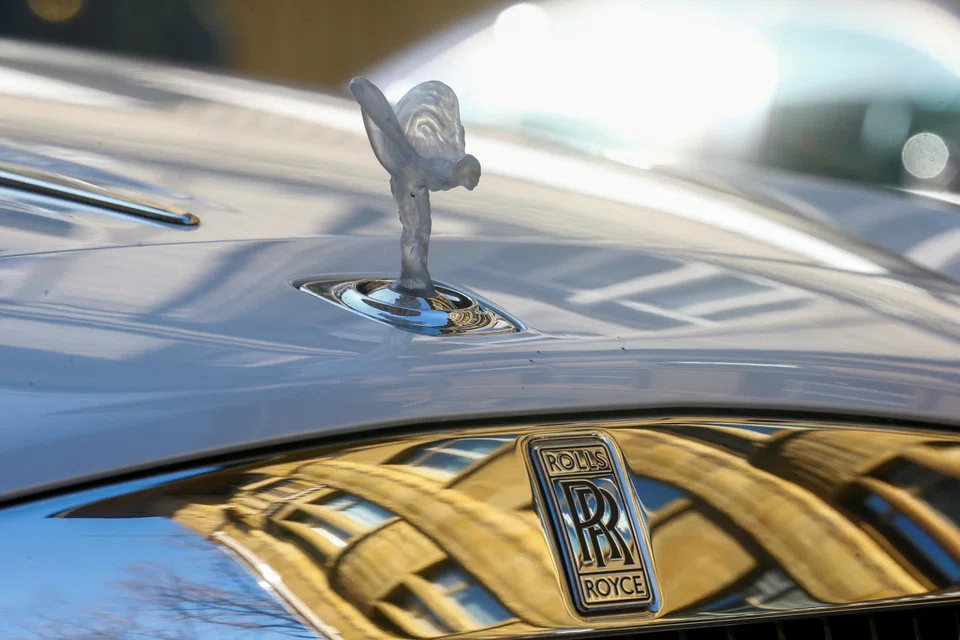
AFTER stellar figures in the first five months of 2023, Singapore registrations of upper-crust luxury cars such as Ferrari and Rolls-Royce plummeted in June because of tax increases.
Industry watchers said the impressive results for the first half were front-loaded as buyers rushed to purchase cars before the Additional Registration Fee (ARF) tax increase could no longer be avoided.
The ARF hike was announced on, and effective from, Feb 14, but dealers could avoid the tax by using open category certificates of entitlement (COEs). These have a three-month validity, so if they were secured in February, they could be used to register a car between then and May.
With this no longer being an option, sales for the rest of the year may not match the first five months’ exceptional results, said industry watchers.
Of the six ultra-luxury brands with significant sales in Singapore, Ferrari, Rolls-Royce and McLaren had significantly more registrations in the first half of 2023 than the year-before period – with 2022 having already been a bumper year for the segment.
Rolls-Royce registered 81 cars in H1 2023, up 50 per cent from 54 in H1 2022 and already close to its 2022 total of 93. Ferrari registered 69 cars, a 40.8 per cent increase from 49 units previously, while McLaren registered 13, up from nine.
A few brands registered fewer cars: Bentley registered 51, down from 68; Aston Martin registered 13, down from 16; and Lamborghini registered eight, down from 14.
However, H1 registrations were concentrated almost entirely in the first five months of the year.
In June, Bentley registered four cars, Rolls-Royce registered two and Ferrari registered just one. Aston Martin, McLaren and Lamborghini did not register any.
Ultra-luxury cars are the most expensive on the market, with models typically costing S$1 million or more. For instance, Ferrari’s least expensive model in Singapore, the Roma coupe, starts at S$1,090,028 without a COE or options.
The ARF changes have meant a significant increase in price for the ultra-luxury segment, with the highest taxation tier – applicable to ultra-luxury cars – raised to 320 per cent, from 220 per cent before.
This meant price increases of as much as S$100,000 to S$400,000, depending on the model and exact equipment specification. Ferrari’s above-mentioned Roma costs S$918,491 without COE or options before the tax increase.
Clients brought forward their purchases and delivery of cars before the new ARF policy’s impact, said Renee Chua, managing director for Rolls-Royce Motor Cars Singapore.
She believes that there will be slower registrations in the next few months, but was “cautiously optimistic” that sales could be boosted in the fourth quarter, when Rolls-Royce launches its first electric vehicle, the Spectre.
Bentley Singapore general manager Chow Yiling said it was “very likely” that demand tailed off by June as a result of the ARF spike, noting that buying sentiment had cooled off in recent weeks.
Still, she expects that the market will “pick up soon”, citing how previous ARF increases did not prevent the market from eventually having good sales performance.
The managing director for an ultra-luxury sports car brand, who declined to be named, told The Business Times (BT) that the ARF spike could have meant lower sales as a result of increased competition from mainstream luxury brands such as BMW, Mercedes-Benz and Porsche.
The director added that the upward price shift meant more mainstream luxury cars entering the “most competitive ultra-luxury price range” of S$800,000 to around S$1 million – and some clients who noticed the large increase in price decided to deploy their funds into property or investments instead.
The director pointed out that cheaper, immediately-available parallel import options could also have contributed to the inflated numbers in the first five months, as parallel importers were able to capitalise on the tight time frame.
Parallel importers hold ready stock, compared to authorised dealers, whose customers often choose specific equipment or customisations, which add to delivery time.
Another factor that may mean lower registrations for the rest of the year is a clampdown on parallel imports, which Bentley and Rolls-Royce representatives said the companies were working on.
Of the cars registered in the first half of 2023, 15 Bentleys, 17 Ferraris and 44 Rolls-Royces were registered by parallel importers.
A parallel importer of ultra-luxury cars, which had sold “a number” of these, told BT that most buyers had asked for delivery before May in order to avoid the tax increase.
TRENDING NOW

Things to know about DBS’ incoming chairman Anthony Lim
DBS eyes prime brokerage business as Q3 profit falls 5% on weaker trading income

Royal Group and Sunset Hospitality abandon plans to open Casa Mett hotel off Orchard Road

George Yeo adds 100,000 Wilmar shares at S$2.97 apiece, taking stake to over 1 million shares

