

UN agency issues health guidelines for airlines
ICAO's recommendations include mask-wearing, temperature checks and aircraft disinfection
 Add BT as a preferred source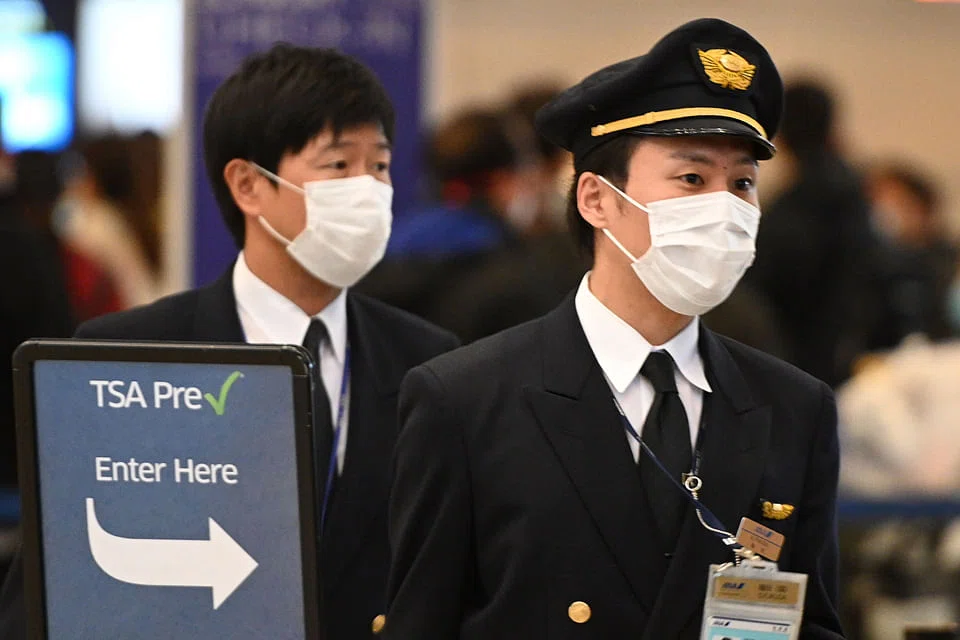
Montreal
MASK-WEARING, temperature controls, disinfection of aircraft - these are among a series of health recommendations published by the International Civil Aviation Organization (ICAO) for the pandemic-hit airline industry as it relaunches air travel.
The protocol was drawn up by an international task force formed by the Montreal-based ICAO with the help of other United Nations (UN) agencies, such as the World Health Organization and the International Air Transport Association (IATA).
"These guidelines will facilitate convergence, mutual recognition and harmonisation of aviation Covid-19 related measures across the globe," Philippe Bertoux, France's representative on ICAO's board, said. France also led the task force debate.
The changes being suggested are the most important for air travel since security measures put in place after the Sept 11, 2001 terrorist attacks on the United States.
The recommendations, adopted on Monday evening by the ICAO's executive committee, are intended to serve as a "framework" for assuring the safety of passengers and workers on planes and at airports.
On their arrival at airports, travellers should present a health certificate and undergo an initial temperature check, under the guidelines. Online check-in before arriving at the airport should be given priority, and passages through security should be rethought to limit physical contact and waiting in lines.
Mobile tickets are advised, as well as other forms of no-contact technology, such as facial or eye scans. "This will eliminate or greatly reduce the need for contact with travel documents between staff and passengers," the protocol said.
Passengers are encouraged to travel as light as possible, with just one small piece of hand luggage. Newspapers and magazines will no longer be allowed on board, and duty-free sales will be limited.
The wearing of a mask or face covering should be obligatory inside aircraft and terminals, where physical distancing of at least one metre should be respected.
Terminal access will be limited to passengers and their companions, such as those accompanying disabled travellers, and airport personnel.
Aboard planes, passengers should wear masks, move as little as possible within the cabin, and not line up outside toilets to lessen the risk of infecting other passengers. People will be assigned specific toilet stalls on the plane in accordance to where they are seated.
Flight attendants will be provided with personal protective equipment that could include visors, gloves and medical masks.
But the ICAO does not advocate leaving every other seat open to assure physical distancing, a restriction that the airline industry sees as a threat to its profitability. The organisation, nevertheless, asks passengers to remain as far from one another as possible.
It also advocates that food on board be pre-packaged and that aircraft be regularly disinfected. Temperature checks should also be taken upon a flight's arrival.
The measures are not obligatory, but they are the product of a broad consensus that imparts "an authority that will make them a global reference for the first time on this issue since the start of the Covid-19 crisis", said Mr Bertoux.
To reopen after having been grounded for months and brought to its knees financially, the airline industry is pressing for rules to be harmonised to reassure passengers and states that have closed their borders to halt the spread of the virus. AFP
Decoding Asia newsletter: your guide to navigating Asia in a new global order. Sign up here to get Decoding Asia newsletter. Delivered to your inbox. Free.
Share with us your feedback on BT's products and services
TRENDING NOW

Stocks to watch: ComfortDelGro, ESR-Reit, Frasers Property, Centurion, Fuyu
Fed chair Warsh’s hawkish Jackson Hole turn favours soaring banks over struggling S-Reits

Beyond data centre Reits: The AI potential that Singapore investors are still missing
Frasers Property shareholders approve S$2.1 billion hospitality portfolio revamp

