

United Airlines unveils bid to fund sustainable aviation fuel use
 Add BT as a preferred source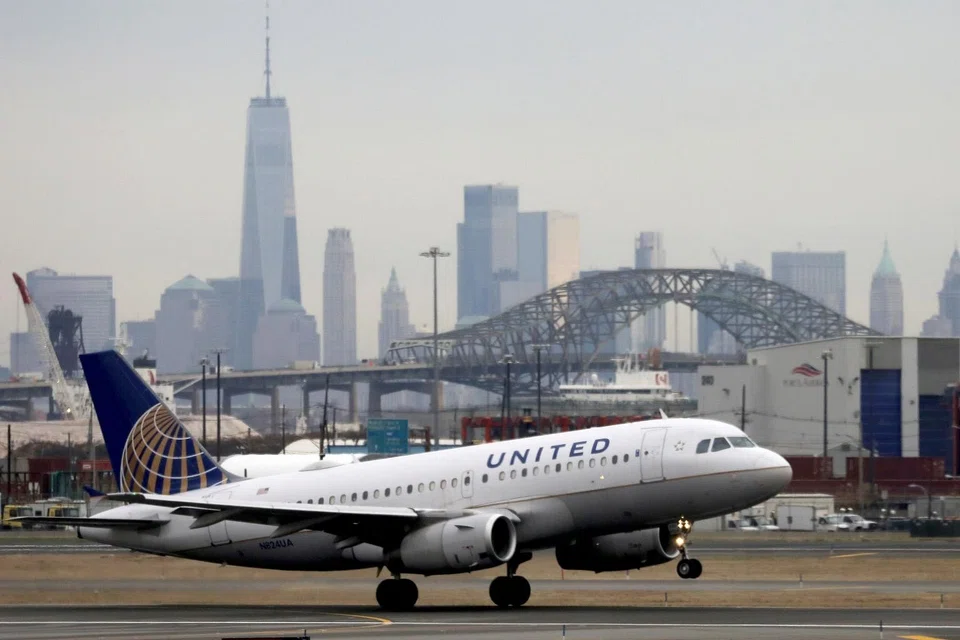
DeeperDive is a beta AI feature. Refer to full articles for the facts.
[NEW YORK] United Airlines said on Tuesday it has partnered with global firms including Nike and Siemens in an 'Eco-Skies Alliance' to finance use this year of about 3.4 million gallons of low-carbon, sustainable aviation fuel derived from trash.
Though tiny compared with the 4.3 billion gallons of jet fuel that United consumed in 2019 prior to the start of the Covid-19 pandemic, the amount triples the roughly 1 million gallons of sustainable fuel it has used each year since 2016.
Airlines have used sustainable fuel since 2008 as part of efforts to reduce outright emissions, but so far this represents barely 1 per cent of the fuel used worldwide, industry groups say.
Chicago-based United did not disclose the cost of the plan, nor how much its 11 partners would contribute. It said the project gives customers a way to help reduce the environmental impact of flying beyond buying carbon offsets.
Air transport accounts for 2 per cent-3 per cent of greenhouse gas emissions, the French aerospace association said on Tuesday.
Environmental groups argue the sector's overall contribution is higher.
Navigate Asia in
a new global order
Get the insights delivered to your inbox.
United chief executive Scott Kirby said part of the aim of the alliance was to create more of a market for sustainable aviation fuels.
"We'll see how it develops," he told reporters. "I think there's a huge appetite for it." Partners include companies with corporate or cargo deals with United, like Nike, Palantir, Siemens and Japan's Takeda Pharmaceutical.
The airline industry has focused more broadly on the purchase of carbon offsets to reduce the environmental impact of flying, pending the arrival of new technology to meet the sector's goal of halving net emissions by 2050 versus 2005.
Environmental critics say offsets do not directly address climate goals and mask the problem of ongoing jet emissions.
United, which along with some other carriers has said it wants to cut net emissions more aggressively by 100 per cent by 2050, has criticised offsets and announced a recent investment in 'carbon-capture' technology. It has invested in a sustainable aviation fuel producer called Fulcrum BioEnergy.
"While we know that aircraft are never going to be completely decarbonized, we are not going to use offsets as the way to get to 100 per cent green," Mr Kirby said.
Airline association Iata says lifecycle greenhouse emissions from sustainable fuel can be at least 80 per cent lower than normal fuel and are the only medium-term option for curbing emissions growth, since airlines cannot yet switch to electric planes.
While using waste avoids taking land from food production, environmental groups like Transport & Environment say such supplies are limited and face competition from other sectors.
REUTERS
Decoding Asia newsletter: your guide to navigating Asia in a new global order. Sign up here to get Decoding Asia newsletter. Delivered to your inbox. Free.
Share with us your feedback on BT's products and services
TRENDING NOW
Air India asks Tata, Singapore Airlines for funds after US$2.4 billion loss

Beijing’s calculated silence on the Iran war

China pips the US if Asean is forced to choose, but analysts warn against reading it like a sports result

Richard Eu on how core values, customers keep Singapore’s TCM chain Eu Yan Sang relevant

