

US Airways readies for integration
Charlotte, North Carolina
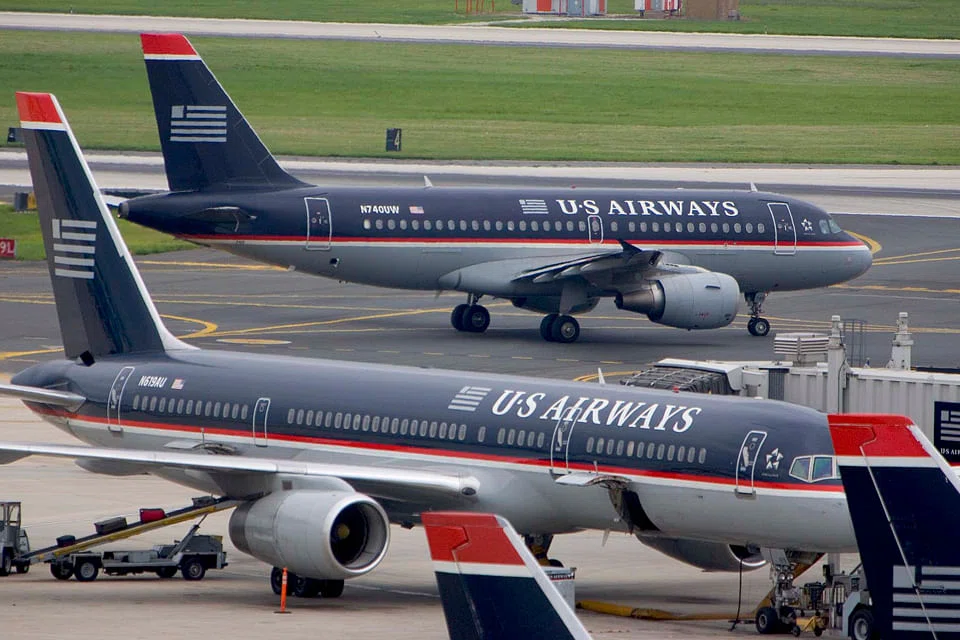
ON Oct 17, at 12.01 am, the website of US Airways will go dark. The airline's reservation system will power down. Hours later, its last flight, a red-eye from San Francisco, will kiss the runway in Philadelphia. With that, US Airways will disappear as a brand. And its tens of thousands of employees and 655 planes will enter an unknown new world - that of American Airlines.
Over the past 15 years in the United States, a burst of airline mergers has created a group of mega-airlines - including American - that rank as four of the world's five largest by passengers carried. But combining airlines has proved difficult and at times created fresh complications for harried travellers. While some of the mergers have worked well, others - particularly between United and Continental - have required constant triage, resulting in technical malfunctions and recurring, headache-inducing delays and flight cancellations. That is why, for US Airways, its last phase as a company might also be its most important.
Mergers in the airline industry are particularly tricky, analysts said, because they require a stitch-up of complex computer systems and policies - all of which must be done while serving customers without interruption. A problem at just one airport can ripple across the nation.
"Putting everything together can be a nightmare," said Michael Boyd, president of Boyd Group International, an aviation consulting firm.
On paper, US Airways and American merged two years ago in an US$11 billion deal that would create a stronger rival to United and Delta. But Oct 17 is the date for what they call the true "integration" - the point at which reservations systems are fused and US Airways ceases to operate its own subsidiary airline. If all goes well, customers will only notice the new airport signage, with all US Airways logos peeled away. But the last time that US Airways tried this - in 2007, with America West - there was full-on bedlam: Kiosks of the merged airlines could not communicate, and lines snaked across terminals. In Charlotte, frantic employees handed out sheets of paper reading, "Please go home and try to get a seat on a later flight," according to news accounts from the time.
Officials at American said that they have prepared nearly two years for this day. For the sake of consistency, they have tweaked nearly 500 US Airways policies. (US Airways did not allow checked pets; soon it will. It did not allow unaccompanied minors to make connections; now it does.) They have combined frequent flyer programmes. US Airways switched into the Oneworld alliance, a group of cooperating global airlines that already included American. Particularly over the past year, US Airways has handed off bits and parts of its operation to American's headquarters while shuttering its Twitter account, which now reads, "Please follow @AmericanAir for updates and customer support."
"I tell people, we're engaged but not married," said Amy Mason, a US Airways customer service supervisor in Charlotte. "On Oct 17, we'll be married."
While in wind-down mode, US Airways remains something of a weird half-airline. It is possible to buy a flight on AA.com, check in at a US Airways kiosk and board a plane painted in US Airways colours. In your seat pocket, you will get an American Airlines safety card, an American Airlines magazine and a US Airways "Marketplace" menu. The flight attendant might wear an American Airlines lanyard but pass out coffee with US Airways sugar packets.
But the airlines are still distinctly separate. For now, if you buy an American flight but want to travel standby on a US Airways flight, US Airways customer service agents cannot make it happen.
The change, come Oct 17, will be most profound at the US Airways hubs - Phoenix Sky Harbor International, Philadelphia International, Reagan National and Charlotte Douglas International. In Charlotte, the nation's eighth busiest airport, 90 per cent of passengers fly US Airways. Roughly four in five passengers who travel through Charlotte connect to another flight, meaning that the operations at this airport, more so than most hubs, can determine whether Americans on any given day travel smoothly.
The US Airways manager in charge of the transition in Charlotte, Erin Frey, described an elaborate affair in which nearly every part of the airport has to change. She needs new stock paper for tickets. New automated scanners. New technology for routing baggage on its long journey through the bowels of the terminal.
"So many moving parts that people will never notice," said Ms Frey, who has worked for the airline since 1997. "It's like when you're going to see a play. So much is going on behind the curtains. But when you pull up the curtains, customers just get to see the product."
Airlines are sometimes called tech companies with wings, and for years, US Airways has used a reservations system called Shares that is the heart of its operations. American has used a system called Sabre. They are alike in the manner of a PC and a Mac: They accomplish similar objectives but come with their own jargon and shortcuts.
To reduce the odds of a frantic Oct 17, US Airways since July has gradually moved its reservations into the American system, rather than doing a complete transfer overnight. This "drain-down", as officials call edit, follows the model used by Delta in a smooth merger with Northwest.
The most challenging mergers - including United-Continental and America West-US Airways - have come when the surviving airline adopted the reservations system of the smaller airline. Meaning that the majority of employees, rather than the minority, had to learn something new. Since the merger with Continental in 2010, United has had at least five major computer malfunctions. In 2013, the airline was fined for taking too long to respond to refund requests, something that it blamed on merger-related tech issues.
"We knew we needed to take the larger carrier's system," said Kerry Philipovitch, the American Airlines senior vice-president of customer experience. "It wasn't even a consideration."
Despite the technical problems that ensued, the merger made sense, industry experts say, and helped finally turn around the airline. US Airways trimmed some of its East Coast hubs and gained a foothold in Phoenix. And although the new airline kept the US Airways name, America West's executives, including chief executive Doug Parker, filled all the top positions.
And it was those same executives who, starting in 2011, reached out to American Airlines' creditors as it, too, was emerging from bankruptcy protection. Today, Mr Parker runs American Airlines.
"Really, US Airways took over American," Mr Boyd, the consultant, said. "It's just that they kept the American name." The disappearance of US Airways will be marked with only a little symbolism. The final red-eye will be given the flight number UA 1939, in tribute to year that the company began operations as All American Aviation. Before hitting San Francisco, the plane will have headed through Philadelphia, Charlotte and Phoenix - the majority of the airline's hubs.
But some employees said that they have learnt to have little nostalgia. Asked about the merger on a recent US Airways flight, one flight attendant chuckled. "I'm from Piedmont. Started in 1978," she said. "Five mergers later, here I am." WP






