

US port strikes to boost global shipping rates despite earlier front-loading of peak season demand
Prices spiked in July as companies scheduled shipments before the usual year-end peak period

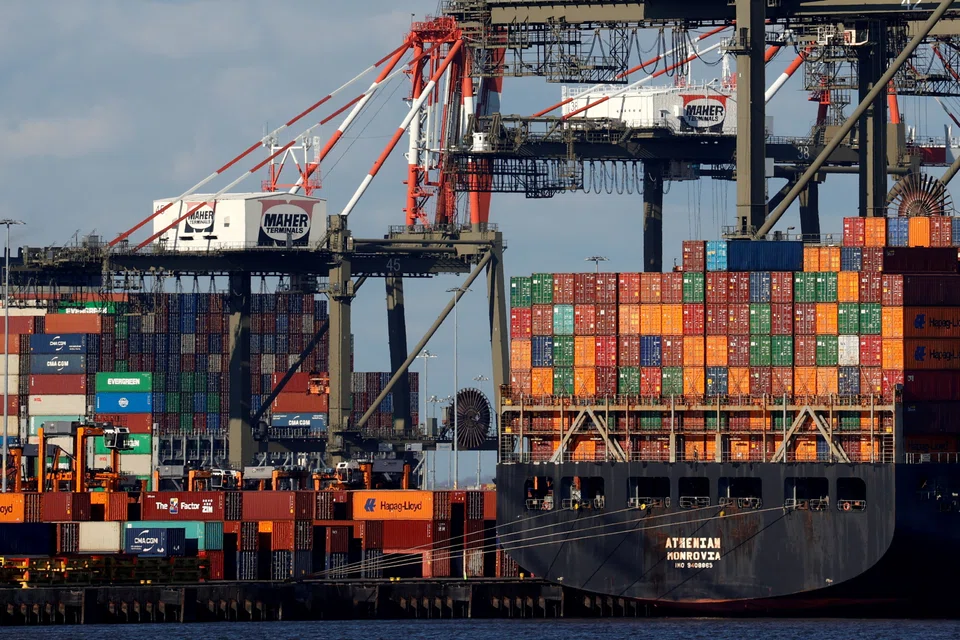
THE year-end peak shipping season has been quieter than usual, as companies brought forward shipments amid global uncertainty. Port strikes on the US East Coast, however, may now drive prices back up.
Members of the International Longshoremen’s Association (ILA) began striking just after midnight on Tuesday (Oct 1) at every major port on the US East and Gulf coasts, which handle as much as half of all US trade volumes.
Container cargo and auto shipments will be halted, although energy supplies and bulk cargo will continue.
No agreement could be made between ILA and ocean carriers and terminal operators, represented by the US Maritime Alliance (USMX), so the six-year contract lapsed on the deadline of midnight on Monday.
The union, which has around 50,000 active members, said USMX’s final proposal made on Monday fell “far short of the demands of its members to ratify a new contract”.
In earlier statements, ILA added that ocean carriers had benefited from billions in profits, but this had not been shared with workers.
USMX said it had offered to bump wages by nearly 50 per cent over a previous proposal.
US President Joe Biden earlier ruled out intervention on the industrial action.
ILA leadership said they were prepared to “fight as long as necessary” for wages and protection against automation.
According to JPMorgan Chase, losses from the strike could amount to US$3.8 billion and US$4.5 billion a day.
Gregg Johnston, partner and head of shipping and offshore finance at Stephenson Harwood, said that if the strikes are prolonged, they will create upside pressure on container rates over the next few weeks.
This, along with continued disruptions in the Red Sea, will likely keep 2024’s shipping prices well above 2023 levels.
Pre-emptive shifts
August till October is usually the high season for global shipping, as retailers stock up for the festive shopping from November to December.
Yet this year, container prices have fallen by more than a third from highs set in July.
The Drewry World Container Index (WCI), which indexes the price of a 40-foot container on major global trade routes, was at US$3,691 on Sep 26, down 37.8 per cent from a high of US$5,937 on Jul 18.
The fall in prices is due to many companies having front-loaded their usual year-end shipments, scheduling these from May onwards instead of August, said industry observers.
These decisions were taken against a backdrop of global uncertainty, given the Red Sea disruptions – but also because US port workers began making their strike threats months in advance, with Sep 30 as the deadline for negotiations.
Lim Lian Hoon, managing director at consulting firm AlixPartners, said: “Shippers have moved freight earlier, causing an earlier peak in volumes as everyone tried to get freight in before the deadline of Sep 30.”
Christian Roeloffs, CEO of Container xChange, noted that businesses have been pulling forward shipments over the past two to three months on the threat of port strikes, supported by robust consumer spending in the US.
Much of the inventory for Black Friday – the Friday after Thanksgiving in late November, notable for massive sales – and Christmas has already been shipped, Container xChange noted in a report.
This front-loading of demand, however, will not be enough to relieve pressure on shipping demand. Now that the strike threat has materialised, prices are still expected to rise.
“If there is prolonged disruption, this will likely result in port congestion and therefore soak up more vessel capacity. Maersk previously estimated that one week of strikes could cause up to four to six weeks of port congestion,” said Stephenson Harwood’s Johnston.
The strikes, which could affect more than 30 ports, are the biggest for US ports since the 1970s, he added.
This could shore up global sea freight prices through the year-end season and into the other seasonal peak around Chinese New Year, depending on how long the strike persists.
Paolo Montrone, global head of sea logistics trade for Kuehne+Nagel, said: “(The strikes) could lead to significant disruptions, potentially creating a domino effect that extends beyond US trade routes.”
Jason Yang, partner at Virtus Law, said that as ILA is the largest maritime workers’ union in North America, the industrial action will significantly crimp the supply of containers in the short term.
“Both exporters and importers, particularly of refrigerated agricultural products, utilise ports on the US East Coast and Gulf Coast for transatlantic trade,” he said. These companies will now be scrambling to reroute shipments and reorganise supply chains.
Leading container lines had pre-announced strike surcharges, which will come into effect around mid-October and push up container rates for the US East Coast and major trade routes connected to it.
For instance, surcharges per 40-ft container at affected ports are US$1,500 for imports for Hapag-Lloyd, US$3,000 for imports and exports for Maersk, and up to US$3,000 for CMA CGM.
Continued pressure
Strikes aside, escalating trade tensions between the US and China have also driven up demand for containers, said Yang.
After the Biden administration’s tariff hike for Chinese goods in May, importers are rushing to get goods in before retaliatory tariffs from China, or – even worse – a possible Trump presidency, which could raise tariffs even more and spark a tit-for-tat trade war.
“The uncertainty surrounding the outcome of the US election, as well as the lack of visibility as to the extent and timing of China’s retaliatory response, has also contributed to supporting near-term spot container prices, as importers in both countries are front-loading imports in order to get ahead of these anticipated tariffs,” Yang added.
Container prices were low for most of 2023, on weak demand and an oversupply of container ships.
But from October 2023, the reroutes forced by Houthi attacks in the Red Sea have absorbed spare capacity and raised rates – with no end in sight.
The Red Sea situation has “certainly supported freight rates in many shipping segments”, said Stephenson Harwood’s Johnston. “The attacks have been consistent throughout the year and there is, to date, no clear plan or compromise in sight to stop them.”
AlixPartners’ Lim added that port congestion in Asia – including Singapore – has also played a part in absorbing excess capacity and raising rates.
Johnston and Lim said that if the Suez Canal situation is resolved, shipping rates are very likely to fall.
“If the tensions in the Red Sea end and all the container vessels currently on order are delivered, absent a high level of scrapping, a supply-led downturn in container shipping is plausible,” Johnston said.
“(If) ships are routed through the Suez Canal again, that will free up around 9 per cent of global capacity, which would definitely result in oversupply,” said Lim.
Container xChange’s Roeloffs, however, thinks rates could fall even without a Red Sea resolution. This year is on track to be one of the strongest for both container and container vessel deliveries, boosting capacity, he noted.
New competitors on trans-Pacific routes – such as Taiwan’s TS Line and Singapore’s SeaLead Shipping – are also putting pressure on established carriers by undercutting rates, which could lead to a price war.
TRENDING NOW

Once staunchly pro-China, Malaysian Chinese businesses are now distancing themselves from Beijing

Looking beyond looming CEO succession, should UOB potentially pursue a transformative merger?

Could stablecoins be the future of money?

Grab CEO’s wife Chloe Tong on life with Anthony Tan and finding her purpose

