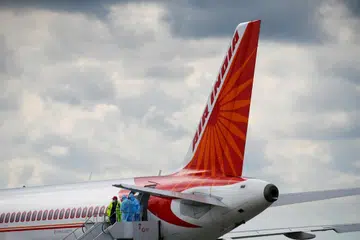
US requires inspections for wire failure on Boeing 737 Classic planes
Directive stems from investigation into Jan 9 Indonesian flight crash, in which all 62 passengers were killed
 Add BT as a preferred source
DeeperDive is a beta AI feature. Refer to full articles for the facts.
Washington
THE Federal Aviation Administration (FAA) said on Friday it was requiring US operators of 143 Boeing 737 Classic series airplanes to check for possible wire failures stemming from an investigation into an Indonesia crash in January.
The 737 Classic is an older generation of planes more than two decades old. The FAA said the issue affected 1,041 737-300, -400 and -500 Classic series airplanes worldwide, but many are currently out of service, because of Covid-19 or other issues.
The FAA is issuing an air-worthiness directive for operators to verify that the flap synchro wire, which plays a role in the operation of the aircraft's auto-throttle system, is securely connected to a safety sensor.
The wire failure could go undetected by the auto-throttle computer on affected airplanes and pose a safety risk.
The FAA is requiring some speedier checks than had been suggested by Boeing, which said late on Friday that it was "engaged in ongoing efforts to introduce safety and performance improvements across the fleet". The newer 737 MAX and 737 NG are unaffected by the directive.
Navigate Asia in
a new global order
Get the insights delivered to your inbox.
The FAA and Boeing identified the potential problem during the investigation of the Jan 9 crash of Sriwijaya Air Flight 182 in the Indonesian capital.
Indonesia's third major airline crash in just over six years shone a spotlight on the South-east Asian nation's poor air safety record.
All 62 aboard were killed after the 26-year-old Boeing 737-500 crashed into the Java Sea soon after takeoff from Jakarta.
The FAA said there was no evidence the flap synchro wire issue had a role in the accident though the possibility of a failed connection presented a safety concern warranting prompt attention.
In February, Indonesia's National Transportation Safety Committee (KNKT) said the plane had an imbalance in engine thrust that eventually led it into a sharp roll before a final dive into the sea.
There had been two prior problems reported with the auto-throttle system that automatically controls engine power based on maintenance logs, but the issue was rectified four days before the crash, the agency said.
Boeing issued a March 30 message to operators directing them to perform electronic checks of the auto-throttle computer to confirm the wire is connected within 250 flight hours.
The FAA is requiring the initial test within 250 flight hours or two months from now, whichever occurs first, "to ensure that airplanes with low utilisation rates are addressed in a timely manner". Operators must then make repairs, if needed.
The FAA said a faulty connection could result in the failure of the auto-throttle system to detect the position of the aircraft's flaps if the plane's engines were operating at different thrust settings due to another malfunction.
The FAA is requiring follow-on inspections every 2,000 flight hours after the first.
Affected US operators are Aloha Air Cargo, DHL, iAero Airways, Kalitta Charters and Northern Air Cargo, the FAA said. REUTERS
Decoding Asia newsletter: your guide to navigating Asia in a new global order. Sign up here to get Decoding Asia newsletter. Delivered to your inbox. Free.
Share with us your feedback on BT's products and services