Vessels carrying Middle East oil, LNG exit Hormuz amid US-Iran peace talks, head for Pakistan, China
They are among a handful of supertankers exiting the Gulf in May via a transit route that Iran has ordered ships to use
 Add BT as a preferred source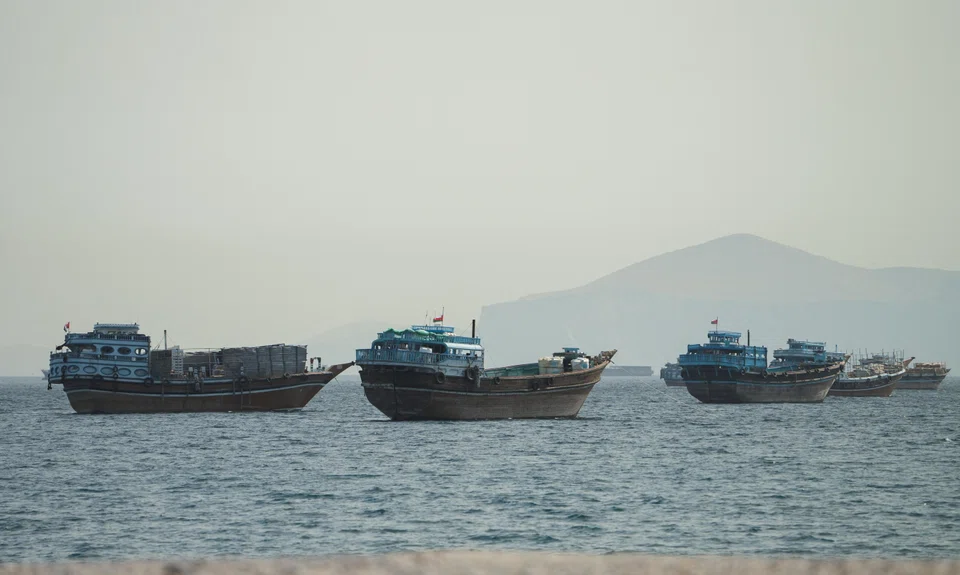
[SINGAPORE] Two liquefied natural gas tankers are exiting the Strait of Hormuz on Monday (May 25), heading to Pakistan and China, while a supertanker with Iraqi crude for China left the Gulf on Saturday after being stranded for nearly three months, shipping data showed.
The US-Israeli war on Iran that began on Feb 28 has severely curtailed shipping through the Strait of Hormuz, through which around one-fifth of the world’s supply of oil and LNG normally flows.
The vessels are among a handful of supertankers exiting the Gulf in May via a transit route that Iran has ordered ships to use. In the week ended May 24, three Very Large Crude Carriers (VLCCs) made their way to China and South Korea with 6 million barrels of crude.
LNG tanker Fuwairit is crossing the Strait of Hormuz on Monday and is expected to discharge its cargo in Pakistan on Tuesday, shipping data on LSEG and Kpler showed. The vessel, sailing under the Bahamas flag, loaded LNG at Qatar’s Ras Laffan port around Mar 28.
Japan’s Mitsui OSK Lines (MOL), which owns the Fuwairit, could not be immediately reached for comment.
The LNG tanker Al Rayyan has also exited the strait. Carrying a cargo loaded at Ras Laffan, it was last seen in the Gulf on May 22, and currently shows up outside the strait between Iran and Oman. It is expected to discharge its cargo in China on June 27, LSEG and Kpler data show.
QatarEnergy, which owns Al Rayyan, did not immediately respond to a request for comment outside office hours.
Separately, the VLCC Eagle Verona, which exited the strait on Saturday, is expected to reach Ningbo port in eastern China on Jun 12 to discharge its cargo, shipping data on LSEG and Kpler showed.
The Singaporean-flagged vessel chartered by Unipec, the trading arm of Asia’s largest refiner, Sinopec, loaded nearly 2 million barrels of Basrah crude around Feb 26, according to the data.


The Eagle Verona was among seven ships Malaysia had sought permission from Iran to transit, two sources earlier told Reuters. Five of the ships have since exited the waterway, while two more remain in the Gulf.
Sinopec and Malaysian state shipper MISC, which owns the vessel, could not be immediately reached for comment.
Before the war began, shipping traffic through the strait averaged 125 to 140 daily passages. Some 20,000 seafarers remain stranded inside the Gulf on board hundreds of ships. REUTERS
Decoding Asia newsletter: your guide to navigating Asia in a new global order. Sign up here to get Decoding Asia newsletter. Delivered to your inbox. Free.
Share with us your feedback on BT's products and services