

Vietnam’s capital needs US$887m investment for fully electric bus fleet
 Add BT as a preferred source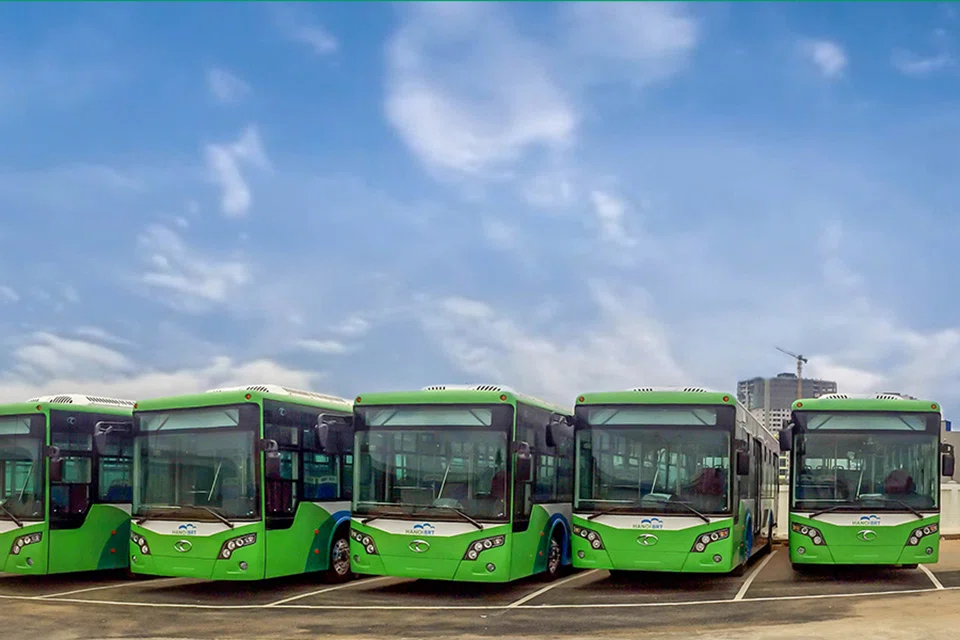
DeeperDive is a beta AI feature. Refer to full articles for the facts.
VIETNAM’S capital Hanoi will need about 21 trillion dong (US$887 million) in the coming years to replace all petrol- and diesel-powered public buses with electric alternatives, state media reported on Tuesday (Sep 20).
Hanoi Transport Corporation (Transerco), the project’s adviser and Hanoi’s major bus lines operator, plans to convert around 1/5 of the city’s 1,100-bus fleet to electric by 2025, and the full fleet by 2050, state-run newspaper Vietnamnet reported.
Combustion engine buses currently on the streets of Hanoi can run 260-400km per day while e-buses run 250-300km per charge, the newspaper reported, adding the company must devise a plan that ensures long distances can still be covered by the electric vehicles (EVs).
Currently, there are 9 electric bus lines in Hanoi with a handful of EVs operated by Vinbus, a unit of Vietnam’s biggest conglomerate Vingroup. The city first introduced electric buses in December last year.
The move toward EVs is in line with Vietnam’s pledge to become carbon-neutral by 2050. REUTERS
Decoding Asia newsletter: your guide to navigating Asia in a new global order. Sign up here to get Decoding Asia newsletter. Delivered to your inbox. Free.
Copyright SPH Media. All rights reserved.






