

Volkswagen budget cuts force battery unit to seek external funds
PowerCo is considering bank loans, external investors and a potential public offering
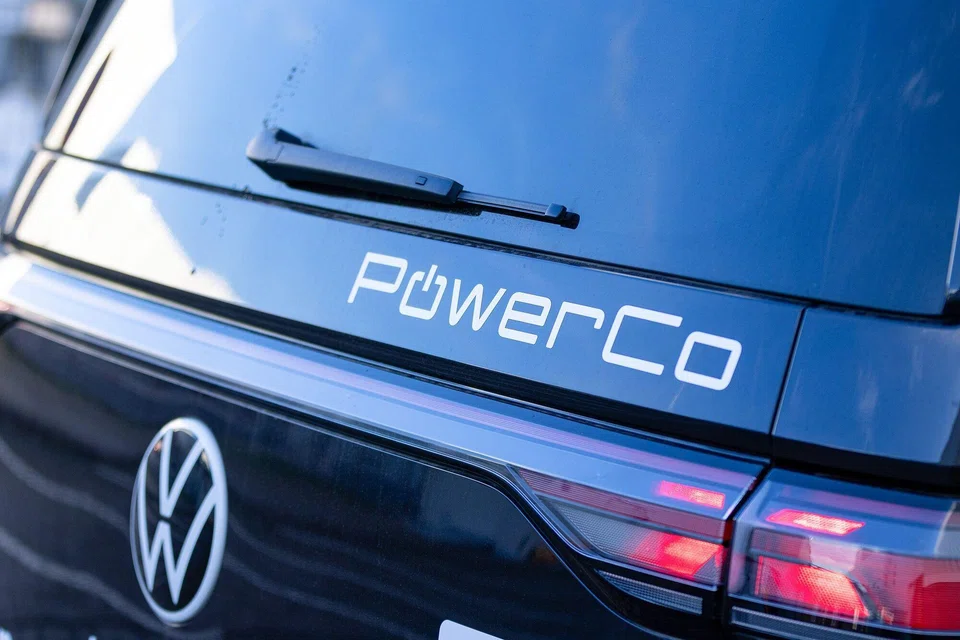
[FRANKFURT] Volkswagen’s battery business is being forced to seek external financing after the German carmaker cut its five-year spending plan, creating a mid-term squeeze for the unit.
Third-party funding “is an option that we are looking into more closely than before”, PowerCo chief executive officer Frank Blome told reporters at the unit’s plant in Salzgitter, Germany, on Tuesday (Dec 16).
Bank loans, external investors and a potential public offering are all options under consideration after the unit’s budget was reduced, he said.
Volkswagen management is in the midst of deciding the details of its five-year planning round, which has been reduced to 160 billion euros (S$242.3 billion) from 180 billion euros two years ago.
The carmaker annually decides on how to divide up spending between factories, vehicle models and new technologies such as batteries, software and electric vehicles (EVs). The plan is expected to be unveiled in March.
PowerCo does not plan to halt construction at its three plants in Germany, Spain and Canada, but a solution for mid-term financing is needed, Blome said, adding that less investment is needed given the slower-than-expected uptake of EVs.
“It’s true that things aren’t progressing quite as quickly as originally planned,” Blome said.
PowerCo on Wednesday commissioned the Salzgitter gigafactory, Volkswagen’s first battery-cell manufacturing site. The automaker is aiming to regain control of a key part of the electric-vehicle supply chain as Europe’s shift away from gasoline-powered vehicles loses steam. The cells will debut in EVs made by Volkswagen, Skoda and the Cupra brand next year after completing final road tests.
Germany’s higher costs will make the Salzgitter plant primarily a lead example for new batteries, establishing operations blueprints for the other two planned factories in Spain and Canada. Those will start serial production in 2027 and 2028, respectively.

The company has halved its capacity target for the initial ramp-up of the Salzgitter plant to 20 gigawatt (GW) hours a year. While it still has a long-term goal of producing batteries with a capacity of 200 GW hours overall in its three plants, it has not provided more details.
The three plants together would have a maximum capacity of 190 GW hours if built out completely. A company spokesperson said that PowerCo would look into how to get to the 200 GW-hour target when it gets closer to that mark, but it is “still very far” from the goal.
The Spanish factory could be able to produce a maximum of 60 GW hours, while the Canadian one’s capacity could be as much as 90 GW hours. The Salzgitter plant will top out at 40 GW hours.
PowerCo initially set out to supply about half of Volkswagen’s battery needs, to help the automaker reduce its dependence on Chinese suppliers.
The European Union decided earlier this week to pull back from a combustion engine ban, further clouding the outlook for EVs. Carmakers, including Volkswagen, have pushed for greater flexibility, but the softened stance risks slowing development and widening the technological gap with competitors.
PowerCo’s expansion could be further threatened by a potential slowdown in the continent’s rollout of EVs, due to the EU’s move on combustion engines. The battery-maker has said it can expand production in 20 GW increments, but stressed that this depends on market conditions.
Chinese cell makers continue to offer large quantities of low-cost batteries, making it harder for European producers such as Volkswagen to justify large investments. PowerCo’s expected losses – 1.55 billion euros this year and nearly 900 million euros in 2026, as tracked by Bloomberg – illustrate how the unit remains far from breaking even. BLOOMBERG
Decoding Asia newsletter: your guide to navigating Asia in a new global order. Sign up here to get Decoding Asia newsletter. Delivered to your inbox. Free.
Share with us your feedback on BT's products and services
TRENDING NOW

Once staunchly pro-China, Malaysian Chinese businesses are now distancing themselves from Beijing

Could stablecoins be the future of money?

Grab CEO’s wife Chloe Tong on life with Anthony Tan and finding her purpose
Malaysia suspends sale of Chery Omoda 5 after viral incident; Singapore cars not affected

