Volkswagen sets Porsche price at top end in bold listing move
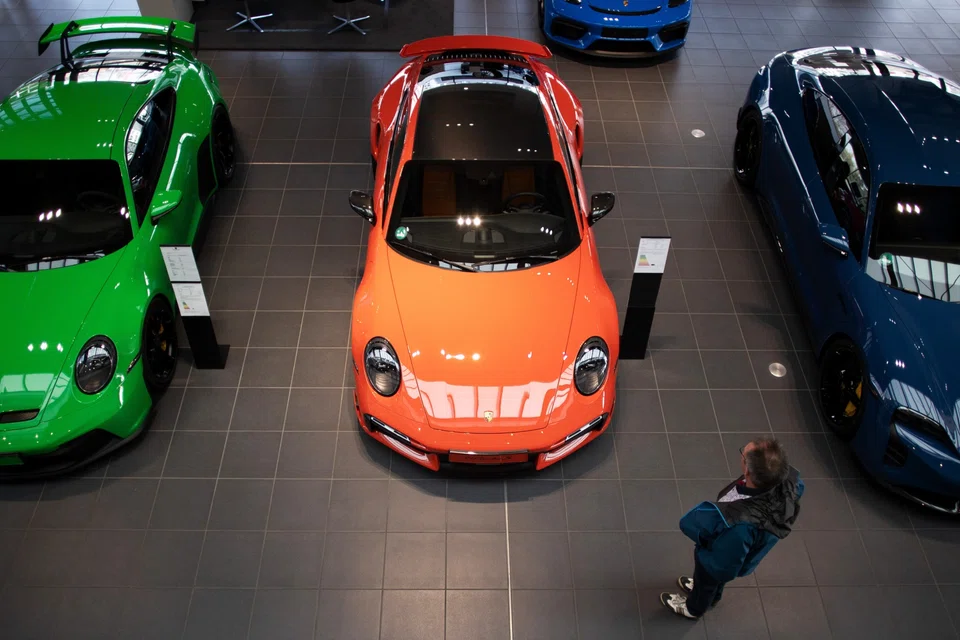
VOLKSWAGEN (VW) set the final listing price for Porsche at 82.50 euros per share, valuing the company at 75 billion euros (S$105 billion) as it seeks to prove that the iconic sports-car brand can sidestep the slump in capital markets and pull off Europe’s largest initial public offering (IPO) in a decade.
A meeting of VW’s supervisory board and its executive committee late on Wednesday (Sep 28) approved the final list price, which sits at the upper limit of the 76.50-82.50-euro range first offered to investors. Porsche will mark its first day of trading when markets open on Thursday in Frankfurt.
The listing of the 911 maker is a bold move into public markets, which have been largely shut to IPOs for most of the year, with companies shying away from seeking new listings because of the European energy crisis, rising interest rates and record inflation. The sale will help Volkswagen raise funds to plough into its electrification push, while investors get a slice of an emotional brand akin to Ferrari, which also managed a successful separation from parent Fiat in 2015.
“If you can pull of an IPO in such a difficult market, it shows the attractiveness of the business,” Jefferies analyst Philippe Houchois said. “Porsche is a mature, well-known business that doesn’t need to raise capital. Putting it on the market as a fully formed business - being able to pull that off is quite impressive.”
Companies raised less than US$10 billion in IPOs this year through August, an 83 per cent drop in proceeds from the same time last year, according to data compiled by Bloomberg. Porsche’s listing is set to be the largest in Europe since miner Glencore raised almost US$10 billion in a London IPO in 2011, the data showed.
The share price puts Porsche at a valuation that’s not far from VW’s total market capitalisation - a business that comprises Audi, Skoda, Seat, and the VW brand, among others. Yet for all its aggressive marketing, the listing has also garnered negative attention for its complex structure.
Volkswagen divided Porsche’s share capital into equal parts voting and non-voting shares, with the German carmaker retaining 75 per cent ownership. Some 12.5 per cent of total share capital - only non-voting shares - is being publicly listed, with a large portion going to 4 cornerstone investors. Qatar Investment Authority, Norway’s sovereign wealth fund, T Rowe Price and ADQ have together committed to take up as much as 3.7 billion euros of the IPO.
The other 12.5 per cent of total shares up for grabs is going directly to VW’s largest shareholders - the billionaire Porsche and Piech family - via their investment company Porsche Automobil Holding. The family already owns a 53 per cent majority of VW’s voting shares, and under the IPO terms, they will also get 25 per cent plus 1 share of Porsche’s voting stock, paying a small premium to preferred shares for a total of 10.1 billion euros.
Porsche will mostly finance the acquisition with debt capital of 7.9 billion euros, buying shares in 2 tranches starting next month with the second purchase expected in January, following a special dividend payout by VW.

Up until 2009, the family owned half of Porsche and all voting rights, but they were forced to sell the sports-car business to VW after their attempt to take over German carmaker went awry. The IPO restores family control over an asset that has been long out of reach: They get a blocking minority on the sports-car maker’s supervisory board, and their status as VW anchor shareholder bolsters that control.
Porsche is targeting revenue of as much as 39 billion euros this year and return on sales of as much as 18 per cent, up 2 percentage points from last year, the company said in July. Returns are to climb above 20 per cent in the long term. The company is still best known for its 911 model, though Porsche has expanded its lineup significantly in the past decade by adding popular sports-utility vehicles like the smaller Macan, as well as the 4-door Panamera and the battery-powered Taycan.
Besides the byzantine ownership structure, governance is another issue for some investors. Porsche chief executive officer Oliver Blume was recently elevated to CEO of Volkswagen while retaining his post at the unit.
According to an analysis from Bernstein, Porsche’s market capitalisation should sit at 80 billion euros - just below luxury companies but at the higher end of carmakers.
“Compared to the luxury companies, Porsche still exhibits higher volatility in earnings growth and margin profile,” wrote European autos analyst Daniel Roeska. “Porsche has only grown volumes significantly by adding new formats, and that does not seem likely in the upcoming years.” BLOOMBERG
Decoding Asia newsletter: your guide to navigating Asia in a new global order. Sign up here to get Decoding Asia newsletter. Delivered to your inbox. Free.
Share with us your feedback on BT's products and services