

Volkswagen works at turning US business around
Carmaker's reliance on leasing is designed to lock in repeat customers for 2017
Southfield, Michigan
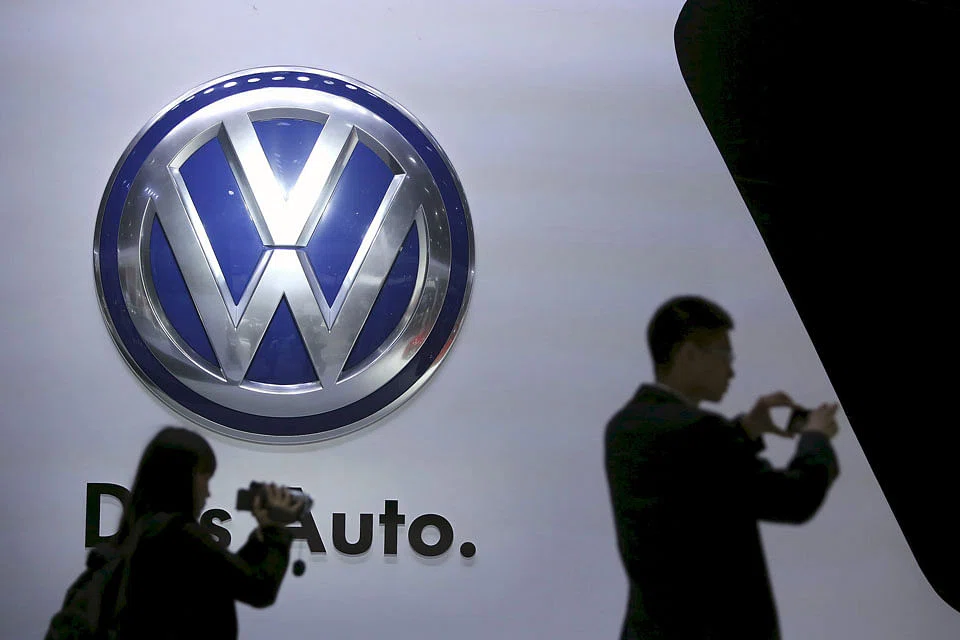
THE US$89 a month it takes to lease a Jetta at some US dealerships is about as low as the price of using an iPhone on some mobile-phone plans. It's also a sign of how Volkswagen AG (VW) is grasping to turn around its fortunes in the US.
The bargain deal - available after a down payment of about US$2,500 on the US$17,325 Jetta - runs over a three-year term. Other recent offers ranged from as low as US$39 a month in San Jose, California, to US$99 in Boston. VW's reliance on leasing is designed to lock in repeat customers for 2017, when the German carmaker can show them an improved product line. VW, with an ageing lineup that lacks a mid-size SUV, seeks to more than double US sales to meet a 800,000-vehicle goal by 2018.
Subsidised leases from Volkswagen, sometimes sweetened by the dealer, illuminate the US as a weak spot for the world's second-biggest carmaker. VW's American sales have dropped for two straight years, even with industrywide growth now in its sixth year. In recent months, leases accounted for as many as 45 per cent of the company's deliveries - more than Porsche and about double the rate of most mainstream brands.
"This market isn't particularly in VW's favour," said Jack Nerad, an analyst at KBB.com. "They sell mostly small, fuel-efficient kind of stuff, and gas prices have not favoured that. A lot of their deals are subsidised. That's the way they put cars on sale."
The Wolfsburg, Germany-based company needs to get the US market right to reach its goal of overtaking Toyota Motor Corp as the world's biggest carmaker by 2018. Its US deliveries fell 10 per cent to 366,970 vehicles last year and were down 7.5 per cent through April, even with a bump that month from the entry-level Jetta, one of the oldest models in VW's lineup.
Carmakers report May sales results on Tuesday. They'll probably post a 1.1 per cent decline in deliveries of cars and light trucks in May to about 1.59 million, the average estimate from 11 analysts surveyed by Bloomberg. There were 26 selling days last month, one fewer than in May 2014. Adjusted for seasonal trends, the annualised pace probably rose to 17.3 million, the fastest since August.
Volkswagen is expected to say that monthly sales fell 0.9 per cent, while Fiat Chrysler Automobiles NV may report a 2.6 per cent increase, the widest gain from a year earlier among the largest carmakers, based on the estimates. General Motors Co deliveries may have risen 0.1 per cent and Ford Motor Co's may have declined 3.1 per cent.
VW's vehicles get dinged by reviewers for stodgy styling and being a step behind on safety and infotainment technology. While there is a market for conservatively designed vehicles, it's already cornered by the two top-selling sedans: Toyota's Camry and Honda Motor Co's Accord. "Those customers who want a very conservative product will go with Toyota, and VW doesn't have a chance to beat it," said Alexander Edwards, managing director of Strategic Vision Inc, a marketing research firm in San Diego.
VW's US car line-up beyond Jetta includes the mid-size Passat, small Golf hatchback, sportier GTI and Beetle. Its sport utility vehicles, the compact Tiguan and upscale Touareg, have yet to catch on even in a market hungry for SUVs and pickups. A new mid-size SUV is slated to begin production in Tennessee in late 2016.
VW is leaning on leases until it can start reaping the benefits of a planned US$7 billion investment in North America. To be more nimble, it plans to introduce new products every five years and refresh models after three years instead of seven. The fruits of that programme won't start to reach dealer lots until at least 2017, so doing leases now helps VW ensure customers come back to see a spiffed-up and expanded fleet.
VW said that its leasing percentages are higher because it has greater market share in the North-east, Florida and California, where customers are more likely to lease. The carmaker also likes the increased likelihood of repeat business as consumers come back to dealerships when the contracts end.
"Leasing is a very effective tool to support sales and leasing customers are significantly more loyal," said Carsten Krebs, a company spokesman. "These returning customers will provide VW and our dealers with a business opportunity. Generally we run a very balanced and quality-oriented business model."
The strategy has risks by jeopardising profit on each transaction and possibly pushing down resale values because of the increase in the number of leased vehicles that return to be resold. VW is averaging discounts, which include cash or leasing incentives, of about US$3,020 a car through April, or US$134 more than last year and just US$64 less than what US carmakers offer, according to Autodata Corp.
The outlook for VW's residual values has declined from a year earlier since fall 2013 and outpaced the industry, according to forecasts from TrueCar Inc's ALG unit. Lower residual values increase the cost of making a lease affordable for the consumer and damage the brand, said Kevin Tynan, a car analyst at Bloomberg Intelligence.
Leasing rates are determined by interest rates and residual value - how much the vehicle will be worth at the end of the lease. The cost of a lease is the difference between the selling price and the residual value, spread across the months in a lease term. Carmakers and dealers subsidise leases to help entice buyers. Down payments and interest rates can also affect the price. BLOOMBERG
TRENDING NOW
Ex-Nvidia CEO Jensen Huang carried a secret for more than a year. It led to his downfall

Demand, tech capabilities position Apac and AI as Skyscanner’s next growth frontiers: CEO Bryan Batista

Jensen Huang after Nvidia: Will he ever be a CEO again?

Singtel group CEO Yuen Kuan Moon sells S$8.1 million worth of shares

