

Volvo, Buick and Cadillac among first China-made cars to arrive in America
New York
A PEEK under the hood of three new cars from Volvo, Buick and Cadillac will not reveal a Made in China label. But those cars are breaking new ground in the auto industry, becoming the first to be manufactured in the People's Republic and exported to the United States.
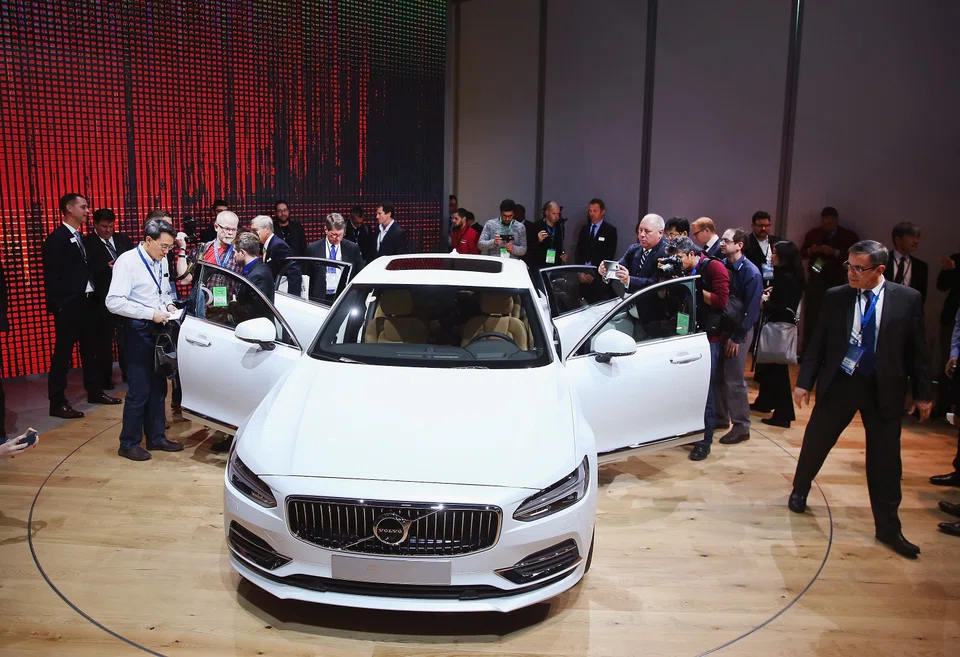
Sweden's Volvo, now owned by Geely Auto of China, has shipped more than 1,000 copies of its S60 Inscription. Buick, desperate to fill the most glaring hole in its line-up, the compact crossover, will import the Envision.
And last month, Cadillac announced that it would export a plug-in hybrid version of its new CT6 flagship sedan from China, supplementing production of the standard version from its Detroit-Hamtramck plant.
The arrival of Chinese-made cars has surprised some people in the US, particularly United Auto Workers (UAW) leaders who objected to General Motors' (GM) decision to begin selling the Buick Envision starting this July.
But it is the culmination of a long-promised, never-fulfilled vision, and their introduction stands in stark contrast to 2007, when Chinese carmakers stormed auto shows in America, making bold promises that they would soon open showrooms here.
But the mainly low-budget cars appeared dowdy, primitive, even potentially unsafe. Not one Chinese-branded car cracked the US market, though companies such as Guangzhou Automobile continue to float the idea.
Since that time, much has changed. Global and Chinese carmakers have partnered to produce more sophisticated models, including Buicks and BMWs, that are familiar faces around the world. Geely's trophy purchase of Volvo has given it a trusted name that is synonymous with safety.
Chinese cars do remain an unknown quantity to consumers, who were also once leery of the first cars imported from Japan - and later, from Mexico and South Korea.
Michael Harley, editor-in-chief of AutoWeb, said top carmakers had solved those puzzles of global manufacturing and understood the stakes in US showrooms.
"When Hyundai first brought Korean cars here, they didn't realize the scrutiny Americans would put on them, and the poor quality almost destroyed the Hyundai brand," Mr Harley said. "Today, companies like Volvo and GM know they have to build a world-class product to present to American consumers, and there's no getting around it."
In November, Aaron Ezrilov became one of the first Americans to drive a Chinese-built car, though he didn't realise it until a salesman told him while signing the Volvo S60 Inscription lease.
Mr Ezrilov, a long-time Volvo loyalist and a federal solutions director for Resolute Partners, felt the briefest flash of anxiety. But he has been closely going over the car ever since and fell in love on a fast canyon run to San Juan Capistrano from his home in Canyon Lake, California.
"The doors 'thud' when you close them, and I'm not finding any corners cut or cosmetic flaws at all," Mr Ezrilov said, adding that he was impressed enough to pick up a second Inscription for his mother.
Katarina Fjording, Volvo's vice-president for purchasing and manufacturing in the Americas, helped create Volvo's Chinese factory in Chengdu. "When I went to China, I had doubts about what it would be like, especially in a remote area," she said. "But I've been proven wrong many times."
The biggest cultural challenge, Ms Fjording said, was to encourage Chinese workers to suggest improvements without fear of repercussions.
For GM's Buick brand, China is driving the best sales in its 112-year history, with America the outlier: Buick built and sold more than one million cars in China last year, compared with 223,000 in the US.
So exporting the Envision, a Chinese award-winning sport utility vehicle, is a natural, considering America's growing appetite for small crossovers, said Duncan Aldred, Buick's vice-president for sales. "It's the biggest sales segment, and we need to be in there."
Mr Aldred said that, ultimately, US consumers were more interested in a product's design and performance than where it's assembled.
"It's the same model used by iPhone," Mr Aldred said of the Chinese-built product. "Most people have one in their pocket and pay a premium for that device."
Mr Harley said US consumers were buying a brand, not a country of manufacture. "Germans are building cars in South Carolina, but no one says you're driving a South Carolina BMW," Mr Harley said. "It's still a German car, and as long as quality is equal or better, consumers aren't going to care."
Mr Ezrilov agreed, saying he wasn't concerned about the Volvo's provenance but about its performance and a back seat that could fit his six-foot-plus teenage son.
"I believe in fair trade," he said.
Such globalisation arguments haven't swayed Cindy Estrada, vice-president of the UAW. She said GM was welcome to build cars in China to serve the world's largest car market. But Ms Estrada, who led negotiations that resulted in a four-year GM labour deal last autumn, minutes before a strike deadline, said the company was breaking its oft-stated pledge to "build where you sell".
"If you're looking to rebuild the company and invest in workers, you don't go and bring in something from China," Ms Estrada said. "We have to hold them accountable to build vehicles here."
Mr Aldred replied that Buick continued to invest in US manufacturing, including an all-new LaCrosse sedan at Buick's Detroit-Hamtramck plant. Buick headquarters, including its global design and engineering, will always remain in suburban Detroit, he said.
"We're a proudly American brand, the oldest in the US industry, and also a great international success story," he said. NYT
TRENDING NOW

Peter Kwee loses appeal to reclaim properties in daughter’s name; judges rule trust was ‘illegal’

South-east Asia has lost Nvidia’s best salesman

Demand, tech capabilities position Apac and AI as Skyscanner’s next growth frontiers: CEO Bryan Batista

Could Jensen Huang work for Elon Musk? It would be ‘a titanic ego death match’, says biographer

