

Volvo Cars scraps sales-growth target due to slump in China
[STOCKHOLM] Volvo Cars scrapped its target of selling more cars this year due to a sharper-than-expected deterioration in China which cut into profitability in the second quarter.
The Swedish automaker controlled by China’s Zhejiang Geely Holding Group reported quarterly operating income of 826 million kronor (US$85.4 million) on Friday (Jul 17), below the 1.3 billion-krona analyst consensus. It still expects the second half to be “significantly better” than the first as cost cuts take effect and new model launches gather pace.
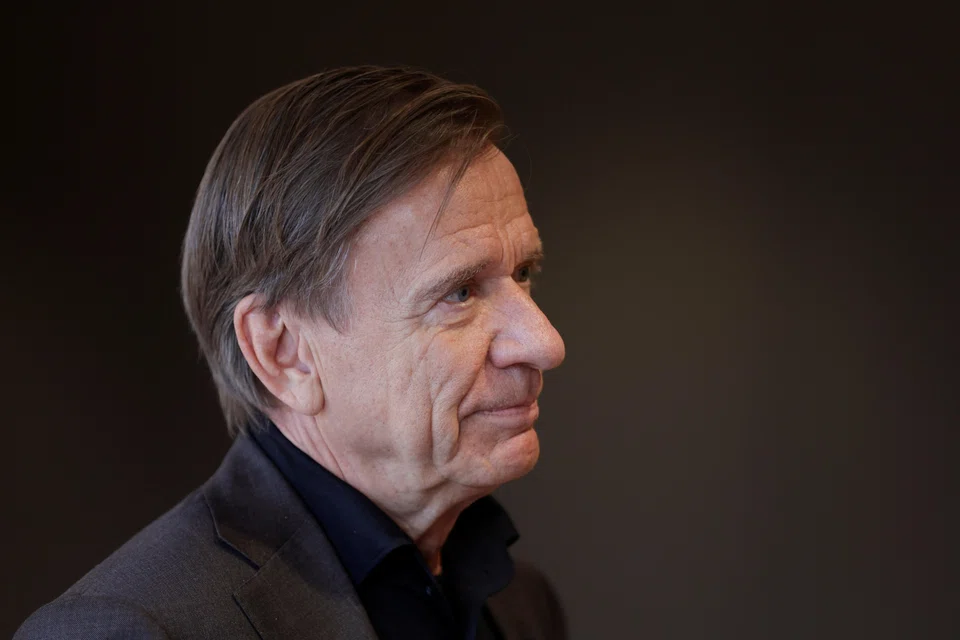
CEO Hakan Samuelsson said Volvo Cars has dropped its ambition for full-year volume growth and his main current takeaway is that “the market is pretty bleak”.
“There’s a tremendous amount of political uncertainty, consumer confidence isn’t at its best, and in China, what has happened above all is that the market has fallen sharply,” Samuelsson said in an interview. “That probably happened faster than we had expected.”
Volvo Cars and its global peers are grappling with challenges including slowing EV demand, fierce price competition in China and a sluggish US market, where sales of electrified vehicles have yet to recover following the removal of purchase incentives.
Analysts are expecting the latest quarter to mark a low point for Volvo Cars’ earnings, having warned that elevated discounting, higher freight and raw-material costs and an unfavourable sales mix would pressure margins.
The company said it expects “significantly stronger sales during the second half of the year”, driven by growth in Europe and a continued recovery in the US. Toward the end of the year, it sees “strong positive free cash flow” and expects to end 2026 “approximately at break even”.
Samuelsson said the main risk for the second half is that the market deteriorates further.
“If there’s a backlash and things get even worse – if, for example, the conflict in the Middle East were to escalate into a full-scale war – that would obviously not be good for the economy,” he said.


One key uncertainty hanging over the company was removed in May when it secured US authorisation to continue selling connected vehicles despite its Chinese ownership, eliminating the risk of a potential sales ban in one of its largest markets.
Polestar, in which Volvo is a major shareholder, failed to secure similar approval, effectively ending plans to expand production at Volvo’s plant in Charleston, South Carolina to supply the US market.
Volvo is also looking to improve capacity utilisation in Europe, where demand for EVs has been supported by subsidies in Germany, the region’s biggest market, and France. “We’re seeing very strong growth in electric vehicles, particularly in Europe,” Samuelsson said.
The company said this week it had signed a memorandum of understanding with the Belgian federal government and the Flemish regional government that could unlock as much as 119 million euros (US$136 million) in support for investment at its Ghent plant.
Samuelsson said the automaker is stepping up cooperation with its majority owner Geely as it adapts to a rapidly changing Chinese market. While there are no concrete plans, Volvo’s Ghent plant in Belgium could eventually assemble Geely brands under contract, he added.
He also said the companies will work more closely on future vehicle platforms, hardware components and China-specific models, arguing that developing competitive products for the Chinese market from Gothenburg alone would be “almost impossible”.
Volvo Car said it has delivered five billion kronor in indirect and variable cost savings this year, six months ahead of time, and coming on top of eight billion kronor last year. BLOOMBERG
Decoding Asia newsletter: your guide to navigating Asia in a new global order. Sign up here to get Decoding Asia newsletter. Delivered to your inbox. Free.
Share with us your feedback on BT's products and services
TRENDING NOW

LTA proposes combining car COE categories, adding rebate-surcharge system

StarHub to acquire MyRepublic’s mobile business amid ongoing telco consolidation

DBS, OCBC, UOB rout lops billions off STI as inflation, rate concerns spook investors

Grab CEO’s wife Chloe Tong on life with Anthony Tan and finding her purpose

