

Troubled firms wait too long to restructure and bounce back: lawyer
Top lawyer Patrick Ang says 'fear of failure' culture has resulted in firms asking for help too late
Singapore
ASIAN societies' aversion to failure has given bankruptcy a bad name it does not deserve, according to a top lawyer.
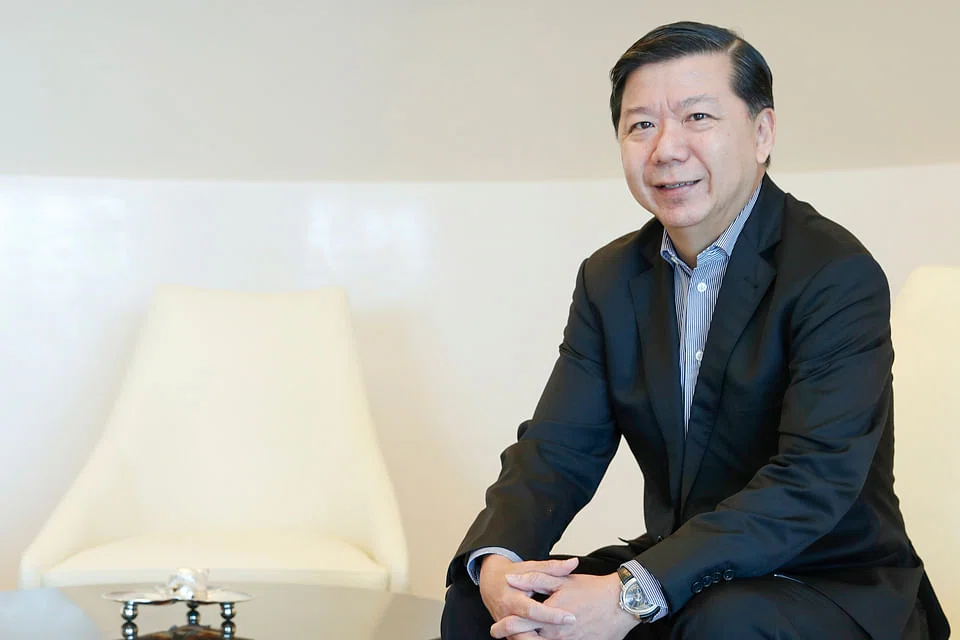
This stigma surrounding corporate restructuring and insolvency means ailing companies often wait too long to call in the experts, says Patrick Ang, the deputy managing partner of Rajah & Tann Singapore.
"Almost every company in trouble calls us too late," says Mr Ang, who has over 25 years' experience handling restructuring and insolvency cases.
"It's a very cultural thing... because (Asian societies) regard failure as something terrible."
Instead of going to lawyers for restructuring advice, for example, some companies might simply wait for their problems to go away, or attempt to stave off creditors by paying them in instalments - further draining limited resources.
This delay - an "Asian way of approaching problems" - can hurt companies' chances of restructuring successfully, Mr Ang notes.
The 54-year-old has acted in some of the biggest corporate failures here and abroad - including United States investment bank Lehman Brothers; Japanese department store operator Sogo; Canadian telecom company Nortel Networks; Singapore-listed jet fuel trader China Aviation Oil; Indonesia's Asia Pulp & Paper; and Singapore-listed offshore and marine firm Swiber Holdings.
In March, he was inducted as a Fellow of the American College of Bankruptcy, making him the first Singaporean and the fourth lawyer from Asia to be admitted to the prestigious organisation for leading bankruptcy and insolvency practitioners globally.
Membership is by invitation only and Mr Ang is one of more than 900 professionals who have been honoured since the college was formed in 1989.
Mr Ang started his career as a general commercial litigator after being called to the bar in 1990.
He joined Rajah & Tann in 1995 to set up the firm's insolvency and restructuring practice group - one of the first such specialist practices in the region.
The practice has expanded rapidly over the years - from an initial team of three to more than 30 lawyers today, doing a wide range of cross-border work.
Rajah & Tann Singapore was named Insolvency & Restructuring Law Firm of the Year at the Asian Legal Business Southeast Asia Law Awards earlier this month.
Corporate restructuring can be tough, Mr Ang acknowledges - many stakeholders are involved and emotions often run high.
"There are limited resources in a restructuring. The pain has to be allocated fairly... that's where the tension is."
His advice to troubled companies? Bite the bullet and deliver all the bad news at once. "You don't give people bad news in dribs and drabs - it's better to come clean, give the hardest medicine to everybody concerned, and work upwards from there."
To get buy-in from stakeholders involved in the restructuring process, the company's management also needs to show that they are committed to cutting back, Mr Ang notes.
"How you project yourself is important - for example, a managing director with a big house will probably have to sell it and scale down.
"It might seem like common sense to most, but you'd be surprised - some people will still wear their flashy watches and drive multiple cars."
Lawyers, accountants and other professionals involved in a corporate restructuring exercise are often seen as the bad guys, but Mr Ang says their aim is ultimately to give companies a fresh start.
"Companies can sometimes come back stronger and better. In that sense, we feel that we have done something good.
"It's not just about being an undertaker and wiping out debt. Restructuring can help save the entrepreneurial spirit for the future of society."
Mr Ang, who is also chief executive of legal network Rajah & Tann Asia, is upbeat about industry growth prospects in the coming years especially as Singapore positions itself as a regional debt restructuring hub.
"I think we are doing very well because we are already getting cases from the region coming to Singapore, including from Indonesia, Thailand and Malaysia," he notes.
"I think we will see more of such cases coming to Singapore especially with all these Belt and Road projects in the pipeline. Some of them will meet financial difficulties...When they have these issues, I believe Singapore is the best place to either mediate or work out a restructuring because we have all the ancillary services that are needed."
His firm has doubled in size over the last eight years - from 300 to more than 600 lawyers - to ramp up its presence in the region.
"I have told all my younger partners that they cannot follow the way I practice. It's not enough," Mr Ang says.
"In a sense, we are less international than we should be. As a firm, we are still very Asean-centric. We have some presence in Asia but not enough. The next step might have to be broader - growth across Asia and internationally."

