

Trump has been good for stocks, but investors should still root for a Biden win
Neoliberal thinking behind tax cuts, deregulation is unsustainable as growing inequality stokes social unrest

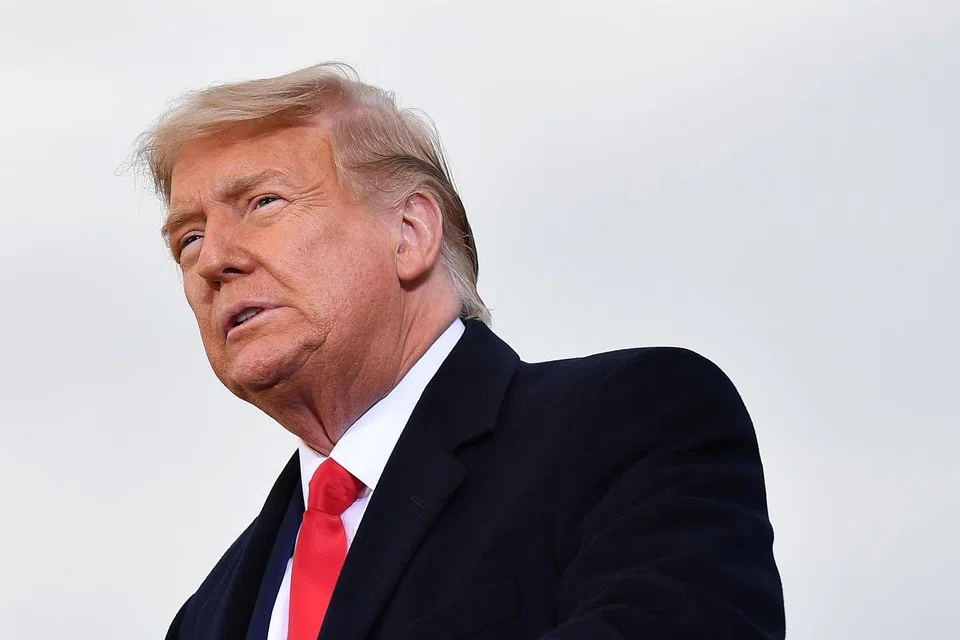
DONALD Trump's presidency is widely preceived as a disaster for the US and the world. He has sowed confusion, hatred and mistrust, and has failed to demonstrate any real leadership.
Yet, from the narrow perspective of stock investors, he hasn't done too badly.
The S&P500 is up 53.9 per cent since Mr Trump's inauguration in January 2017, which just pips the 52.3 per cent rise charted by the benchmark index during Barack Obama's second term.
In fact, the only other Republican president in the last 40 years who saw a stronger advance in the S&P500 than Mr Trump while in office was Ronald Reagan in his second term.
From Mr Reagan's second inauguration to the point when he left office, the S&P500 was up 67.5 per cent. The S&P500 was up 27.5 per cent during his first term.
His successor George HW Bush came close to matching Mr Trump's record, with the S&P500 rising 51.7 per cent during his single-term presidency.
George W Bush never stood a chance though. His time in office was marked by the fallout of the technology bust, the 9/11 terrorist strikes and ensuing war in the Middle East, and the subprime mortgage bust that triggered the Global Financial Crisis.
The S&P500 sank 11.8 per cent during his first term, and 28.2 per cent during his second term.
The two Democrat presidents elected to office over the last four decades presided over much stronger runs in the S&P500 than Mr Trump though.
In particular, Bill Clinton saw the S&P500 rise 78.4 per cent in his first term, and then climb a further 73 per cent during his second term.
As for Mr Obama, his first inauguration was held only four months after Lehman Brothers collapsed, when the market was close to a crisis bottom. Fuelled by unprecedented monetary stimulus, the S&P500 rallied 74.8 per cent during Mr Obama's first term.
Tax cuts, stimulus
More remarkable than the scale of the S&P500's advance since Mr Trump took office is that the gains came after a strong and sustained rally during the Obama years.
The main driver of the market during this period was the slew of corporate-friendly policies that the Trump administration quickly rolled out. Besides deregulating sectors such as financial services and energy, corporate taxes were slashed across the board under the Tax Cuts and Jobs Act of 2017.
These corporate tax cuts had a very tangible impact on the market. Specifically, it led to bucket loads of money being pushed into the pockets of investors through share buybacks.
According to data from S&P Dow Jones Indices, companies that are part of the S&P500 index conducted US$806.41 billion worth of share buybacks in 2018, the year the tax cuts kicked in.
Index constituents spent US$519.40 billion and US$536.38 billion in share buybacks in 2017 and 2016, respectively.
But things started to go awry earlier this year.
According to S&P Dow Jones Indices, the pace of share buybacks slowed sharply in Q2 2020 as companies within the S&P500 reacted to the impact of Covid-19 on their sales and balance sheet liquidity.
"Q2 2020 buybacks were US$88.7 billion, down 55.4 per cent from US$198.7 billion in Q1 2020 and down 46.4 per cent from US$165.5 billion in Q2 2019," the firm said, in a press release last month.
"For the 12-month to June 2020 period, companies spent US$644.9 billion, down 19.2 per cent from their 12-month to June 2019 expenditure of US$798 billion. The record 12-month high is US$823.2 billion in March 2018."
In spite of this, the S&P500 has held up well. While the index dipped to a low of 2,237.40 on March 23, at the height of the Covid-19 panic, it has since rebounded to 3,483.81, which is 7.8 per cent higher than where it was at end-2019.
This was the result of massive monetary loosening by the US Federal Reserve, and the strong performance of the largest, tech-oriented stocks within the S&P500, which have businesses that are seemingly impervious to the Covid-19 fallout.
For instance, Microsoft is up nearly 40 per cent this year. Apple is up about 62 per cent. Amazon is up some 77 per cent.
Changing economic thinking
So, what should investors do now? Should they bet that Mr Trump will keep pushing money into their pockets? Or, should they prepare for a Biden presidency?
With the US presidential election now only a couple of weeks away, and Covid-19 deaths in the US higher than in any other country in the world, the likelihood of Mr Trump winning a second term seems to be fading.
Yet, after his surprise win in 2016, in the face of stark evidence that he was not equal to the job, few commentators are willing to completely write him off.
My own view is that the world will be a better place if American voters decisively boot Mr Trump out of office. Yet, even investors who want nothing more than to see stock prices continue rising should root for Joe Biden at this point.
The fact is; the neoliberal thinking behind the tax cuts and deregulation that became commonplace during the Reagan years, and which Mr Trump and conservative Republicans still embrace, is becoming unsustainable as growing inequality increasingly stokes social unrest.
Mr Trump's 2016 election win was at least partly a reflection of decades of stagnant middle class incomes in some parts of the US, which he promised to fix by getting tough on trade and turning his back on "globalist" multilateral institutions.
Yet, in order to address issues such as the Covid-19 crisis and climate change, and pave the way for a lasting economic recovery, government action and international cooperation are often crucial.
While a Biden administration will certainly roll back Mr Trump's tax cuts and deregulation that have been so positive for the market over the last few years, the benefits of greater social stability and more sustainable economic growth as a result of this leftward tilt in economic thinking and renewed appreciation of multilateralism should not be underestimated.
In my view, this shift will provide a more sustainable platform for the corporate sector to grow their businesses and deliver returns to their shareholders.






