

Tuan Sing banks on building ecosystems
At home and abroad, the real estate company bets on mixed-use concepts to realise the potential of its properties.

Singapore
THE Covid-19 pandemic is reshaping where people live, work and play, raising the profile of mixed-used developments and the ecosystems they create.
For mainboard-listed real estate firm Tuan Sing, T24 fostering ecosystems is a recurring theme at its development projects at home and abroad - including at its Dunearn Road properties.
Last month, the group secured a private tender for a 1,592.4 square metre freehold site at 870 Dunearn Road for S$56 million. It sits just next to Link@896, the group's mixed-use office and retail building a stone's throw from King Albert Park MRT station.
Taken together, the combined site will be a fairly sizeable 160,000 square feet (sq ft), or about 14,864 sq m.
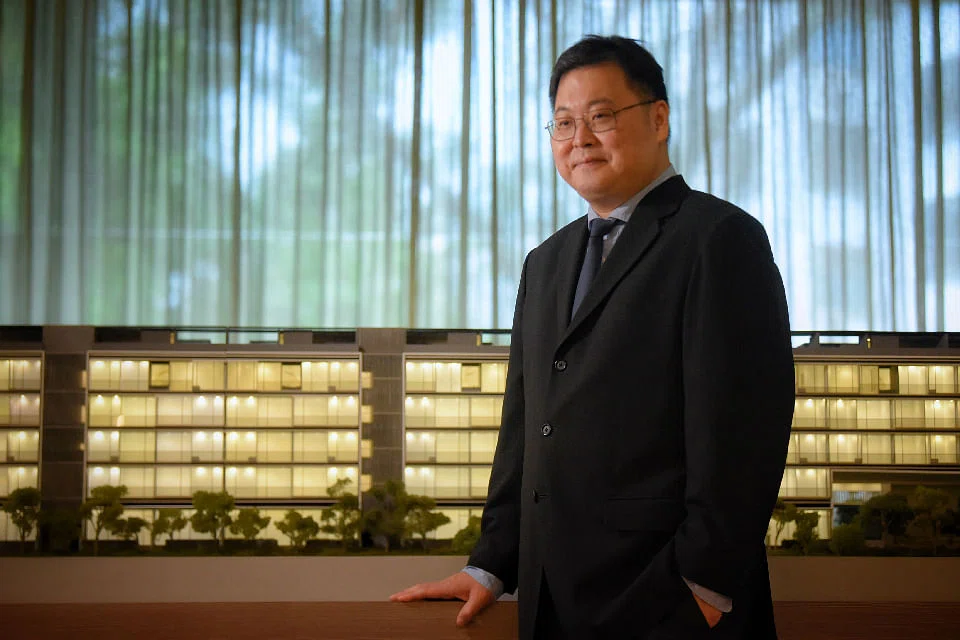
William Liem, chief executive of Tuan Sing, sees a lot of potential for the new property, though he was quick to add that plans for it are yet to be finalised.
"(It's) potentially a very interesting asset that, if given the necessary approvals, we should be able to create an interesting mixed-use development as well," he told The Business Times.
"We'll be bringing a lot of F&B (food and beverage) concepts, creating food courts and other facilities that will really reinvigorate the whole location. And being at the MRT station, it's very helpful in terms of having good traffic," he said.
He added that Link@896's proximity to the Green Corridor has also made it a popular touch point for hikers.
Overseas investments
Tuan Sing is adopting the same strategy with its properties Down Under.
Its commercial property next to Hyatt Regency Perth, which it also owns, is undergoing redevelopment expected to complete by the fourth quarter of 2023.
While the hotel is the property's anchor, there is also a big office component, said Mr Liem.
"We are building now the retail component, which is the restaurants, F&B, supermarkets, schools, gyms and other facilities. It will become a more 'work, live and play' concept that we are shooting for in many of our projects in the region," he said.
Similar plans are afoot for Tuan Sing's property in Melbourne, which also features a commercial centre within its Grand Hyatt Melbourne complex.
"Whether it's in Singapore or Australia or Indonesia, we like mixed-use (developments), and we like to build an ecosystem actually, where people can work there, they can live there, they can play there," said Mr Liem.
Indonesia in particular holds great potential for such a concept to take off.
Take the group's Opus Bay development in Batam, for example. Occupying a 1.25 million sq m piece of land on the Indonesian island, Mr Liem said Tuan Sing wants to create a community that allows businesses to thrive.
"We believe that with the pandemic, more and more people want to be entrepreneurs, and more and more people want to have the option of being able to do business and work at the same time," Mr Liem said.
"Traditionally, homes are homes, workplaces are workplaces. But now it's becoming quite acceptable to have both," he added.
At the same time, Tuan Sing is looking at investing in an international school as well as medical facilities, and eventually create a conducive space for people looking for a retirement home.
These concepts are popular in Malaysia too, but there already are many such projects there, Mr Liem noted.
"Batam has fewer such projects, so we feel that we are one of the earliest to do such a mixed-use project in Batam," he said.
He added that Batam's geographical proximity to Singapore makes it the "most logical place" for a Singapore-listed company to invest.
Indonesia can be a challenging market to navigate because it is not as transparent, and information not as readily available, Mr Liem conceded.
Fortunately, Tuan Sing's key shareholders have garnered deep knowledge and local expertise after operating in Indonesia for more than 60 years, Mr Liem said.
"We know the industry, we know who's good, who isn't good, who to trust, who not to trust. It's not rocket science, but it's fundamental."
In fact, the complexities of the Indonesian market play to Tuan Sing's strengths, and have made it a magnet for foreign companies looking for partners to help them invest there.
"We are in the midst of setting up a platform with a major MNC (multi-national corporation) to invest in multiple mixed-use assets in Indonesia," said Mr Liem.
He declined to identify the partner, other than to say it is a global company that also has a Singapore presence. An announcement is expected to be made in January.
China opportunities
Tuan Sing's zeal for mixed-used developments extends to China.
The group in 2018 took a 7.8 per cent stake in Hainan-based Sanya Summer Real Estate, the developer of the mixed-used project connected to Sanya High-Speed Railway Station.
"We will continue to look at more opportunities because we are very optimistic about Hainan as a destination, and (Chinese President) Xi Jinping has already made it clear that he wants Hainan to be the future tourist as well as economic hub of China," he said. Interestingly, Gultech China, a company in which Tuan Sing owns an effective 44.5 per cent stake, recently divested a 15.5 per cent stake in Gultech Jiangsu Electronics for 518.75 million yuan (S$108 million).
"The good news is that we got a price that I'll say is significantly above our book value so it will book some profits from there, and the good news is we still own 30 per cent stake," said Mr Liem.
Two institutional investors - Yonghua Capital and Wens Capital - bought a 13 per cent stake in Gultech Jiangsu Electronics.
A further 2.5 per cent was purchased by the investment arm of the local authority, Xishan Economic and Technology Development Zone.
So, this means that the government themselves feel that our company is worth investing in, which is actually noteworthy, Mr Liem said.
"We have a partnership to eventually list the company, which means that we believe this company has much more value, further upside. If they can list, the valuation will be much higher than today," he said, adding that the company's current valuation is close to S$700 million.
Meanwhile, in June, Tuan Sing completed the sale of Robinson Point for S$500 million. The divestment was one of the factors that contributed to a 15-fold increase in net profit for the first half of 2021 to S$100.7 million.
"To be honest, we were not really looking to divest it because we knew that the asset will continue to appreciate, but we did decide to divest because . . . we wanted to reallocate our portfolio," Mr Liem said.
Most of the company's segments have done better this year as well, partly owing to the low base effect from last year, Mr Liem said.
"Other than that, our office (segment) has been doing fairly well - our occupancy rate has been climbing and our rental rates are fairly strong," he said, adding that this was so for both Singapore and Australia.
Remote working
And despite the rise of remote working, with the pandemic forcing large swathes of office workers to stay home, Mr Liem remains sanguine about office rentals in the central business district (CBD).
"People will still need to go to work because people will still need to meet their colleagues, meet their bosses, have presentations, and the face-to-face interaction will not necessarily change," he said.
But this could help the suburban real estate market and drive the rentals there up, as more people may go to suburban malls and even work from there since it is closer to home.
"The way I look at it is that, yes, there will be more people moving to suburban locations, but actually the suburban locations are getting quite expensive," he said.
"For example, if you go to Fusionopolis today, what used to cost, say, S$5 (psf per month), they are paying almost S$8 psf now. And S$8 psf is almost what an older building in the CBD would cost," he said.
The way Mr Liem sees it, office rentals in the CBD will always cost more than those in the suburbs, given that the CBD is considered the most coveted address.
"So that's why we don't think that (rentals in) the CBD will go down. It is supported by what rental is being charged in the suburbs."
When it comes to residential property development though, it is no secret that margins have thinned in recent years, and Mr Liem said one key reason is the rising cost of construction and commodities.
For example, iron ore prices have risen more than 50 per cent over the last year, he noted.
This is compounded by supply chain disruptions, and hikes in freight rates of more than 300 per cent, he added.
"So, meaning that inflation is real, and as a result, going forward, assuming that land price is consistent, which it isn't, the construction costs may go up 15 to 20 per cent easily," he said.
"All in, the margins will be squeezed because we also cannot sell at a much higher price to the consumer. So as a result, we have to accept a lower margin," he said.
This is also why Tuan Sing has been actively reallocating its portfolio and investing abroad aggressively.
In Batam, for example, land cost is "extremely low", which allows for much higher margins than in Singapore.
"We're selling at over S$200 psf in Batam, which is probably one-tenth of the Singapore price and yet still, we are enjoying very healthy margins," Mr Liem said.
"We think that in Singapore, in a way, there are still pockets of opportunity but there will be lesser and lesser (opportunities) because there's just too much competition in Singapore. That's why we want to look at other markets."
Even so, Mr Liem is optimistic about the rest of the year, especially as vaccination rates in the region pick up.
He said: "I'm fairly cautiously optimistic that things will improve. Of course it's not every year that we sell an asset like Robinson Point, but other than that, our normal performance, even if you take out Robinson Point, has improved.
"We have been profitable even during the pandemic, and we believe we will improve going forward as well," he added.
TRENDING NOW

DBS, OCBC, UOB rout lops billions off STI as inflation, rate concerns spook investors

Grab CEO’s wife Chloe Tong on life with Anthony Tan and finding her purpose

OCBC sheds S$8 billion in value as shares close nearly 6% down; analysts cautious on banks

Deal between tycoon friends sparks scrutiny of Philippine power sector

