

Uber's CEO Kalanick wasn't fired for bad behaviour
Company lost a lot of money under him - US$2.8 billion on US$6.5 billion of revenue in 2016
London
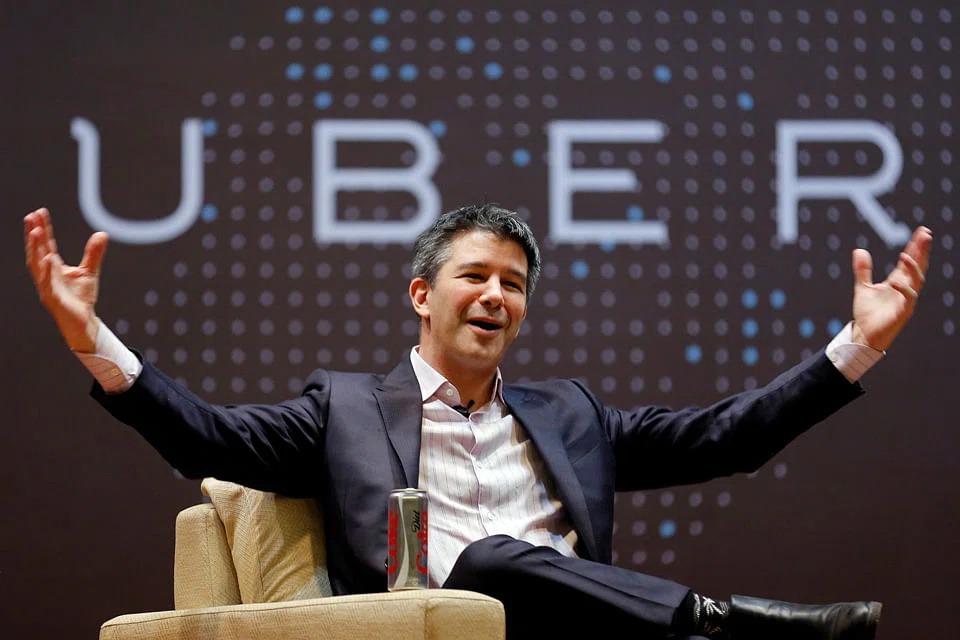
AFTER a string of scandals and embarrassments, Uber's embattled CEO Travis Kalanick was forced to resign. The assumption is that he was pushed out for bad behaviour. The truth is more prosaic: the other problems compounded the basic one that he lost a lot of money. Uber lost US$2.8 billion on US$6.5 billion of revenue in 2016.
Many years ago, Fred Wilson, one of the top venture capitalists (VCs) in the world, famous for his role in companies such as Twitter and Zynga, put it succinctly: "VCs have control when things don't work. Entrepreneurs have control when they do." That's common sense in most of the business world. But as the Uber debacle shows, legal provisions such as board seats or shareholder voting rights matter much less than actual performance in Silicon Valley too.
The prevailing mythos of Silicon Valley says that it is visionary founder-CEOs - think Bill Gates, Steve Jobs, Mark Zuckerberg - who create great companies and need to be insulated to work their magic. Venture capitalists and money men, the thinking goes, would otherwise get legal control of the company, oust the great founders and lead companies to their doom. Founders should be allowed to retain legal control of the company, something that, in a highly competitive Silicon Valley funding environment, many VCs have agreed to.
And yet, Mr Kalanick, one of those visionary founders, was just ousted from the company despite having a great deal of control. One of Uber's key investors, Benchmark Capital's Bill Gurley, a legendary venture capitalist, seems to have played a crucial role in Mr Kalanick's ouster, even though technically he did not have the authority on the board to fire him.
As Bloomberg View columnist Matt Levine pointed out, Mr Kalanick controlled the majority of seats on Uber's board, as well as a majority of voting rights for shareholders. However, that ended up not meaning much: Uber, which is losing money by the bucketful, arguably a necessary move to build a network effect which will reap profits later, needs investors. Having the majority voting rights in a company that gets shunned by investors because you're reckless is not worth a lot.
Steve Jobs never had formal legal control at Apple. He was ousted from the company in the 1980s because the visionary products he shepherded - the Apple Lisa desktop computer and then the Mac - were commercial failures. When he returned to the company in 1998, he put out a string of highly successful products - first the iMac, then the iPod, and of course the iPhone - that brought the company back from the brink and then ensured strong profitable growth; his leadership was never subsequently questioned.
Facebook has had various growing pains as a fledgling social network, but its user numbers and revenue never stopped growing. If the company had a MySpace-like trajectory, it is unlikely that Mr Zuckerberg's formal legal control of the company's board and shareholder voting rights would have protected him from investor pressure to make radical changes, up to stepping down.
Many have fretted about the corporate governance implications of Snapchat going public by releasing only non-voting stock to the public; but if the company ends up cratering CEO Evan Spiegel is likely to be outgoing. Similarly Rupert Murdoch was able to survive phone-tapping scandals in the UK and the problems at Fox in large part because of the robust results he continued to generate for News Corp.
Some companies can lose money but still do well because they're growing, capturing markets and building strategic advantage. Uber is not only losing money - and it's burning through cash at an enormous rate - but clearly it is also going through a crisis, with executive turnover, a stalled self-driving car project, myriad lawsuits and other problems.
Meanwhile, Microsoft is one of the most profitable companies on Earth, but it is growing tepidly and is getting outplayed by competitors in its most strategic markets. Its co-founder and CEO Steve Ballmer was not brutally defenestrated, but he was certainly nagged to pass on the reins by board members and investors until he felt he had to go. It seems obvious that if Microsoft under Mr Ballmer had beaten Google in search, Apple in mobile and Amazon in cloud, he would be CEO of Microsoft today, and would be globally lauded as a turnaround artist.
As an Uber watcher (and mostly satisfied customer) Mr Kalanick's ouster feels bittersweet. Uber's aggressive, macho culture caused problems; but it also seems clear that without it Uber would never have managed to become the behemoth it is today, one which has changed transportation forever, and that culture came from Mr Kalanick. His ouster is another reminder that meteoric growth and arresting vision are never enough. A CEO who is making a healthy profit for his firm has a secure position; but, even in Silicon Valley, a company that needs investors to stay afloat will sacrifice a founder if needed, whatever the company's by-laws. BLOOMBERG
TRENDING NOW

Simba admits to unauthorised spectrum use; director Richard Tan to resign

‘If there’s a price to be paid, so be it’: George Yeo says Singapore must safeguard its reputation

Beyond the greenback, Vietnam’s big borrowers turn to Asian-currency bonds

Could the proposed COE changes mean higher premiums for all car buyers?

