

UIC proposes name change to Singapore Land in group-wide refresh
Singapore
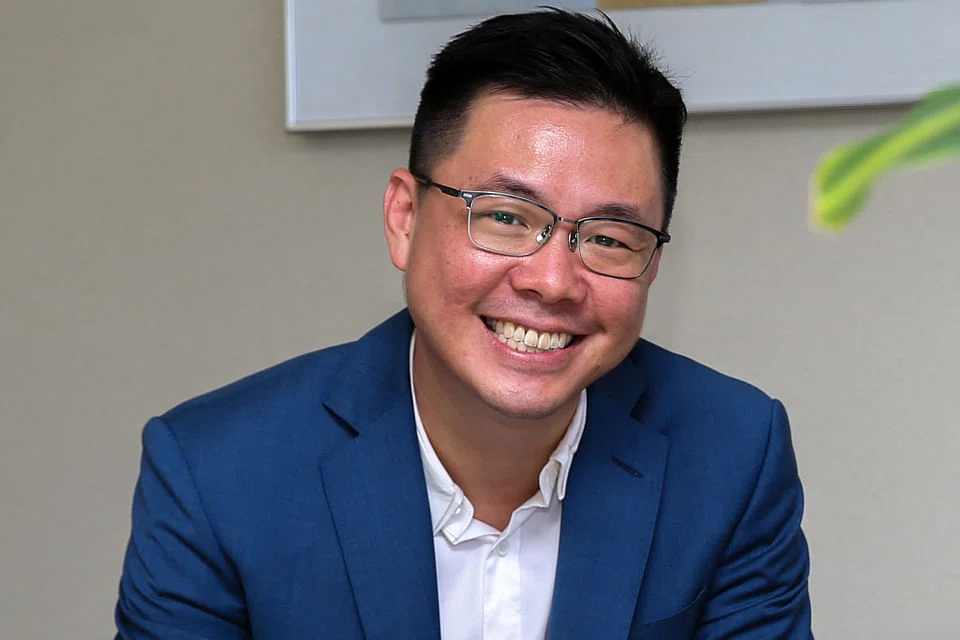
THE proposed name change of United Industrial Corp (UIC) to Singapore Land Group is more than a cosmetic change, says chief operating officer (COO) Jonathan Eu. The real estate developer also has plans to rejuvenate and gentrify its aged office portfolio, as well as kick-start its ESG (environmental, social, and governance) roadmap.
It would also not rule out setting up capital recycling platforms such as funds or real estate investment trusts for fee income in future.
In its circular to shareholders on Thursday, UIC said that "Singapore Land" has a strong historical brand equity within real estate circles, being one of Singapore's largest commercial landlords. Plus, it is synonymous with premier property developments comprising both office and retail spaces, including the eponymous Singapore Land Tower.
Singapore Land was what Singland Properties, the unit holding UIC's Singapore commercial portfolio, used to be called. UIC began as a detergent and toiletries manufacturer and distributor in the 1960s, but changed its direction when it acquired a majority stake in Singapore Land in 1990. The detergent business was sold in 2004, but its product still goes by the name UIC.
Mr Eu, who became COO at the start of last year, said the name change was also partly to build corporate identity among employees who still identified themselves as employees of "Singland" and "UIC", depending on when they joined. (see amendment note)
As part of the group-wide refresh, UIC is looking at optimising its portfolio, which includes what he called "Grade-A location, but Grade-B quality" assets including Clifford Centre and SGX Centre in the central business district, as well as city-fringe and suburban assets such as The Gateway, Tampines Plaza 1 and 2, and West Mall. Together with UOL, it also holds stakes in Marina Square and the three hotels Pan Pacific Singapore, Marina Mandarin Singapore, and the Mandarin Oriental Singapore.
The portfolio rejuvenation has begun with Singapore Land Tower. In early March, UIC said that it has secured its first green and sustainability-linked loans totalling S$300 million. The S$100 million green loan will go towards a major upgrading of the 48-storey office building, including the introduction of green features as well as a covered walkway to Raffles Place MRT station. Completion is expected by end-2023.
UIC is also doing "lighter touch" spruce-ups at SGX Centre and Tampines Plaza 1 and 2. As for Marina Square, Mr Eu noted that its former idea of having "four anchors" at the corners of the mall is dated, conceptualised in the 1980s after the US shopping mall format at the time. The mall has underperformed nearby shopping centres mainly because it lacks a "natural feed" from offices.
"The synergy between hotel guests and malls isn't as strong as between offices and malls. We miss out on a chunk of the lunch crowd because we don't have offices that sit right above the retail podium," he explained.
The group is in the process of assessing its options, which range from supplementing the existing development to a total re-envisioning of the site. But in the past two years, it has tried to draw new crowds by adding family-centric tenants such as play space Kiztopia and Nerf Action Xperience, and enrichment schools like MindChamps. Other ideas that have been thrown up include adding serviced apartments and co-living spaces.
Asked about its capital expenditure budget, Mr Eu only said that the group has a healthy balance sheet, with cash and cash equivalents of S$178.6 million as at end-2020.
UIC is also on the lookout to acquire commercial plots of land for newbuild projects, and believes that its capabilities in retail, hospitality and office will play well to the emergence of more mixed-use sites. For the next few years, the group's plan will remain domestically-focused, he added.
Investors' main gripe with the stock has been its public float of less than 12 per cent and consequent thin trading liquidity. But this is the result of the holdings of the two major shareholders - chairman Wee Cho Yaw and JG Summit (linked to the Gokongwei family in the Philippines). They hold 50.366 per cent and and 37.045 per cent, respectively.
The good news, said Mr Eu, is that both major shareholders have a "very good, professional relationship", contrasting the longstanding rivalry between the late billionaire John Gokongwei and Mr Wee, which had resulted in a history of neck-and-neck competition by both to boost their stakes in the illiquid stock.
The counter may have hit a one-year high of S$2.70 on April 1, but it remains at a 47 per cent discount to its end-2020 book value of S$5.12. An optimistic Mr Eu hopes that by creating value in the portfolio, that discount will "adjust itself".
Meanwhile, the group has also jumped on the ESG bandwagon - not in copycat fashion or even to get "financing discounts" if the group hits its sustainability targets. Mr Eu said he hopes to do it in a way that is meaningful. Over the three years, it also hopes to obtain ESG accreditations such as the Global Real Estate Sustainability Benchmark.
The proposed name change is still subject to shareholders' approval, to be submitted by proxy forms by April 20, 2.30pm. The extraordinary general meeting will be convened virtually on April 23, 2.30pm.
Amendment note: The article has been amended to reflect the correct year that Mr Eu became chief operating officer.
TRENDING NOW

From legacy to launch: Francis Yeoh and Yeoh Pei Xien on family unity and YTL’s next‑gen ventures

Could Japan trigger the next global financial crisis?

Wealthy Indonesians snap up government bonds as yields near 8%: OCBC
‘You buy more picks and shovels because you keep hitting gold’: Why AI spending needs to see results

