UK’s Crown Estate profits fall as offshore wind fees decline
The value of the Crown Estate portfolio increased 11.3 per cent to £16.7 billion last year

PROFITS at the Crown Estate, the property company that generates income for King Charles III, fell last year as a temporary boost from the licensing of new offshore wind farms began to fade.
Operating profits at the company, which also owns swathes of commercial buildings in some of London’s most expensive districts, fell to £1.2 billion (S$2.1 billion) in the year through March, down from £1.4 billion a year earlier.
The organisation has seen its earnings soar in recent years due to high option fees for bidders of Round 4 offshore wind farms. Winning bidders stop paying those fees once they start to build the projects, and previous and future leasing rounds have had significantly lower fees.
The landlord had previously warned the uplift would be temporary and said that profits excluding the impact of Round 4 had increased by 5 per cent to £370 million.
The UK has the biggest offshore wind capacity after China and is pushing to develop it further. The Crown Estate is planning to hold its sixth leasing round next year. The UK government is also due to start its next auction for subsidy contracts, known as AR8, this summer.
The Crown Estate oversees real estate surrendered by the monarchy in 1760 in exchange for annual payments. The UK Treasury collects its earnings and provides the King with a percentage.
The drop in profits, which is expected to persist beyond this year, means the Crown Estate will contribute less to the Treasury to support public spending. It will also contribute less to the Sovereign Grant, the percentage of the Crown Estate’s income that is allocated to fund the Royal Household.
The Royal Trustees, which include the Prime Minister and Chancellor of the Exchequer set the overall level of the grant at £99.9 million from 2027 to 2028, which is 20.5 per cent of the Crown Estate’s profits, according to a statement from the Treasury. That’s down from £138 million this year.
The cut comes after upgrade works on Buckingham Palace came to an end, meaning the royal household’s expenditure is expected to drop.
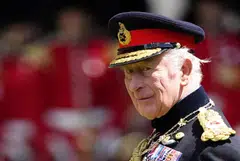
Changes to the company’s borrowing and investment powers granted by parliament last year mean the Crown Estate can now retain more of its revenue for investment. As such the group is returning £487 million of the £1.2 billion it earned in 2025 to the Treasury, down from £1.1 billion of its £1.4 billion profit a year earlier.
The overall value of the Crown Estate portfolio increased 11.3 per cent to £16.7 billion last year. Rising rents in London’s West End districts helped boost the value of the group’s so-called urban business, which includes much of Regent Street and the St James’s district, by 5.8 per cent.
Outside London, the landlord is building homes and labs, including a planned £4.5 billion project in Oxfordshire.
The Crown Estate results come as King Charles and Prince William disclosed their personal tax obligations for the first time in their current roles.
The country’s head of state voluntarily paid £12.9 million and his son paid £7.76 million in personal income and capital gains taxes for the 2024-2025 financial year, according to statements released on Thursday by Buckingham Palace and Kensington Palace. BLOOMBERG
Decoding Asia newsletter: your guide to navigating Asia in a new global order. Sign up here to get Decoding Asia newsletter. Delivered to your inbox. Free.
Share with us your feedback on BT's products and services