

UOB digital bank eyes S$10b Asean millennial market
It plans to focus sharply on acquiring high quality customers in the most cost efficient way
Singapore
UNITED Overseas Bank (UOB) has projected a S$10 billion market opportunity in Asean, with the 84-year-old Singapore bank going on the offensive to take a chunk of it through its standalone digital bank for millennials.
The bank's digital outfit, known as TMRW, is putting in place plans to focus sharply on acquiring high quality customers - measured by the value of their engagement with the bank - in the most cost efficient way.
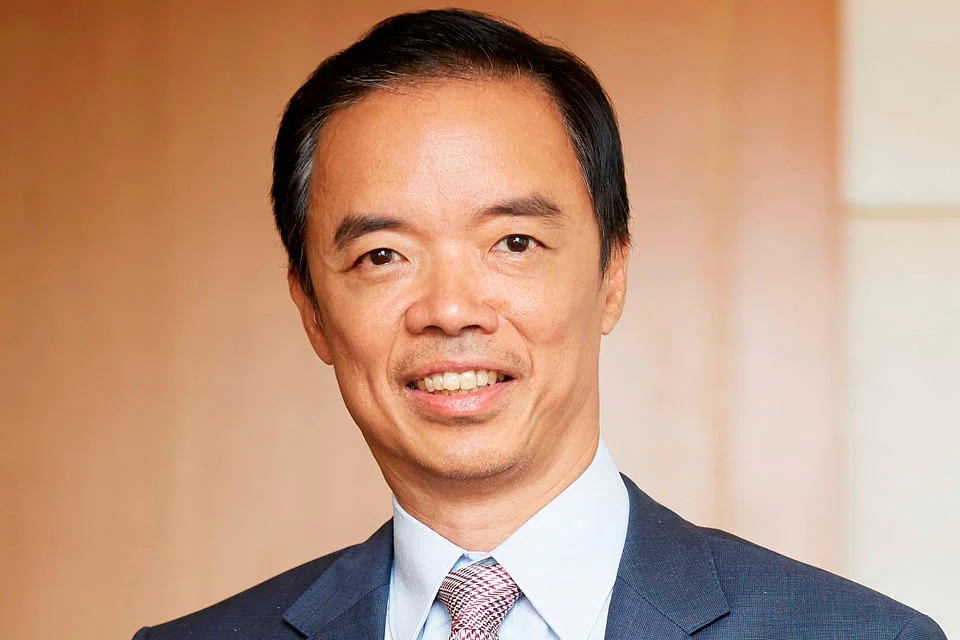
In an interview with The Business Times, group head of TMRW digital group Dennis Khoo said TMRW, which has been running in Thailand for just over nine months now, is gearing up to be the world's most engaging bank, keeping costs at sustainable levels while tapping on the sizeable lifetime revenue from Asean customers.
"This is to protect the future of the retail business within UOB, which is why we are very committed to see this through even though it's going to take a lot of time," he said.
The bank's S$10 billion projection reflects the lifetime value of young professionals in Asean, given an expected surge in demand for more complex financial instruments that will ramp up TMRW's asset base. To be clear, this is after about five years of transacting with TMRW on plain-vanilla services.
TMRW will expand to at least one other large market in Asean this year to tap the millennial market in the region, where six in 10 are under 35 years old. Indonesia and Vietnam are understood to be the likely markets.
Dr Khoo noted that in markets such as Indonesia, Thailand, and Vietnam, there are still large numbers of the unbanked, and regulators are keen to bring them into the financial system. UOB's focus on the banked segment at the start is a means to figure out how to keep costs low for larger parts of the population.
In Thailand, UOB is currently already the second-largest foreign bank, albeit with a market share of less than 5 per cent after 16 years. But the business is profitable and it is now a familiar name to customers and regulators there.
By combining cheaper technology and predictive machine learning into a digital bank built completely from scratch, TMRW can closely track the profitability of the digital trail of its customers, and monitor how this cost-revenue mix will evolve as a customer becomes more active with the bank.
UOB's TMRW aims to run at a 35 per cent cost-to-income ratio after five years. Fresh statistics from the bank provided to BT showed that TMRW has gained traction.
Its annual revenue per active TMRW customer as at end-November jumped 80 per cent from March; acquisition cost per active TMRW customer also fell about 70 per cent over that same period.
There is cost discipline, with the acquisition cost of a customer not exceeding one third of the projected lifetime value of a customer. As a measure, TMRW is "well-within" its target to be marginal-cost positive in five years, Dr Khoo told BT. The bank aims to scale with actively engaged customers and recoup total costs from a broader client base of a projected three to five million new customers from this region.
Since TMRW started in March last year, its customer accounts have grown 20 per cent each month on average from end-March to end-December. It had about 12,000 customers' accounts at the end of March. Just using member referral programmes with partners such as Grab and Shopee alone, TMRW has acquired customers roughly at the rate of 2,000 new customers per month, making up 30 per cent of new customers who are acquired.
This channel of acquisition is cheaper than Google and Facebook, said Dr Khoo. TMRW now aims this year to gain 4,000 customers per month via member referral programmes alone.
What also drives the data engagement is the use of fintech, which helps to tag and clean the customer's spending and savings data to turn it into useful financial insights that customers can use to rejig their savings and investment habits.
With the flexibility afforded by new technology, TMRW customers can switch at any time the category - say, on food - that would allow them the most amount of cashback on their card spending. Customers are also alerted when they overspend, and see their spending habits segmented into neat buckets.
"We know that the millennials want to bank differently. They want banking to be simple, transparent, and useful to them in a way that is friendly and personal," said Dr Khoo.
For a sense of the work involved behind building a digital bank from ground-up, the mobile-only bank has embedded more than 600 features, and its setup involves teaching some 25,000 Thai phrases and counting to its chatbot. The team runs about 18 weekly tests to refine the modeling.
What the bank also tracks closely is its net promoter score (NPS), which measures how much a customer would play advocate on behalf of the bank. TMRW's NPS already ranks the nine-month-old bank among the top five for all Thai banks, based on external NPS benchmarks from a couple of years ago. The jury is still out on whether challenger banks will succeed, but neobanks come with a high NPS, which keeps customers coming back, Dr Khoo said.
By creating a standalone digital bank, UOB made a decision to largely abandon legacy structures to turbo-charge the data analytics. While there is a large upfront investment cost of about S$100 million in technology build for two markets, this approach has allowed the bank to be unencumbered by dated infrastructure.
"Why it is sometimes very hard to reduce costs is that every single channel that banking has ever created for retail customers is still around. Nothing has really been closed down," said Dr Khoo. This means that a large regional bank could have 50 to 100 systems interconnected.
"So one of the objectives of building a future model is to streamline costs, because obviously margins are coming down, not just from competition within the industry but competition across different industries. In the digital economy, lines are blurred. There's no longer such a distinctive identity of 'this is your sector' and 'that's my sector'. They're all coming together."
Indeed, UOB's paradigm shift comes as the drums of competition are sounding louder in this region. Regulators are opening doors to non-banking digital entities from lifestyle and retail sectors eager to turn to finance as a new revenue driver. Over in Singapore, regulators are due this year to hand out up to two digital full banking licences to new entrants. They can now soak up cheap retail deposits, once an advantage only enjoyed by the incumbents.
But banks will continue to stand alone as regulated entities, precisely because of the way they are funded, and have their fates intertwined with the economic growth of the region.
"The people who are saying that 'you need banking but don't need banks', are really mistaken," said Dr Khoo. "Because if you define a bank as one that takes deposits, it becomes so critically important to the economy that it has to be regulated. Banks lend the money you put in the bank. They need to be trustworthy, their practices have to be above board, and their capitalisation needs to be strong - those are the fundamentals."
READ MORE: Singapura Finance, fintech MatchMove believed to have teamed up for digibank bid
TRENDING NOW

Singapore bars Alice Huang, woman tied to affair with Nvidia’s Jensen Huang, for misleading police

Nvidia prepares to oust Jensen Huang after news of second affair, with executive: reports

Higher rates, weaker spending: Is the Philippines entering stagflation?

Special dividend for SIA’s 80th anniversary? CEO says extra payout will need board’s nod

