UOB looks to ‘resilient’ Asean to continue to drive growth as Q4 profit beats estimates
The bank is stepping up efforts to enhance productivity


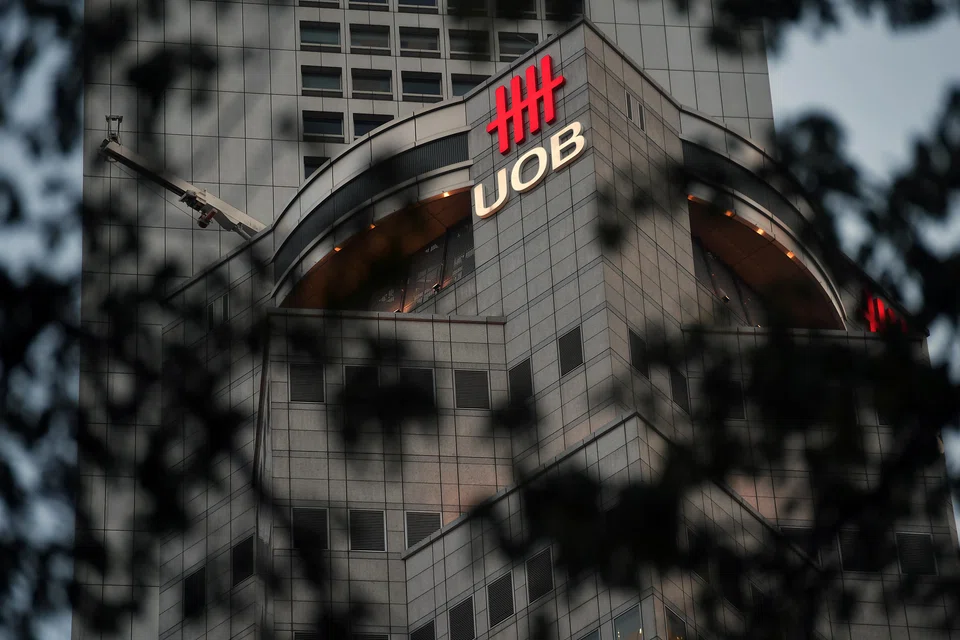
UOB remains confident that Asean economies will be resilient and continue to expand, even as the outlook remains uncertain amid ongoing geopolitical tensions and tariff concerns.
While US tariff policies will likely hit the region, chief executive Wee Ee Cheong remains “hopeful” as he watches for its effects.
“We are closely monitoring developments, and so far Asean continues to be resilient,” he said at the lender’s fourth-quarter results briefing on Wednesday (Feb 19).
He noted that mega trends – such as supply chain diversification, digitalisation and the green economy – are driving investments into the region.
There has also been closer cooperation among Asean countries, such as the Johor-Singapore Special Economic Zone, and integrated cross-border retail payment systems.
“These should help boost intra-Asean connectivity and growth, and reinforce the region’s position as a key player in the global economy,” he said.
Asean’s strength should spur growth for UOB, which focuses its strategy heavily in the region.
Having acquired Citigroup’s retail franchise in Malaysia, Thailand, Indonesia and Vietnam, the lender is seen as the one with the most exposure to the region among the three Singapore banks.
UOB on Wednesday posted a net profit of S$1.52 billion for Q4 ended Dec 31, 2024, up 8.6 per cent from S$1.4 billion a year earlier.
This included S$17 million in one-off expenses from the lender’s Citigroup integration costs after taxes, which was 81.9 per cent lower than the S$94 million recorded in the same period the previous year.
The earnings beat the S$1.48 billion consensus forecast in a Bloomberg survey of six analysts.
Net interest income for the quarter was up 2 per cent on the year at S$2.45 billion, driven by loan growth of 5 per cent.
Net fee income was stable at S$567 million, although it was down from the last quarter’s high due to the seasonal slowdown in loan-related and wealth activities.
Other non-interest income was up 1.1 per cent on the year at S$443 million, after an exceptional third quarter that benefited from market volatilities.
Net interest margin (NIM) for Q4 stood at 2 per cent, down from 2.02 per cent in Q4 2023, and 2.05 in Q3 2024. This was mainly due to lower benchmark rates.
Group chief financial officer Lee Wai Fai said the NIM had likely received the full impact of the US rate cuts in 2024, which had translated “very sharply into the loans repricing”.
He expects the US Federal Reserve will not be as aggressive in 2025, with one cut likely in the later half of the year.
“With that, we hope to maintain at the current 2 per cent level, which means that we have to work very hard on our strategy,” Lee said.
The lender has pivoted its wholesale banking operating model away from just loans to also fees, and has built a strong current and savings account ratio, he said.
He also noted that this means the lender has to “aggressively move towards managing (its) costs”.
Cost management
Core operating expenses increased from investment in franchise growth, with core cost-to-income ratio at 45 per cent.
Total allowances rose to S$337 million on higher specific allowance. The non-performing loan ratio remained at 1.5 per cent as at Dec 31, 2024.
For 2025, UOB aims to keep its cost-to-income ratio around 42 per cent, and maintain total credit costs at 25 to 30 basis points.
Wee said the lender is “stepping up efforts to enhance productivity”.
He noted that the bank could make full use of artificial intelligence to supplement its productivity and streamline the whole thought process.
While Wee did not directly answer questions on job cuts, he added that the bank is trying to upskill its staff and channel them into higher-growth areas.
Capital returns
The lender has proposed a higher final dividend of S$0.92 per share for the half-year period, from S$0.85 the year before.
This brings the full-year dividend to S$1.80 per share, representing a payout ratio of about 50 per cent.
The lender is also proposing a special dividend of S$0.50 per share, paying out S$800 million of UOB’s surplus capital, over two tranches in 2025.
As part of the bank’s capital distribution strategy, the board has announced a S$3 billion package to distribute surplus capital over the next three years.
Apart from the special dividends, the package includes a S$2 billion share buyback programme, where shares will be acquired from the open market and cancelled.
The package is estimated to optimise UOB group’s Common Equity Tier 1 ratio by one percentage point, which stood at 15.5 per cent in Q4.
Full year 2024
For the full year, net profit was up 5.8 per cent at a record S$6.05 billion. Excluding one-off Citigroup integration costs, net profit would be up 2.9 per cent at S$6.23 billion.
Annualised earnings per share rose to S$3.56 for FY2024, from S$3.34 the year before.
Net interest income was stable at S$9.67 billion, driven by healthy loan growth, although it was offset by lower NIMs, which fell to 2.03 per cent from 2.09 per cent.
Net fee income was up 7 per cent on the year at S$2.4 billion, amid growth in wealth management fees, card fees and loan-related fees.
Other non-interest income jumped 10 per cent on the year to S$2.23 billion. This came amid higher customer-related treasury income, strong hedging demands, and good performance from trading and liquidity management activities.
Total allowances were stable at S$926 million, with total credit costs on loans at 27 basis points.
For 2025, the lender is aiming for higher total income, a high single-digit loan growth, and double-digit fee increase led by cards, wealth, trade and loan-related fees.
Shares of UOB were down 0.4 per cent or S$0.17 at S$38.48, as at the midday break on Wednesday.