UOB Q2 profit falls 6% to S$1.34 billion; misses expectations
Declares interim dividend of S$0.85 per share; a second tranche of the lender’s S$0.50 per share special dividend will also be paid out

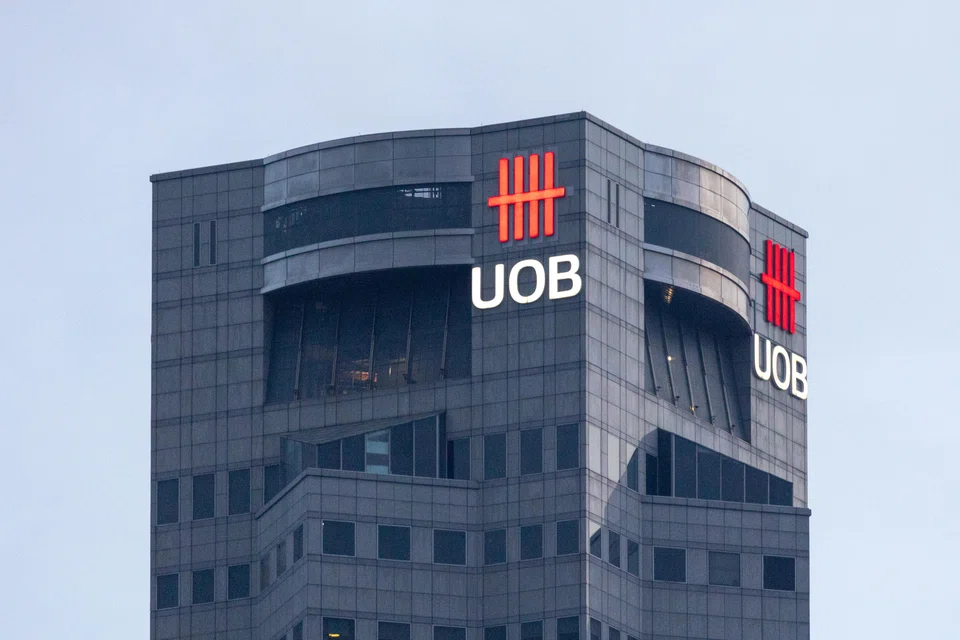
[SINGAPORE] UOB’s net profit for the second quarter fell as net interest income eased on lower margins.
Net profit for the three months ended Jun 30, 2025, stood at S$1.34 billion, compared with S$1.43 billion in the same period a year earlier, UOB said on Thursday (Aug 7).
The result missed the S$1.48 billion consensus estimate in a Bloomberg poll of six analysts.
The lender declared an interim dividend of S$0.85 per share for the half-year ended Jun 30, down from S$0.88 in the previous year. A second tranche of UOB’s S$0.50 per share special dividend will also be paid out to shareholders.
Net interest income for the quarter fell 3 per cent to S$2.34 billion, as net interest margin declined 14 basis points to 1.91 per cent, from 2.05 per cent a year ago.
Non-interest income increased 5 per cent to S$1.13 billion, on broad-based growth across wealth management, loan-related services and credit card fees, along with higher customer-related treasury income and improved trading and liquidity management performance.
The non-performing loan ratio came in at 1.6 per cent, compared with 1.5 per cent a year ago.
Total allowances rose 20 per cent to S$279 million.
For the first half, net profit fell 3 per cent year on year to S$2.83 billion. Total income for the period was up 2 per cent at S$7.12 billion, from S$7 billion.


Shares of UOB closed 0.2 per cent or S$0.08 higher at S$36.45 on Wednesday, before the announcement.
Decoding Asia newsletter: your guide to navigating Asia in a new global order. Sign up here to get Decoding Asia newsletter. Delivered to your inbox. Free.
Copyright SPH Media. All rights reserved.